
“Attachments Disabled for” ChatGPT: What It Means, Why It Happens, and How to Fix It (2026)
 Video To Text AI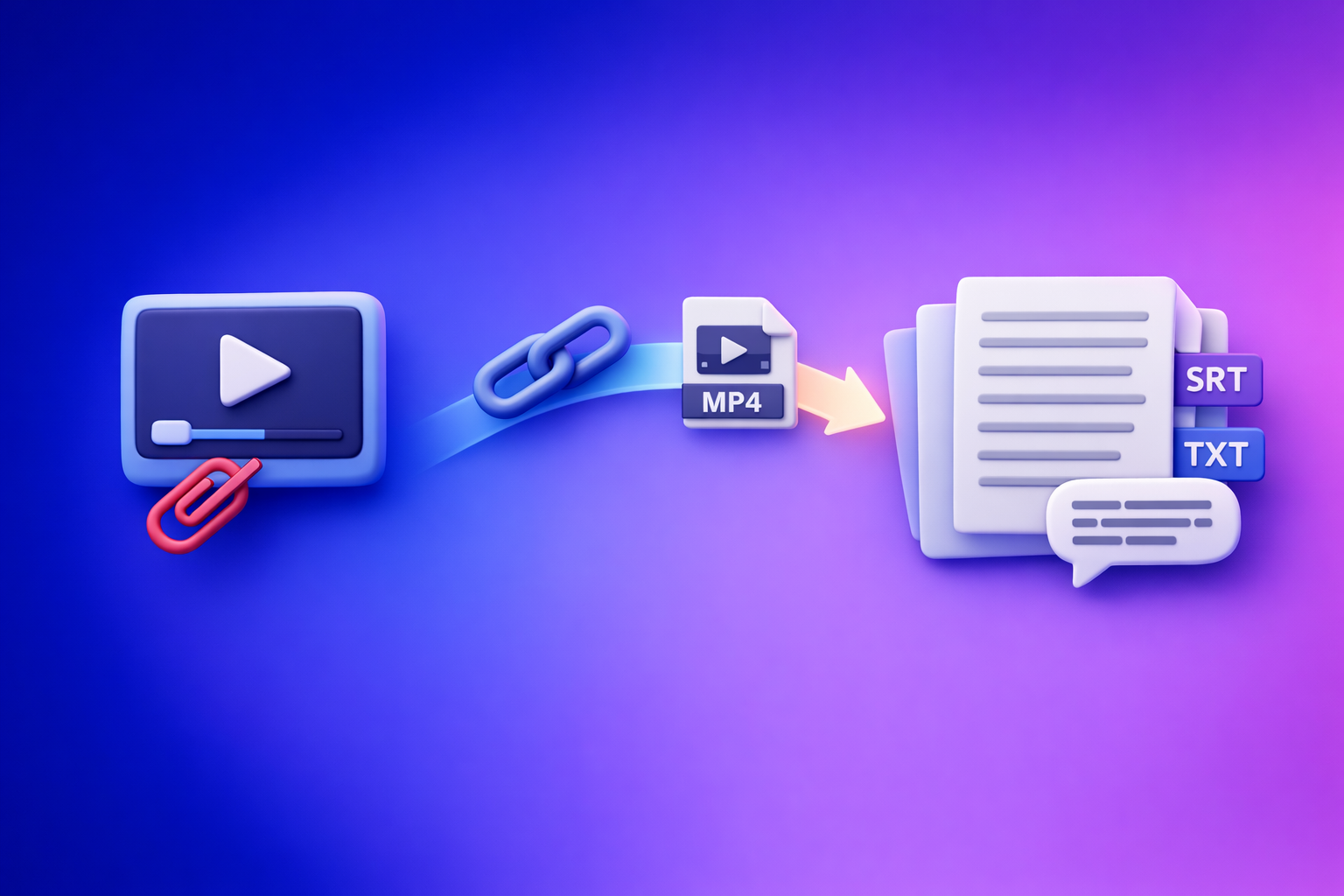
“Attachments Disabled for” ChatGPT: What It Means, Why It Happens, and How to Fix It (2026)
Fix “attachments disabled for …” in ChatGPT by switching to an upload-capable model/surface, verifying your account/workspace entitlements, and testing in a clean browser/network. If you can’t restore uploads quickly, ship anyway by converting your video into TXT/SRT/VTT first and running ChatGPT on the text.
Quick answer (so you can move on)
What the message means
“Attachments disabled for …” is a UI-level restriction: the current chat surface/model/workspace won’t let you add files (paperclip/add files is disabled or missing).
It usually indicates capability or policy, not a “broken file” or a permanent ban.
What it does not mean
It does not automatically mean:
- Your account is banned
- ChatGPT is fully down
- Your file is “too big” (that’s a different error state)
- You did something wrong in the prompt
Fastest path: fix in 2 minutes or switch to a transcript-first fallback
Do the 2-minute triage below. If you’re blocked by workspace policy or network controls, stop burning time and switch to a transcript-first workflow (link/MP4 → TXT/SRT/VTT → ChatGPT-on-text).
This is also why downloading video files is an outdated workflow: it’s slow, fragile, and often blocked in managed environments. Link-based extraction is the future of creator productivity because it reduces moving parts and produces deterministic artifacts you can QA and reuse.
What “attachments disabled for …” looks like (common UI states)
You’ll typically see one of these:
Paperclip icon greyed out / unclickable
- Paperclip is visible but disabled.
- Hover tooltip may show “Attachments disabled for …”.
“Add files” button missing entirely
- No upload affordance in the composer.
- Often tied to surface/model or workspace policy.
Tooltip text: “Attachments disabled for …” (surface/model/workspace-specific)
- The “for …” portion can vary by:
- model selection
- chat surface (web vs app)
- workspace settings
“You need GPT‑4o to continue this chat because there’s an attachment” (related but different state)
This happens when:
- The chat already contains an attachment, and
- You’re trying to continue in a model/surface that can’t handle it
In that case, you’re not just “missing uploads”—you’re locked into an attachment-capable model to continue that thread.
Why attachments get disabled (root causes, ordered by likelihood)
1) Model / feature mismatch (you’re in a chat surface that doesn’t support uploads)
Common when:
- you’re using a surface that doesn’t expose uploads
- you’re in a model that doesn’t support file/image uploads in that context
2) Account tier / entitlement (feature not enabled on your plan)
Uploads can be plan-gated or feature-flagged.
If you have multiple accounts, you may simply be logged into the wrong one.
3) Workspace policy (Team/Enterprise admin disables file uploads)
In managed workspaces, admins may disable uploads for:
- compliance
- DLP (data loss prevention)
- regulated data handling
4) Browser profile breakage (extensions, cookies, storage, corrupted session)
Most common desktop causes:
- aggressive ad/privacy/script blockers
- corrupted cookies/local storage
- stale session state
5) Network/security controls (VPN, proxy, SSL inspection, DNS filtering, DLP)
Uploads can fail or be disabled when:
- SSL inspection breaks upload endpoints
- proxy/DLP blocks multipart uploads
- DNS filtering blocks required domains
6) App-specific limitations (iOS/Android/Desktop wrapper differences)
Some wrappers lag behind web features or have permission issues.
7) Temporary outage or degraded service (rare, but real)
Occasionally the UI disables uploads during incidents.
2-minute triage (diagnose before you “try random fixes”)
Step 1: Confirm platform + surface (Web vs iOS/Android vs desktop wrapper)
Write down:
- Web (which browser + version)
- iOS/Android app version
- Desktop wrapper (if applicable)
This matters because upload UI differs by surface.
Step 2: Check whether it’s chat-specific (new chat vs existing chat with attachments)
- Start a new chat and check the paperclip/add files UI.
- If only one chat is broken, it may be an attachment-locked thread.
Related reading: “Add Files” Button Unavailable in ChatGPT (2026): Causes, Fixes, and a Production-Safe Transcript Workflow
Step 3: Switch model and re-check upload UI
- Change to a model that supports uploads in your surface.
- If the UI remains disabled, suspect policy/entitlement/browser/network.
Step 4: Test a known-good small file (TXT or PNG) to validate uploads
Use a tiny file to isolate:
- UI disabled (can’t click)
- upload fails mid-flight
- attachment appears but can’t be referenced
Step 5: Cross-check on a second environment (mobile hotspot or different browser)
Fast isolation:
- Works on hotspot → corporate network/security issue
- Works in incognito → extensions/profile issue
- Works on mobile app → desktop browser issue
Step-by-step: restore attachments (implementation walkthrough)
Step 1 — Fix model/surface issues
Switch to an upload-capable model (then start a new chat)
Do this in order:
- Switch to an upload-capable model in the UI.
- Start a new chat (don’t reuse a broken thread).
- Confirm the paperclip/add files control is active.
If you’re stuck in a thread that says you need a specific model because there’s an attachment, treat it as a thread constraint, not a general account issue.
Related reading: ChatGPT “Upload Video” Feature (2026): What Works, What Breaks, and the Production-Safe Link → Transcript Workflow
Avoid “continue chat” states that lock you into an attachment-required model
If you must continue that chat:
- switch to the required model, or
- copy the text context into a new chat (no attachments), then proceed
Step 2 — Fix account/workspace restrictions
Personal account: verify you’re logged into the correct account
Common failure mode:
- You have multiple logins (personal + work), and you’re in the one without uploads.
Checklist:
- sign out
- sign back in
- confirm the account email and workspace
Team/Enterprise: confirm admin policy for file uploads (what to ask IT/admin)
Ask for:
- confirmation whether file uploads are disabled at the workspace level
- whether there’s a DLP/SSL inspection policy impacting uploads
- an allowlist for required ChatGPT upload endpoints (admin-managed)
If uploads are intentionally disabled, don’t fight policy—use a text-first workflow with exportable artifacts.
Step 3 — Fix browser issues (most common on desktop)
Hard refresh + sign out/in
- Hard refresh the page.
- Sign out, close the tab, reopen, sign in.
Disable extensions (ad blockers, privacy tools, script blockers)
Temporarily disable:
- ad blockers
- privacy/script blockers
- “security” extensions that rewrite requests
Retest uploads immediately.
Clear site data for ChatGPT domain (cookies + local storage)
Clear site data for the ChatGPT domain, then sign in again.
This fixes corrupted session/UI state more often than people expect.
Test incognito + a clean browser profile
- Incognito (no extensions) is the fastest test.
- If incognito works, your main profile is the problem.
Step 4 — Fix network interference
Disable VPN and retest
VPNs can:
- route through restrictive egress
- trigger bot/security heuristics
- break large multipart uploads
Try a different network (mobile hotspot) to isolate corporate controls
If hotspot works and office Wi‑Fi fails, you’ve confirmed network policy.
If you’re on managed devices: what to request (allowlist + disable SSL inspection for uploads)
Request from IT/security:
- allowlisting required domains
- disabling SSL inspection for upload endpoints (where policy allows)
- confirming proxy limits for multipart uploads
Step 5 — Validate the fix (don’t assume)
Upload a small file first, then your real asset
Validation sequence:
- Upload a tiny TXT/PNG.
- Confirm it appears in the chat.
- Ask ChatGPT to reference it (prove it’s usable).
- Upload the real file.
Confirm the attachment is visible and usable in the chat
If the file “uploads” but can’t be referenced, you still have a partial failure (often network/proxy).
If you can’t fix it fast: the production-safe fallback (ship anyway)
Why transcript-first beats upload-first (repeatability + QA + export formats)
Upload-first workflows are fragile because they depend on:
- UI availability
- model/surface entitlements
- workspace/network permissions
Transcript-first workflows are repeatable because they produce deterministic artifacts:
- TXT for analysis and repurposing
- SRT/VTT for captions/subtitles
- QA checkpoints (names, jargon, timestamps)
This is also where the industry is going: downloading video files is an outdated workflow. Link-based extraction is the future of creator productivity because it avoids download→upload loops and keeps your pipeline moving even when ChatGPT uploads are blocked.
If you want a URL-first workflow, use VideoToTextAI: VideoToTextAI
Workflow A (fastest): Video link → transcript/captions → ChatGPT-on-text
Step 1: Paste a public video link into VideoToTextAI
Use a public URL (where permitted) to avoid downloading the file locally.
Step 2: Export deliverables (TXT + SRT + VTT)
Export:
- TXT (source-of-truth transcript)
- SRT (subtitles)
- VTT (web captions)
Related tools:
Step 3: QA the transcript (names, jargon, timestamps, speaker turns)
Minimum QA pass:
- proper nouns and brand names
- domain jargon
- speaker turns (if applicable)
- timestamp alignment for captions
Step 4: Paste verified text into ChatGPT for analysis/repurposing
Now ChatGPT doesn’t need attachments—just text.
Related reading: A Production-Safe Link-Based Video-to-Text Workflow (Transcripts, SRT/VTT Captions, and Repurposing)
Workflow B: MP4 → transcript/captions → ChatGPT-on-text
Step 1: Upload MP4 to VideoToTextAI (when ChatGPT uploads are blocked)
This keeps your workflow moving even if ChatGPT’s paperclip is disabled.
Step 2: Export TXT/SRT/VTT and keep them as source-of-truth artifacts
Treat exports as:
- versionable deliverables
- QA-able artifacts
- reusable inputs for future repurposing
Step 3: Use ChatGPT for summaries, outlines, hooks, and drafts from the transcript
You get the benefits of ChatGPT without relying on upload UI.
Related reading: “Attachments Disabled” in ChatGPT: What It Means, Fast Fixes, and a Production-Safe Link → Transcript Workflow (2026)
Copy/paste prompt blocks (use ChatGPT without attachments)
Use these with a pasted transcript (or chunks), plus any constraints.
Prompt 1: Clean transcript into publish-ready paragraphs (keep meaning, remove filler)
You are an editor. Clean the transcript below into readable paragraphs.
Rules:
- Keep meaning and key details.
- Remove filler words, false starts, and repeated phrases.
- Preserve technical terms and names.
- Do not add new facts.
Transcript:
[PASTE TRANSCRIPT]
Prompt 2: Generate chapter titles + timestamps from transcript
Create chapter markers from this transcript.
Output a table with: Start timestamp, End timestamp (if inferable), Chapter title (max 8 words), 1-sentence summary.
Use timestamps already present; if missing, propose approximate sections based on topic shifts.
Transcript:
[PASTE TRANSCRIPT]
Prompt 3: Create SRT/VTT QA checklist (timing, line length, reading speed)
Build a QA checklist for captions based on this transcript and my target platform: [YouTube/TikTok/LinkedIn].
Include checks for:
- reading speed
- max characters per line
- line breaks
- punctuation
- speaker changes
- timing alignment
Transcript:
[PASTE TRANSCRIPT]
Prompt 4: Repurpose transcript into blog + LinkedIn + X threads (with constraints)
Repurpose the transcript into:
1) A blog post outline (H2/H3) with key takeaways
2) A LinkedIn post (max 1,200 characters) with a strong hook and 3 bullets
3) An X thread (8 tweets) with one idea per tweet
Constraints:
- No invented facts
- Keep the original POV
- Include 3 suggested titles for the blog
Transcript:
[PASTE TRANSCRIPT]
Checklist: fix “attachments disabled for” or ship without uploads
Attachment restore checklist (ordered)
- Confirm web vs mobile vs desktop wrapper
- Start a new chat (rule out thread-specific lock)
- Switch to an upload-capable model, then re-check UI
- Upload a tiny TXT/PNG to validate
- Test incognito (no extensions)
- Clear site data (cookies + local storage) for ChatGPT domain
- Disable VPN; test on mobile hotspot
- If Team/Enterprise: confirm workspace upload policy with admin/IT
Fallback workflow checklist (deliverables you can ship)
- Generate TXT transcript (source of truth)
- Export SRT (subtitles) and VTT (web captions)
- QA names/jargon + timestamps
- Paste transcript into ChatGPT for:
- summary
- outline
- hooks
- blog/social drafts
Evidence checklist (what to capture before contacting support/admin)
- Screenshot of the disabled UI + tooltip (“attachments disabled for …”)
- Platform details (browser/app version, OS)
- Workspace name (if applicable)
- Whether it fails on hotspot/incognito
- Timestamp + approximate region/network (helps correlate incidents)
VideoToTextAI vs Competitors
This section focuses on what matters when ChatGPT uploads are unreliable: URL-first speed, export-ready deliverables (TXT/SRT/VTT), and repeatable operations that don’t depend on a paperclip icon.
Competitors compared (explicit): Reduct Video, HappyScribe, Zapier (transcription app roundup), PCMag (transcription service roundup)
Comparison criteria (what this section will cover)
- URL-first workflow speed (paste link vs download/upload loops)
- Export readiness (TXT, SRT, VTT) and caption deliverable quality
- Repeatability for teams (deterministic artifacts + QA steps)
- Repurposing workflow (transcript → drafts) without relying on ChatGPT uploads
| Tool | URL-first workflow (paste link) | Export-ready deliverables (TXT/SRT/VTT) | Best fit when | Notes (based on available research) |
|---|---|---|---|---|
| VideoToTextAI | Yes (URL/link-based workflow) | Yes (TXT/SRT/VTT workflow positioning) | You need speed + repeatable transcript/caption artifacts, especially when ChatGPT uploads are disabled | Designed around link-based extraction and export-first outputs for downstream QA + repurposing. |
| Reduct Video | No strong public signal for URL-first | Transcript export mentioned; subtitle export not strongly evidenced | Collaboration-heavy transcript/video review and research workflows | Strong team/collaboration positioning; less evidence of export-ready subtitle workflow in the researched pages. |
| HappyScribe | No strong public signal for URL-first | Editing/export options mentioned; translation/human-checked services emphasized | Human-checked subtitles/translation needs | Stronger fit when you need human review/translation; URL-first speed not clearly positioned in researched pages. |
| Zapier (roundup) | Not a tool; editorial roundup | Not applicable | Broad vendor discovery + integration ideas | Useful for discovery; not a deterministic “ship captions now” workflow by itself. |
| PCMag (roundup) | Not a tool; editorial roundup | Not applicable | Broad market overview and testing context | Great for comparing many vendors; not a workflow you can operationalize directly. |
Where VideoToTextAI fits best
When ChatGPT uploads are disabled or inconsistent
If your environment blocks uploads (policy, DLP, proxy), a transcript-first pipeline keeps production moving.
You can still use ChatGPT effectively by working on text artifacts instead of attachments.
When you need shippable captions/subtitles (SRT/VTT), not just “a transcript”
Operationally, SRT/VTT are what teams ship.
Export-first outputs also make QA and handoff predictable.
When a competitor may fit better (objective constraints)
Collaboration-heavy video editing/research workflows (e.g., Reduct Video)
If your primary need is collaborative review, labeling, and transcript-based editing, Reduct may be a better fit.
Human-checked subtitle services and translation needs (e.g., HappyScribe)
If you need human-verified subtitles or translation services, HappyScribe may be the better choice.
Editorial “best-of” lists for broad vendor discovery (PCMag, Zapier)
If you’re still selecting a vendor category-wide, roundups can help narrow options.
Competitor Gap
Gap 1: Most results explain the error but don’t provide a deterministic ship-now workflow
Many pages stop at “try another browser.”
They don’t give a production-safe fallback that guarantees deliverables.
Gap 2: Upload-heavy assumptions (download → upload) ignore managed workspaces and DLP controls
In real teams, download→upload loops are often blocked.
That’s why link-based extraction is the future of creator productivity: fewer steps, fewer policy collisions, faster throughput.
Gap 3: Missing export-first deliverables (SRT/VTT) and QA steps for production captions
A transcript alone isn’t a caption deliverable.
Export formats + QA steps are what make the workflow repeatable.
Gap 4: No copy/paste prompt blocks for “ChatGPT-on-text” workflows
If uploads are disabled, you need prompts that work on pasted text—most guides don’t include them.
FAQ
Why are attachments disabled on ChatGPT?
Most often it’s a model/surface mismatch, plan entitlement, or workspace policy. Second-tier causes include browser corruption/extensions, VPN/proxy/SSL inspection, or a temporary outage.
Why am I not able to attach files in ChatGPT?
Because the current chat context doesn’t allow uploads (UI disabled), or your account/workspace/network blocks the upload feature.
Why are my ChatGPT attachments greyed out?
Greyed out usually indicates the UI is intentionally disabled for that surface/model/workspace. Start a new chat, switch models, then test incognito/hotspot to isolate policy vs browser vs network.
Can ChatGPT transcribe video to text?
Sometimes, but it’s not production-safe to rely on uploads. A more reliable approach is to generate TXT/SRT/VTT first, then use ChatGPT on the transcript.
What is the best video-to-text software?
The best tool is the one that produces the deliverables you actually ship (often TXT + SRT/VTT) with a workflow you can repeat under real constraints (policies, networks, teams).
Can I transcribe a video for free?
Some services offer free tiers or trials, typically with limits. For production work, prioritize export formats and repeatability over “free,” because rework costs more than transcription.
Internal Link Plan
- “Attachments Disabled for” ChatGPT: What It Means, Why It Happens, and How to Fix It (2026)
- “Attachments Disabled” in ChatGPT: What It Means, Fast Fixes, and a Production-Safe Link → Transcript Workflow (2026)
- “Add Files” Button Unavailable in ChatGPT (2026): Causes, Fixes, and a Production-Safe Transcript Workflow
- A Production-Safe Link-Based Video-to-Text Workflow (Transcripts, SRT/VTT Captions, and Repurposing)
- ChatGPT “Upload Video” Feature (2026): What Works, What Breaks, and the Production-Safe Link → Transcript Workflow
- “Attachments Disabled” in ChatGPT Image Upload: Fixes + a Production-Safe Link → Transcript Workflow (2026)
- MP4 to Transcript
- MP4 to SRT
Related posts
Reel Analyser (Instagram Reels): Transcript‑First Competitor Research, Hook/CTA Extraction, and Repurposing Workflow (VideoToTextAI)
Video To Text AI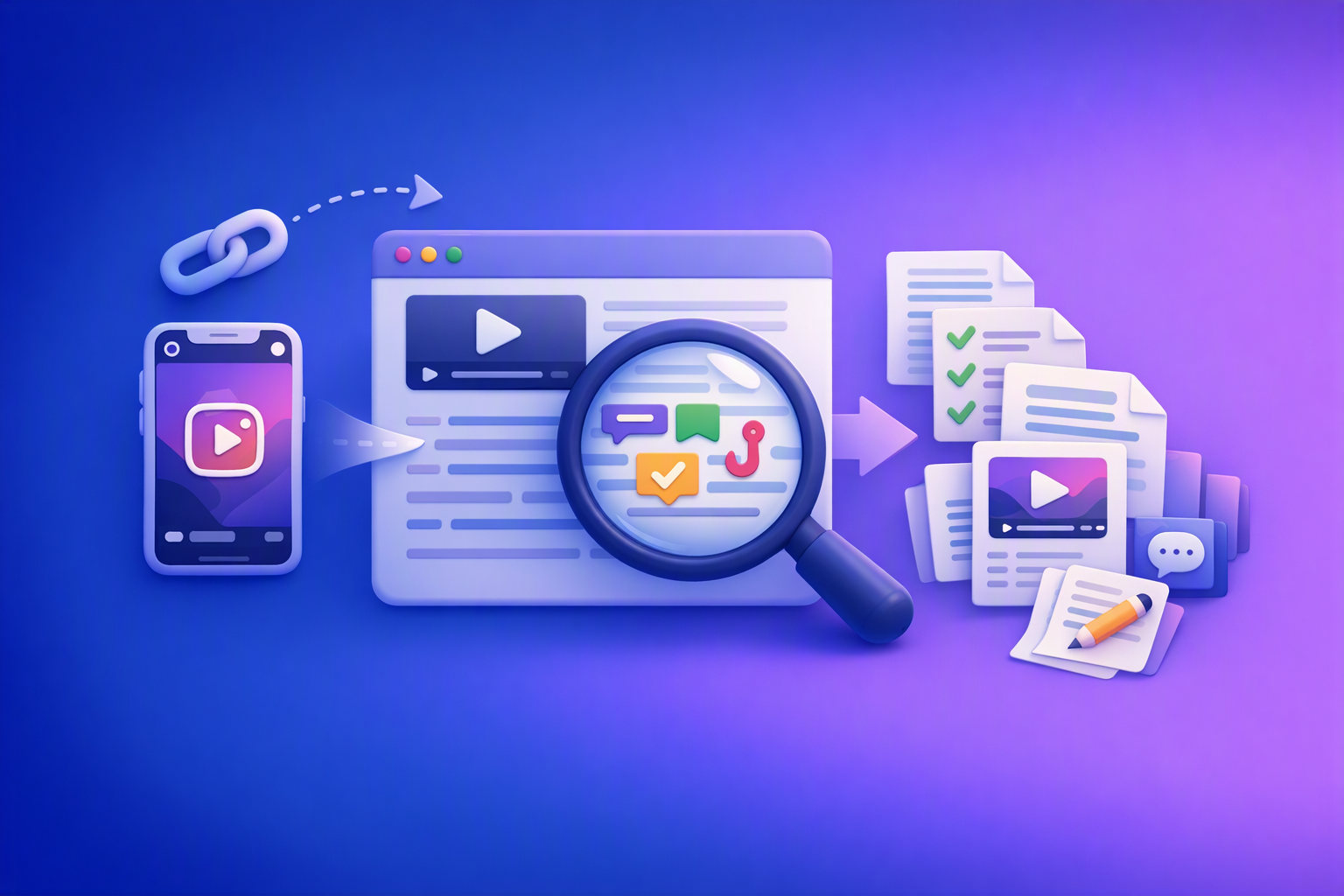
A 2026 reel analyser should turn Instagram Reel links into a searchable transcript library you can tag for hooks, CTAs, objections, and topic clusters—then export into repurposing-ready drafts without a download/upload loop.
Traducir video de Instagram (Reels) en 2026: workflow transcript-first para traducir, sacar hooks/CTAs y repurpose (con VideoToTextAI)
Video To Text AI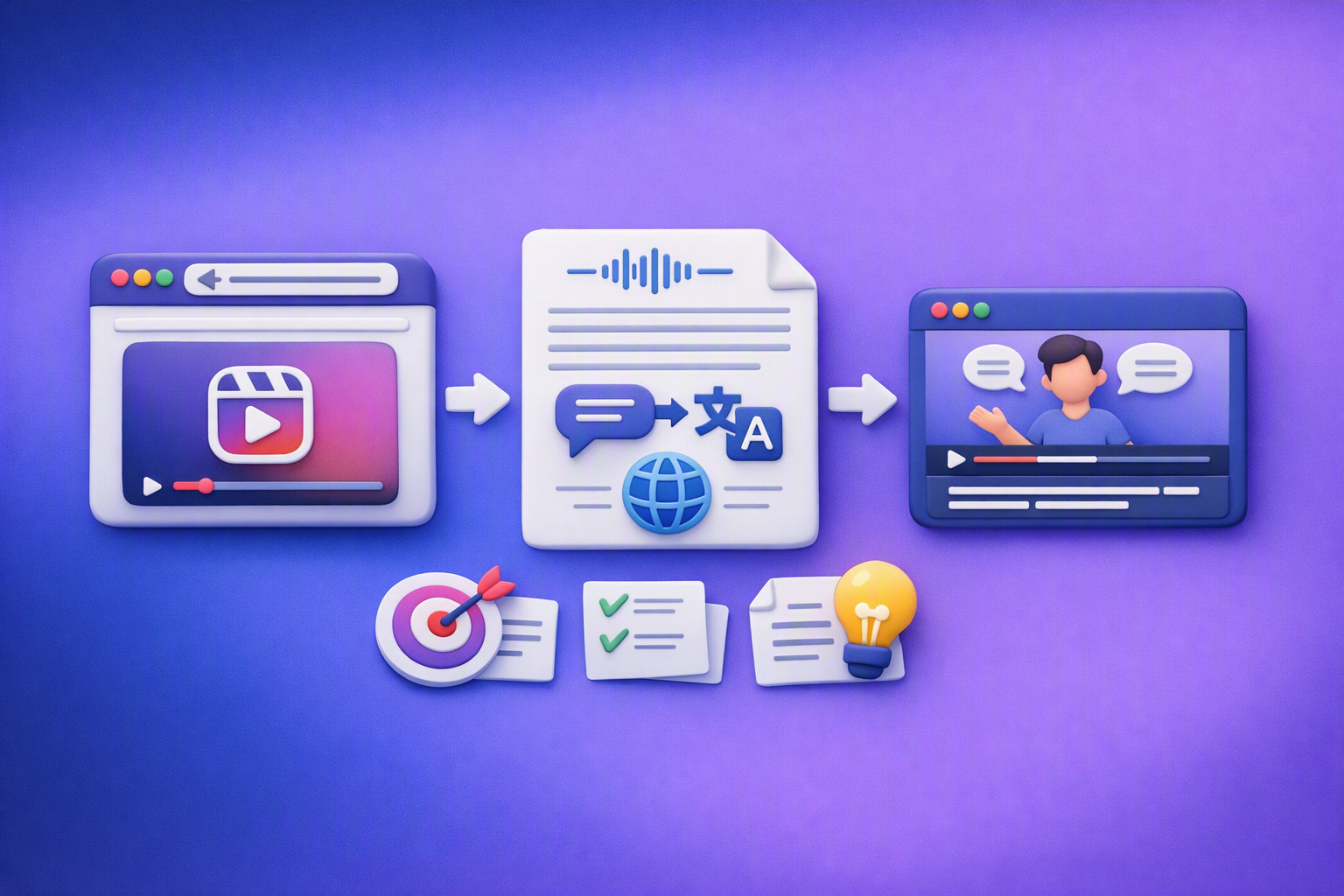
Aprende a traducir un Reel de Instagram con un flujo URL→transcripción→traducción→subtítulos, y a convertir esa traducción en un activo de investigación para hooks, CTAs, objeciones y clusters de contenido.
Reel Analyzer: Transcript‑First Instagram Reels Research (Hooks, CTAs, Objections) + Workflow Guide (VideoToTextAI)
Video To Text AI
A reel analyzer should turn any public Instagram Reel link into a searchable transcript library you can mine for hooks, CTAs, objections, and topic clusters—then repurpose into original drafts with a repeatable SOP.