
“Max 0 Uploads at a Time” in ChatGPT: What It Means, Fixes That Work, and a No-Upload Video→Text Workflow
 Video To Text AI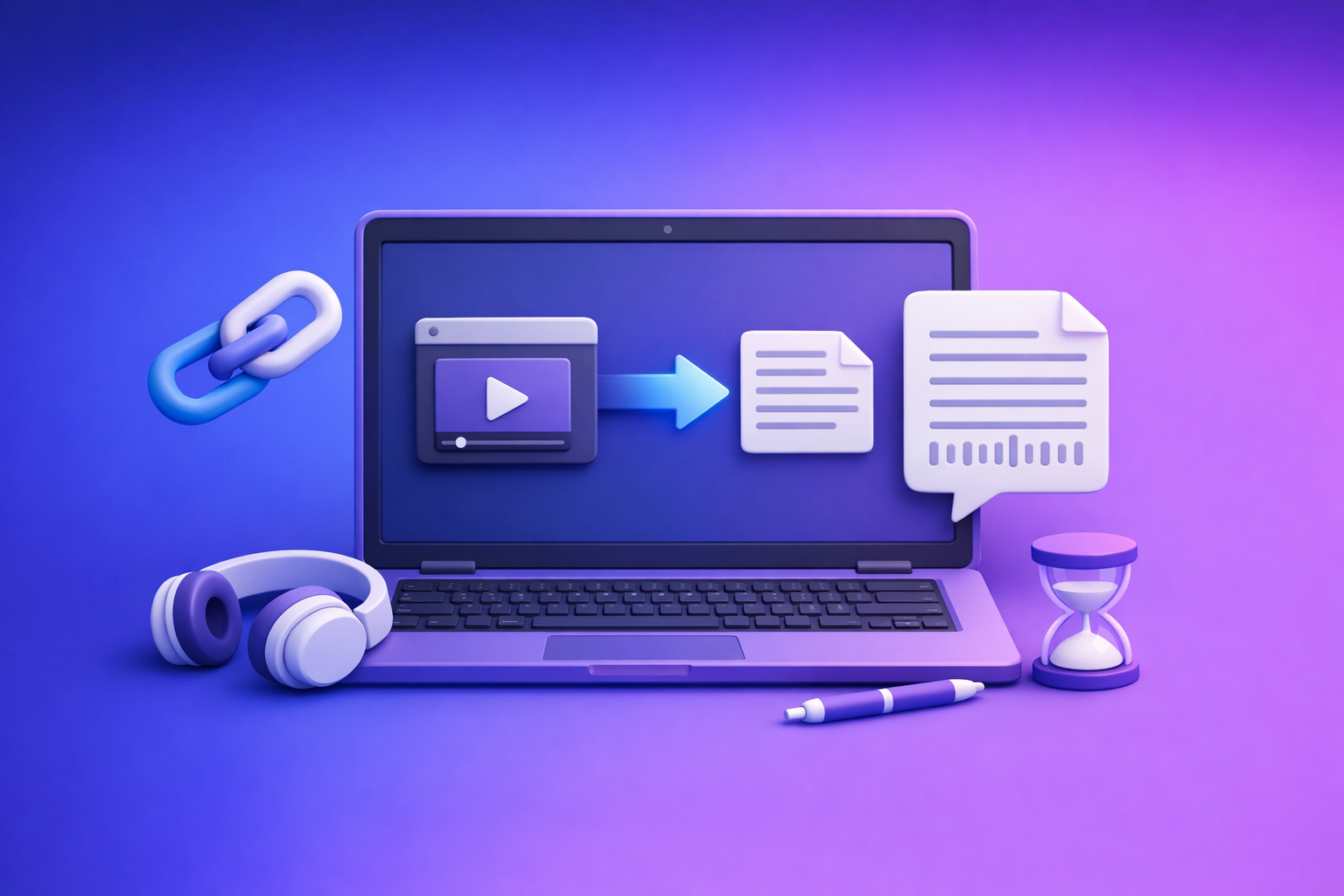
“Max 0 Uploads at a Time” in ChatGPT: What It Means, Fixes That Work, and a No-Upload Video→Text Workflow
If ChatGPT says “Max 0 uploads at a time,” uploads are disabled in your current context, so the UI blocks attachments. Fix it by isolating whether the block is thread-, model-, surface-, workspace-, or local/network-level, or bypass it entirely with a no-upload transcript workflow.
TL;DR (1-minute fix path)
- Confirm whether uploads are disabled in this specific chat, model, surface, or workspace.
- Try the fast reset sequence:
- New chat → switch model → different surface/browser → sign out/in
- If you need to finish work today: use a no-upload workflow:
- Video link/MP4 → transcript/captions via VideoToTextAI → paste text into ChatGPT
If you’re also seeing missing UI controls, cross-check: “Add Files” Button Unavailable in ChatGPT: Why It Happens + Fixes (and a No-Upload Workflow).
What “Max 0 Uploads at a Time” Means (and what it does not mean)
What the message is actually telling you
This message is a capacity/permission flag: in your current context, the maximum number of concurrent uploads is set to zero.
That’s why the attachment UI either:
- refuses to open,
- rejects files instantly, or
- shows a hard limit before you even pick a file.
What it’s not
- Not proof your file is corrupted.
- Not necessarily a global account ban.
- Not always a temporary “rate limit” you can wait out.
Sometimes it is transient, but you should treat it as a configuration/permission mismatch until proven otherwise.
Where the restriction usually lives
Most “Max 0 uploads” cases come from one of these layers:
- Surface-level: web vs mobile vs desktop app behave differently.
- Model-level: some models/surfaces don’t accept files.
- Thread-level: a specific chat can lose attachment capability.
- Workspace/org policy: Team/Enterprise controls can disable uploads.
- Browser/network controls: extensions, VPN, corporate proxy, or DLP tools can block upload endpoints.
Related deep dives:
- “Max 0 Uploads at a Time” Rate Limit in ChatGPT: What It Means, Fixes, and the No-Upload Workflow (2026)
- “Attachments Disabled for” ChatGPT: Meaning, Root Causes, Fixes, and a No-Upload Workflow (2026)
2-Minute Diagnosis: Identify the Block (Surface vs Model vs Workspace vs Local)
Step 1 — Check if it’s thread-specific
- Open a brand-new chat.
- Look for the paperclip / Add files control.
- Attempt a tiny upload (e.g., a small TXT file).
Decision:
- Works in new chat → thread-level issue.
- Fails in new chat → continue.
Thread-level failures are common after long sessions, model switches, or UI glitches.
Step 2 — Check if it’s model/surface-specific
- Switch to a model that supports attachments (if available in your plan).
- Test on another surface:
- mobile app, or
- another browser profile (fresh profile is better than “same browser, same profile”).
Decision:
- Works on another model/surface → configuration limitation.
- Fails everywhere → continue.
If you’re troubleshooting video specifically, also see: ChatGPT “Upload Video” Feature (2026): What Works, What Breaks, and the Reliable No-Upload Workflow.
Step 3 — Check for workspace policy restrictions
If you’re in a managed workspace (Team/Enterprise or company-managed SSO):
- Test in a personal account (if allowed).
- Ask your admin a direct question:
- “Are file uploads disabled for our workspace or specific data controls?”
Decision:
- Works in personal but not workspace → policy restriction.
- Fails in both → continue.
Step 4 — Check local browser/network blockers
Run a quick isolation sweep:
- Try Incognito/private window.
- Disable extensions (ad blockers, privacy tools, script blockers).
- Switch networks (home hotspot vs corporate Wi‑Fi).
- Turn off VPN/proxy temporarily.
Decision:
- Works after isolation → local/network blocker.
- Still fails → proceed to fixes and/or bypass workflow.
Fixes That Work (Ordered, Fastest to Slowest)
Fix 1 — Start a new chat (thread reset)
- Create a new chat.
- Re-select the model.
- Retry upload with a small TXT first.
This is the highest-ROI fix when the issue is thread-level.
Fix 2 — Switch surface (web ↔ mobile ↔ desktop)
- If web fails, test the mobile app.
- If mobile fails, test web in a clean browser profile.
Surface differences often explain why “it works on my phone but not my laptop.”
Fix 3 — Switch model (attachment-capable)
- Change to a model that supports file uploads in your plan.
- Re-test with a small file first.
If the Add files control disappears when you switch models, that’s a strong signal the model/surface combo doesn’t support attachments.
Fix 4 — Sign out/in + hard refresh
- Sign out.
- Clear site data for the domain (cookies + local storage).
- Sign back in and retry.
This resolves stale auth/session states that can incorrectly report upload capacity.
Fix 5 — Remove local blockers
- Disable extensions one-by-one.
- Allow third-party cookies temporarily if your setup blocks them.
- Ensure the browser isn’t in strict tracking prevention mode that breaks uploads.
If Incognito works but normal mode doesn’t, it’s almost always extensions or privacy settings.
Fix 6 — Network isolation
- Try a different network.
- If corporate network: ask IT whether uploads to ChatGPT are blocked.
Corporate proxies and DLP tools can block upload endpoints while leaving normal browsing intact.
Fix 7 — Workspace/admin resolution
- Request explicit enablement of file uploads.
- Confirm any DLP/retention policies that may disable attachments.
If policy is the root cause, no amount of local troubleshooting will fix it.
Implementation: Production-Safe No-Upload Workflow (Video → Text → ChatGPT)
When uploads are blocked, the fastest way to keep shipping is to stop treating “uploading video into ChatGPT” as the default. Downloading and re-uploading video files is an outdated workflow—link-based extraction is the future of creator productivity because it’s faster, more repeatable, and less fragile than UI upload limits.
When to use this workflow
Use this approach when:
- Uploads are blocked (“Max 0 uploads at a time”).
- You need transcripts/captions/subtitles you can deliver today.
- You want repeatable outputs for repurposing (blog, LinkedIn, X, shorts scripts).
Step-by-step: Link/MP4 → Transcript + Captions → ChatGPT
Step 1 — Generate text assets in VideoToTextAI
Use a video link (YouTube/Instagram/TikTok) or upload MP4 to VideoToTextAI, then export:
- TXT transcript (for analysis, editing, repurposing)
- SRT (subtitles)
- VTT (web captions)
Recommended tool paths (pick one):
- MP4 workflows:
- Link-based repurposing:
- YouTube to Blog
/tools/tiktok-to-transcript/tools/instagram-to-text
Step 2 — Paste transcript into ChatGPT (no attachments)
Paste the transcript directly into the chat.
If it’s long, paste in chunks and label them clearly:
TRANSCRIPT PART 1/4TRANSCRIPT PART 2/4… etc.
Use a strict instruction block like this:
Instructions:
- Use only the transcript text below.
- Return: (1) 8-bullet summary (2) key takeaways (3) 5 hooks (4) 1 blog outline (5) 10 social posts.
- If timestamps exist, preserve them in any quotes or clip suggestions.
- If something is unclear, ask a question instead of guessing.
This avoids hallucinated details and keeps outputs tied to the source.
Step 3 — Validate outputs against the transcript
Do a fast QA pass:
- Spot-check names, numbers, claims, and quotes.
- If you need captions: confirm line length and timing format (SRT/VTT).
If you’re producing subtitles, keep your “final truth” as the exported SRT/VTT, and use ChatGPT for editing, shortening, and repurposing, not as the transcription source.
One-time setup, repeatable forever: run the workflow end-to-end at https://videototextai.com.
Checklist: Fix or Ship Without Uploads
Upload fix checklist (10 minutes)
- New chat test
- Switch model
- Switch surface (web/mobile)
- Incognito + extensions off
- Sign out/in + clear site data
- Switch network / disable VPN
- Confirm workspace policy
No-upload shipping checklist (15–30 minutes)
- Generate TXT transcript in VideoToTextAI
- Export SRT/VTT if captions are needed
- Paste transcript into ChatGPT with clear instructions
- Verify facts/quotes against transcript
- Produce final deliverables (blog/captions/posts)
Common Scenarios (and the fastest correct response)
Scenario: “It worked yesterday, now it’s Max 0”
Most likely causes:
- thread glitch,
- model changed,
- surface changed.
Fastest response:
- New chat → reselect model → switch surface (web ↔ mobile).
Scenario: “Only on work laptop”
Most likely causes:
- workspace policy restriction,
- corporate network/proxy/DLP block.
Fastest response:
- Test on hotspot (network isolation).
- If hotspot works: escalate to admin/IT.
Scenario: “Add files button is missing entirely”
Most likely causes:
- model/surface limitation,
- workspace policy.
Fastest response:
- Switch model/surface.
- If still blocked, use the no-upload transcript workflow.
VideoToTextAI vs Competitors
You should evaluate tools on what actually breaks in production: upload fragility, link ingestion, export formats, and repeatability. When ChatGPT says “Max 0 uploads,” the winning workflow is the one that doesn’t depend on ChatGPT uploads at all.
Because the provided research block contains no competitor profiles, a factual comparison table with named competitors would require inventing claims (which we won’t do). Below is a decision table you can use to compare any alternatives you’re considering.
| Criteria | VideoToTextAI | Competitor A | Competitor B |
|---|---|---|---|
| Link-based ingestion (YouTube/IG/TikTok) | Yes (core workflow) | Check | Check |
| Works when ChatGPT uploads are blocked | Yes (paste transcript; no attachments needed) | Check | Check |
| Export formats (TXT + SRT + VTT) | Yes | Check | Check |
| Repurposing outputs from transcript (blog/social) | Yes (workflow-oriented) | Check | Check |
| Operational repeatability (standardized pipeline) | High (video → text assets → ChatGPT editing) | Varies | Varies |
Where VideoToTextAI fits best
- Best when you need a repeatable, no-upload pipeline: video → transcript/captions → paste into ChatGPT for editing and repurposing.
- Best when your source is a public link and you want text assets without fighting upload UI limits.
When a competitor might be better
- If your job is narrowly “edit captions inside a video editor” or “enterprise compliance suite,” a specialized tool may fit better. The key is ensuring it still supports exports you can paste into ChatGPT when uploads are blocked.
Competitor Gap
Most “Max 0 uploads at a time” posts fail because they treat the problem as “wait and retry.” What you actually need is:
- A binary diagnosis flow (thread vs model vs workspace vs local) that finds the root cause quickly.
- A production-safe fallback that ships today (not “try again later”).
- Concrete deliverables: TXT + SRT + VTT outputs and how to use them inside ChatGPT without attachments.
- A 10-minute checklist that tells you whether to fix uploads or bypass them.
The bigger strategic point: downloading video files to move them between tools is outdated. Link-based extraction is the future because it reduces friction, avoids upload limits, and standardizes your content pipeline.
FAQ (People Also Ask-aligned)
Why does ChatGPT say “Max 0 uploads at a time”?
Because your current context has upload capacity set to zero. The restriction can be tied to the chat thread, selected model, app surface, workspace policy, or local/network controls.
How do I fix “Max 0 uploads at a time” in ChatGPT?
Use the fastest sequence first:
- New chat
- Switch model
- Switch surface (web/mobile/desktop)
- Sign out/in + clear site data
- Disable extensions / try Incognito
- Switch networks / disable VPN
- Confirm workspace policy
If you’re blocked by policy, bypass with a no-upload transcript workflow.
Is “Max 0 uploads at a time” a rate limit or a permissions issue?
It can look like a rate limit, but in practice it’s more often a permissions/configuration issue (model/surface/workspace) or a local blocker (extensions/network). Treat it as configuration first, then test for transient issues after you isolate the layer.
Can I still summarize or transcribe a video if ChatGPT won’t let me upload files?
Yes. Generate a TXT transcript (and SRT/VTT if needed) using a link-based workflow, then paste the transcript into ChatGPT with strict instructions and validate outputs against the source.
Internal Link Plan
- “Max 0 Uploads at a Time” Rate Limit in ChatGPT: What It Means, Fixes, and the No-Upload Workflow (2026)
- “Add Files” Button Unavailable in ChatGPT: Why It Happens + Fixes (and a No-Upload Workflow)
- ChatGPT “Upload Video” Feature (2026): What Works, What Breaks, and the Reliable No-Upload Workflow
- “Attachments Disabled for” ChatGPT: Meaning, Root Causes, Fixes, and a No-Upload Workflow (2026)
- MP4 to Transcript
- MP4 to SRT
- MP4 to VTT
- YouTube to Blog
Related posts
Reel Analyser (Instagram Reels): Transcript‑First Competitor Research, Hook/CTA Extraction, and Repurposing Workflow (VideoToTextAI)
Video To Text AI
A 2026 reel analyser should turn Instagram Reel links into a searchable transcript library you can tag for hooks, CTAs, objections, and topic clusters—then export into repurposing-ready drafts without a download/upload loop.
Traducir video de Instagram (Reels) en 2026: workflow transcript-first para traducir, sacar hooks/CTAs y repurpose (con VideoToTextAI)
Video To Text AI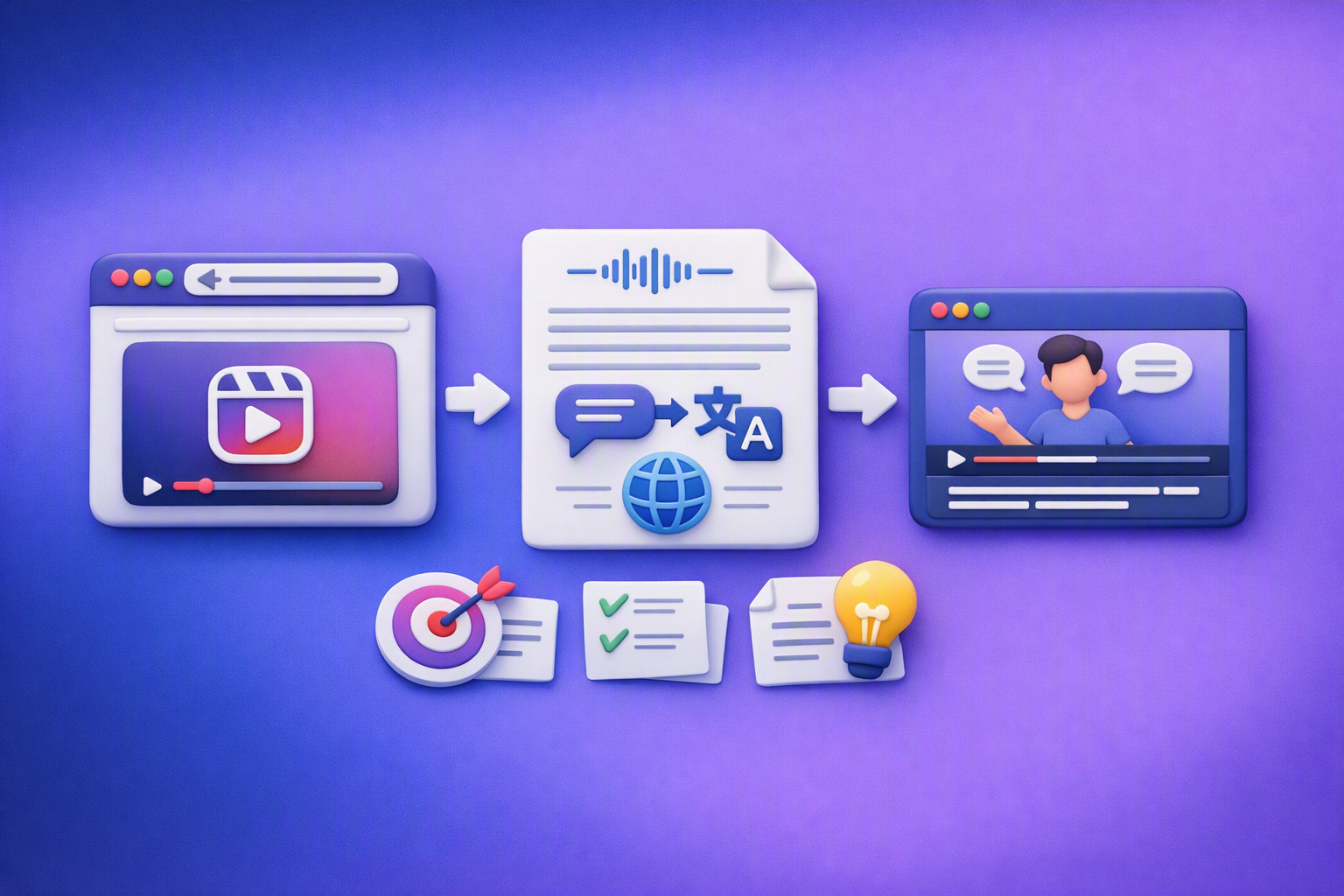
Aprende a traducir un Reel de Instagram con un flujo URL→transcripción→traducción→subtítulos, y a convertir esa traducción en un activo de investigación para hooks, CTAs, objeciones y clusters de contenido.
Reel Analyzer: Transcript‑First Instagram Reels Research (Hooks, CTAs, Objections) + Workflow Guide (VideoToTextAI)
Video To Text AI
A reel analyzer should turn any public Instagram Reel link into a searchable transcript library you can mine for hooks, CTAs, objections, and topic clusters—then repurpose into original drafts with a repeatable SOP.