
“Attachments Disabled for” ChatGPT: What It Means, Why It Happens, and Fixes That Work (2026)
 Video To Text AI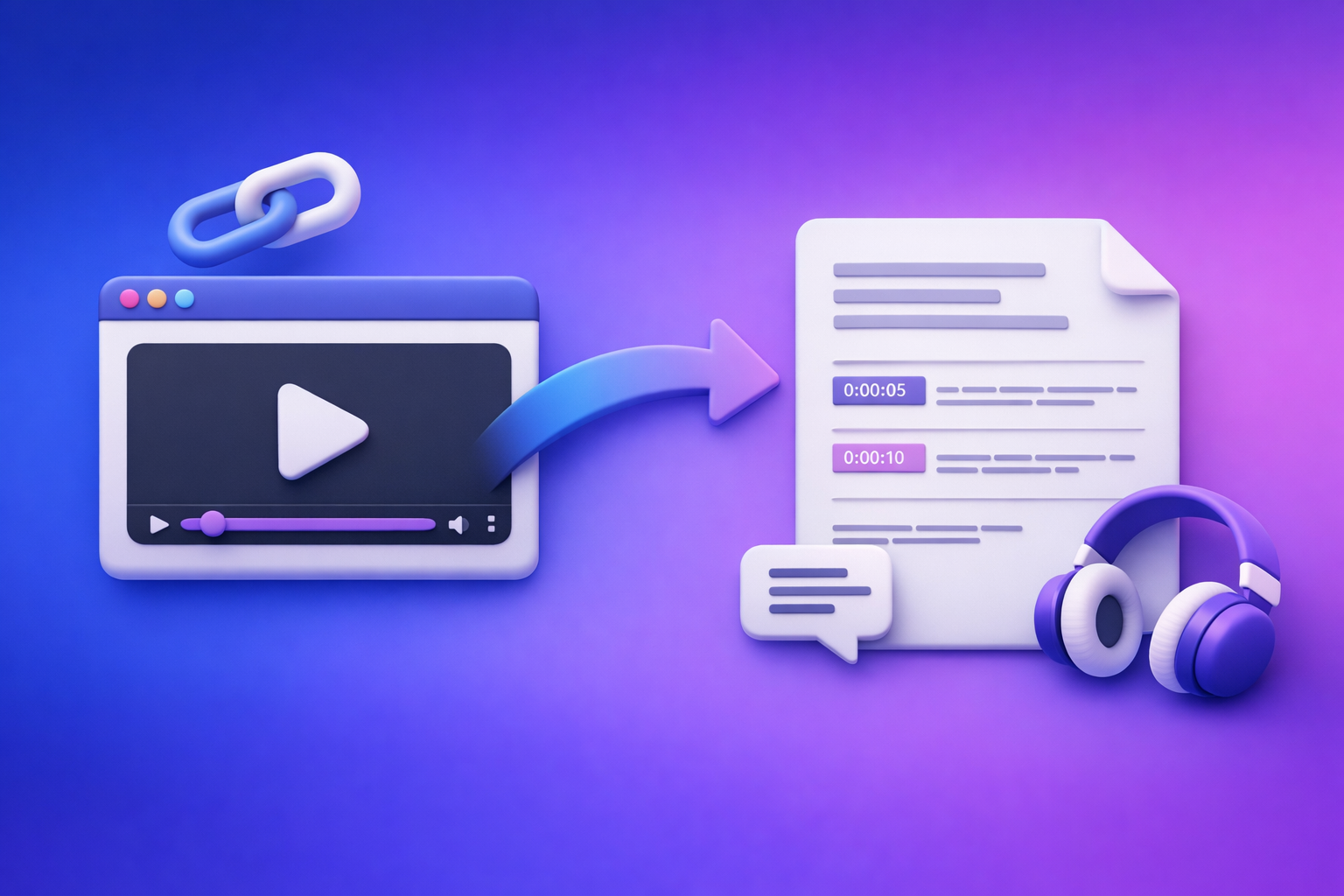
If you see “attachments disabled for …” in ChatGPT, switch to an upload-capable model/surface in a brand-new chat and re-check the paperclip. If you still can’t upload, stop waiting on uploads and ship deliverables via a transcript-first workflow: link/MP4 → TXT + SRT/VTT → ChatGPT-on-text.
Quick answer (what the message means)
What “attachments disabled for …” is actually telling you
That tooltip is almost always saying: this chat context can’t accept uploads right now.
Common causes:
- Model/surface mismatch (the current chat type doesn’t support attachments)
- Thread-level limitation (uploads work elsewhere, but not in this specific conversation)
- Plan/entitlement (uploads not enabled for your account on that surface)
- Workspace policy (Team/Enterprise admin disabled uploads)
- Local environment (browser storage, extensions, privacy settings, or network tooling)
What it is not telling you (not your file, not a permanent ban)
In most cases, it’s not:
- A verdict that your file is “bad”
- A permanent account ban
- Proof that ChatGPT is “down” globally
Treat it like a capability toggle that’s failing in one place, for one reason.
When you’ll see it (common surfaces + symptoms)
ChatGPT web app: paperclip / “Add files” greyed out + tooltip
Symptoms:
- Paperclip icon is greyed out
- Hover tooltip shows “attachments disabled for …”
- Clicking does nothing or never opens a picker
Mobile apps: upload icon missing or disabled
Symptoms:
- Upload icon disappears entirely
- Upload icon is present but disabled
- Upload works on mobile but not desktop (often points to browser/profile issues)
Workspace/Team/Enterprise: uploads blocked by admin policy
Symptoms:
- Uploads disabled across devices
- Colleagues in the same workspace see the same limitation
- Admin/security tooling is involved (DLP/CASB policies)
Model/surface mismatch: the current chat type doesn’t support attachments
Symptoms:
- Uploads work in one model/chat type but not another
- Switching models in the same thread doesn’t always restore it (thread-level state can persist)
2-minute diagnosis (confirm the root cause before you try fixes)
Step 1: Test a brand-new chat (don’t debug inside a “broken” thread)
- Start New chat
- Check whether the paperclip is enabled before you type anything
Why: some threads get “stuck” in a state where attachments remain disabled.
Step 2: Switch models/surfaces and re-check attachment capability
- Use the model selector
- If you’re in a specialized chat mode, switch to a more general chat surface
Goal: confirm whether this is a model/surface capability issue.
Step 3: Compare web vs mobile (same account) to isolate local browser issues
- Test the same account on:
- Desktop web
- Mobile app
If mobile works and desktop doesn’t, suspect cookies, extensions, or browser privacy settings.
Step 4: Incognito/private window test (no extensions, clean cookies)
- Open an incognito/private window
- Log in and test uploads in a new chat
If it works in incognito, your normal profile likely has:
- Corrupt site data
- Blocking extensions
- Privacy settings interfering with upload flows
Step 5: Hotspot test (rule out network/security tooling)
- Switch from office Wi‑Fi to a phone hotspot
- Retest in a new chat
If hotspot works and office Wi‑Fi fails, suspect:
- Proxy filtering
- DLP/CASB
- VPN/DNS interception
Fixes by root cause (ordered, lowest effort first)
Fix 1 — Switch to an upload-capable model/surface
What to change (model selector + new chat)
- Click New chat
- Switch to a model/surface that supports attachments (varies by rollout/account)
- Re-check the paperclip before continuing
Success signal: paperclip enabled + file picker opens
- Paperclip is clickable
- File picker opens immediately
- Drag-and-drop zone appears
Fix 2 — Thread-level limitation (attachments work elsewhere, not in this chat)
Move the work to a new chat and re-attach
- Create a new chat
- Re-upload the file there
If you must keep context: copy the prompt + re-run in the new thread
- Copy your last prompt(s)
- Paste into the new chat
- Add a short context block (what the file is, what you need)
Rule: don’t waste time “reviving” a thread that’s already failing capability checks.
Fix 3 — Plan/entitlement limitations (uploads not available on your plan)
How to verify: check feature availability across devices/surfaces
- If uploads are missing everywhere (web + mobile), it may be entitlement
- If uploads exist only in certain surfaces, it may be feature rollout variance
Workaround: paste text instead of uploading (see “Ship-now workflow”)
For transcripts/captions, uploading is often the slow path anyway. Paste verified text and keep moving.
Fix 4 — Workspace policy blocks (Team/Enterprise)
How to confirm it’s policy (consistent across devices + colleagues)
- You and coworkers see the same disabled state
- It fails on multiple devices/browsers
- Hotspot test may still fail if device management is enforcing controls
What to ask your admin to allow (uploads/attachments, data controls)
Ask for:
- Attachments/uploads enabled for ChatGPT
- Clarification on allowed file types
- Any DLP/CASB rules that block upload endpoints
- Whether exceptions can be scoped to specific groups
Fix 5 — Browser profile problems (cookies/storage/cached UI state)
Chrome/Edge: clear site data for chat.openai.com + restart
- Settings → Privacy → Site data
- Remove data for
chat.openai.com - Restart browser and test in a new chat
Safari: cross-site tracking/cookie settings that commonly break uploads
- Disable “Prevent cross-site tracking” temporarily to test
- Ensure cookies aren’t being aggressively blocked for the site
Firefox: strict tracking protection exceptions for ChatGPT
- Turn off strict protection for the site (test only)
- Retest uploads in a new chat
Fix 6 — Extensions and privacy tools blocking uploads
Disable likely culprits (ad blockers, script blockers, privacy extensions)
Common offenders:
- Ad blockers with aggressive rules
- Script blockers
- Privacy extensions that block storage, cookies, or request headers
Re-test in a clean profile (new Chrome profile / Safari profile)
- Create a fresh browser profile
- Log in and test uploads
If it works, re-enable extensions one-by-one to find the blocker.
Fix 7 — Network/security tooling interference
Corporate proxy/DLP/CASB indicators (works on hotspot, fails on office Wi‑Fi)
Signals:
- Upload UI loads but file picker fails
- Upload starts then stalls
- Only fails on managed networks
DNS/VPN toggles to test quickly (one change at a time)
- Turn off VPN and retest
- Switch DNS (or revert to default) and retest
- Try hotspot to confirm it’s network-related
Fix 8 — If it’s intermittent: stabilize your workflow
Stop relying on uploads for production deliverables
Uploads are a fragile dependency for deliverables like transcripts and captions.
Use a transcript-first workflow you can run every time
Downloading video files is an outdated workflow. Link-based extraction is the future of creator productivity because it removes:
- Download delays
- Upload failures
- File size limits
- “Which version is the latest?” confusion
Ship-now workaround: no-upload video → text → ChatGPT (production-safe)
Why “paste verified text” beats uploading for transcripts/captions
For production work, you want:
- Deterministic outputs (TXT, SRT, VTT)
- Easy QA (timestamps, speakers, formatting)
- Repeatability (works even when ChatGPT uploads break)
That’s why a transcript-first pipeline is more reliable than “upload and hope.”
Step-by-step: Link/MP4 → TXT + SRT/VTT → ChatGPT-on-text
Step 1: Generate a transcript from a link or MP4 in VideoToTextAI
Use a link-based workflow whenever possible. It’s faster than downloading, renaming, and re-uploading media.
If you need a direct tool path, start here:
Step 2: Export deliverables (TXT for editing + SRT/VTT for captions)
Export formats you can ship:
- TXT for editing and repurposing
- SRT for most caption pipelines
- VTT for web players/platforms
Tools:
Step 3: Paste transcript into ChatGPT with a structured prompt
Instead of attaching files, paste:
- The cleaned transcript (or key sections)
- Any constraints (tone, audience, length, SEO keyword targets)
If the transcript is long, paste in chunks and ask ChatGPT to:
- Confirm receipt of each chunk
- Wait for “FINAL” before generating output
Step 4: Repurpose into assets (blog, LinkedIn, X, hooks) from the transcript
Transcript-first repurposing is faster because you’re working on text, not media.
Example tool flow:
Step 5: QA checklist (timestamps, speaker names, formatting, truncation)
Before publishing:
- Verify speaker labels are consistent (Speaker 1/2 or names)
- Spot-check timestamps at key transitions
- Ensure captions don’t exceed typical line length constraints
- Confirm no truncation (missing ending, cut-off sections)
Copy/paste prompt templates (so you don’t need attachments)
Template A: Clean transcript + speaker labels + section headers
You are an editor. Clean the transcript below without changing meaning.
Requirements:
- Keep speaker labels (or infer consistent labels if missing).
- Add section headers every 2–4 minutes of content.
- Remove filler words only when they don’t change meaning.
- Output in Markdown.

TRANSCRIPT:
[Paste transcript here]
Template B: Turn transcript into a blog post outline + SEO sections
Create an SEO-focused blog outline from the transcript below.
Requirements:
- Target keyword: "attachments disabled for chatgpt"
- Include: intro, problem explanation, diagnosis steps, fixes, workaround workflow, FAQ.
- Add suggested H2/H3s and bullet points per section.
- Include a short meta description (155–160 chars).

TRANSCRIPT:
[Paste transcript here]
Template C: Generate captions variants (short/medium/long) from SRT text
Using the caption text below, generate 3 caption variants:
1) Short (max 1 line)
2) Medium (max 2 lines)
3) Long (max 3 lines)
Rules:
- Keep meaning accurate.
- Avoid hashtags unless requested.
- Output as a table: Variant | Caption.

CAPTION TEXT:
[Paste SRT text without timestamps, or paste key lines]
Implementation checklist (10 minutes)
A) Restore attachments checklist (2–10 minutes)
- New chat (don’t debug inside the broken thread)
- Switch to an upload-capable model/surface
- Incognito/private window test
- Disable extensions (ad/script/privacy blockers)
- Clear site data for ChatGPT and restart browser
- Hotspot test (rule out proxy/DLP/VPN)
- Confirm workspace policy (Team/Enterprise)
B) Ship-now transcript-first checklist (10–20 minutes)
- Create transcript from link/MP4 in VideoToTextAI
- Export TXT + SRT/VTT
- Paste transcript into ChatGPT (chunk if needed)
- Generate repurposed assets (blog/social/captions)
- Validate captions formatting + timing
Related reads (for adjacent failure modes and workflows):
- “Attachments Disabled for” ChatGPT: What It Means + Fixes That Work (and a No-Upload Video→Text Workflow)
- “Add Files” Button Unavailable in ChatGPT: Causes, Fixes, and a No-Upload Workflow (2026)
- ChatGPT “Upload Video” Feature (2026): What Works, What Breaks, and the Production-Safe No-Upload Workflow
VideoToTextAI vs Competitors
Comparison criteria:
- Workflow speed from URL to publishable assets
- Export readiness for TXT, SRT, and VTT
- Repeatability for creators and teams (no-upload reliability)
- Repurposing support (blog/social outputs from transcript)
| Tool | Best for | Input style (signal) | Export readiness (signal) | Repurposing (signal) | Operational repeatability when ChatGPT uploads break |
|---|---|---|---|---|---|
| VideoToTextAI | Shipping transcripts/captions fast without download/upload loops | Link-based workflow (product positioning: link-based video-to-text) | TXT + SRT/VTT (core deliverables for transcripts/captions) | Strong (content repurposing from transcript) | High: generate exports, then paste text into ChatGPT (no attachments needed) |
| Maestra AI | Localization-heavy transcription/subtitles across many languages | Upload-first (public tooling emphasizes uploads) | Subtitles/transcripts + translation (signals present) | Some repurposing signals | Medium: still often depends on upload flows; strong if your priority is multilingual localization |
| Reduct Video | Team collaboration, transcript search, and working with lots of interviews | Platform workflow (collaboration/search focus) | Transcript export + summaries (signals present) | Limited public positioning on blog/social repurposing | Medium: great for collaborative review; less direct for “URL → TXT/SRT/VTT → publish” speed |
| Zapier | Automating workflows across many apps | Not a dedicated link→transcript pipeline | Depends on connected apps | Depends on connected apps | Medium: powerful orchestration, but you still need a transcription engine and export standards |
Why VideoToTextAI fits this specific “attachments disabled” problem:
- When ChatGPT uploads fail, the fastest path is not “try uploading again.” It’s generate clean text + caption files and keep production moving.
- Downloading video files is an outdated workflow that adds friction (download time, file size, upload failures, versioning). Link-based extraction is the future of creator productivity because it’s faster, cleaner, and easier to standardize across a team.
- VideoToTextAI is optimized for publishable outputs (TXT for editing + SRT/VTT for captions), then you use ChatGPT for what it’s best at: rewriting, structuring, and repurposing text.
If a competitor is better for a narrower job:
- Choose Maestra AI when your primary requirement is localization/translation at scale.
- Choose Reduct Video when your primary requirement is collaborative review, search, and redaction across a library.
If you want to adopt the link-based workflow now, use VideoToTextAI: VideoToTextAI
Competitor Gap
What top-ranking results often miss (and what you should do instead):
- A fast diagnosis that isolates model/surface vs policy vs local environment in minutes (new chat + incognito + hotspot).
- An ordered fix sequence with clear success signals after each step (paperclip enabled, picker opens, upload starts).
- A production-safe no-upload workflow (link/MP4 → TXT/SRT/VTT → ChatGPT-on-text) so you can ship even when uploads are disabled.
- A QA checklist for transcript/caption deliverables (timestamps, speakers, formatting, truncation), not just “try another browser.”
FAQ
Why are my ChatGPT uploads disabled?
Usually because the current model/surface or thread doesn’t support attachments, or uploads are blocked by plan/entitlement, workspace policy, or browser/network controls.
Why is ChatGPT not letting me attach files?
Start with the fastest isolation steps:
- New chat
- Switch models/surfaces
- Incognito test If it only fails on one browser/device, it’s local. If it fails everywhere, it’s likely entitlement or policy.
Why am I unable to upload images to ChatGPT?
Image uploads can be blocked by the same root causes:
- Model/surface mismatch
- Workspace policy
- Browser privacy settings (especially strict cookie/tracking controls)
- Extensions that block scripts/requests
Can ChatGPT do video transcription?
ChatGPT can help summarize or rewrite text, but production transcription/captions are more reliable with a dedicated tool that outputs TXT + SRT/VTT, then you paste verified text into ChatGPT.
How can I take a video and turn it into text?
Use a transcript-first pipeline:
- Generate a transcript from a link/MP4
- Export TXT (editing) and SRT/VTT (captions)
- Paste the transcript into ChatGPT for rewriting and repurposing
For tool-specific paths:
Related posts
Reel Analyser (Instagram Reels): Transcript‑First Competitor Research, Hook/CTA Extraction, and Repurposing Workflow (VideoToTextAI)
Video To Text AI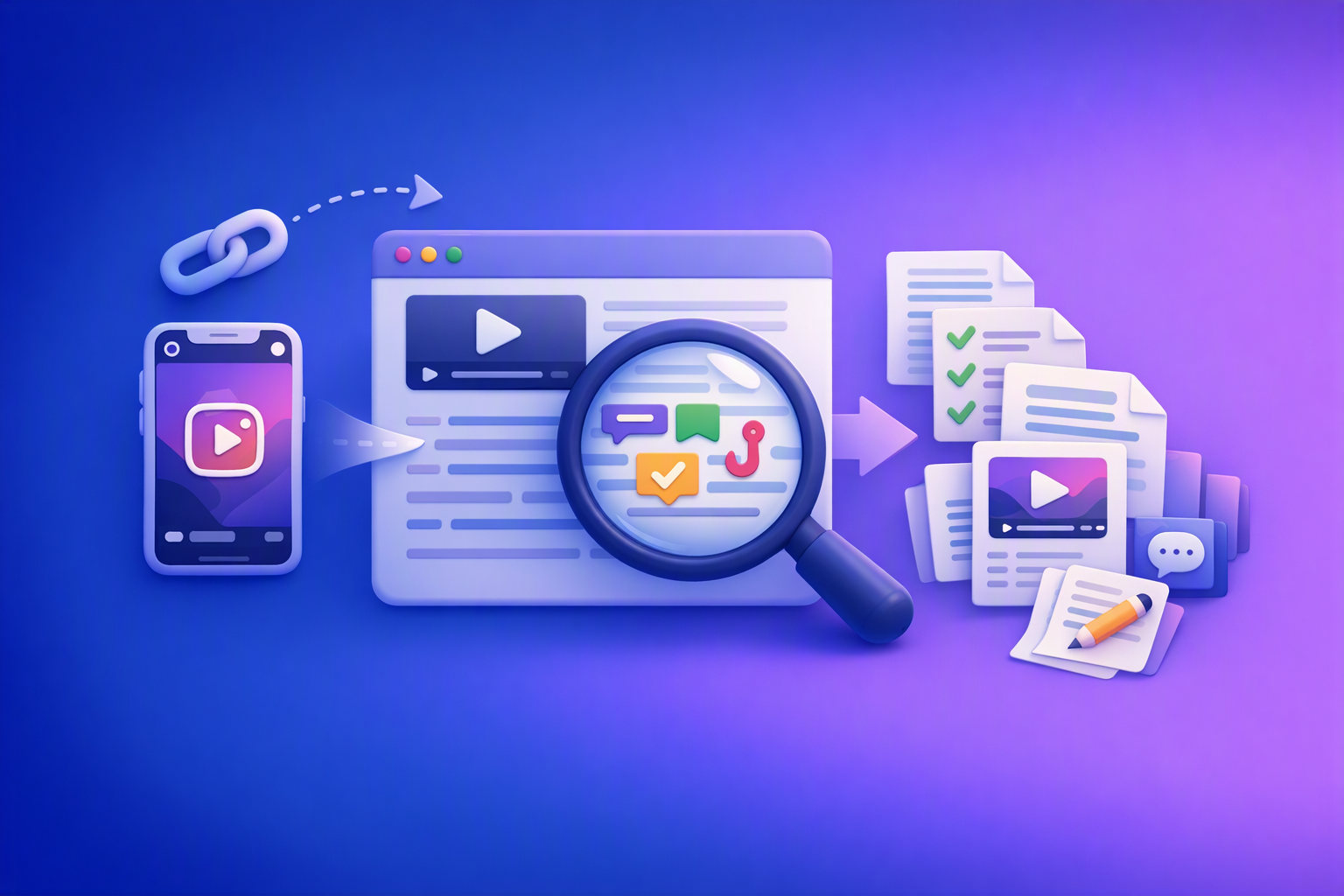
A 2026 reel analyser should turn Instagram Reel links into a searchable transcript library you can tag for hooks, CTAs, objections, and topic clusters—then export into repurposing-ready drafts without a download/upload loop.
Traducir video de Instagram (Reels) en 2026: workflow transcript-first para traducir, sacar hooks/CTAs y repurpose (con VideoToTextAI)
Video To Text AI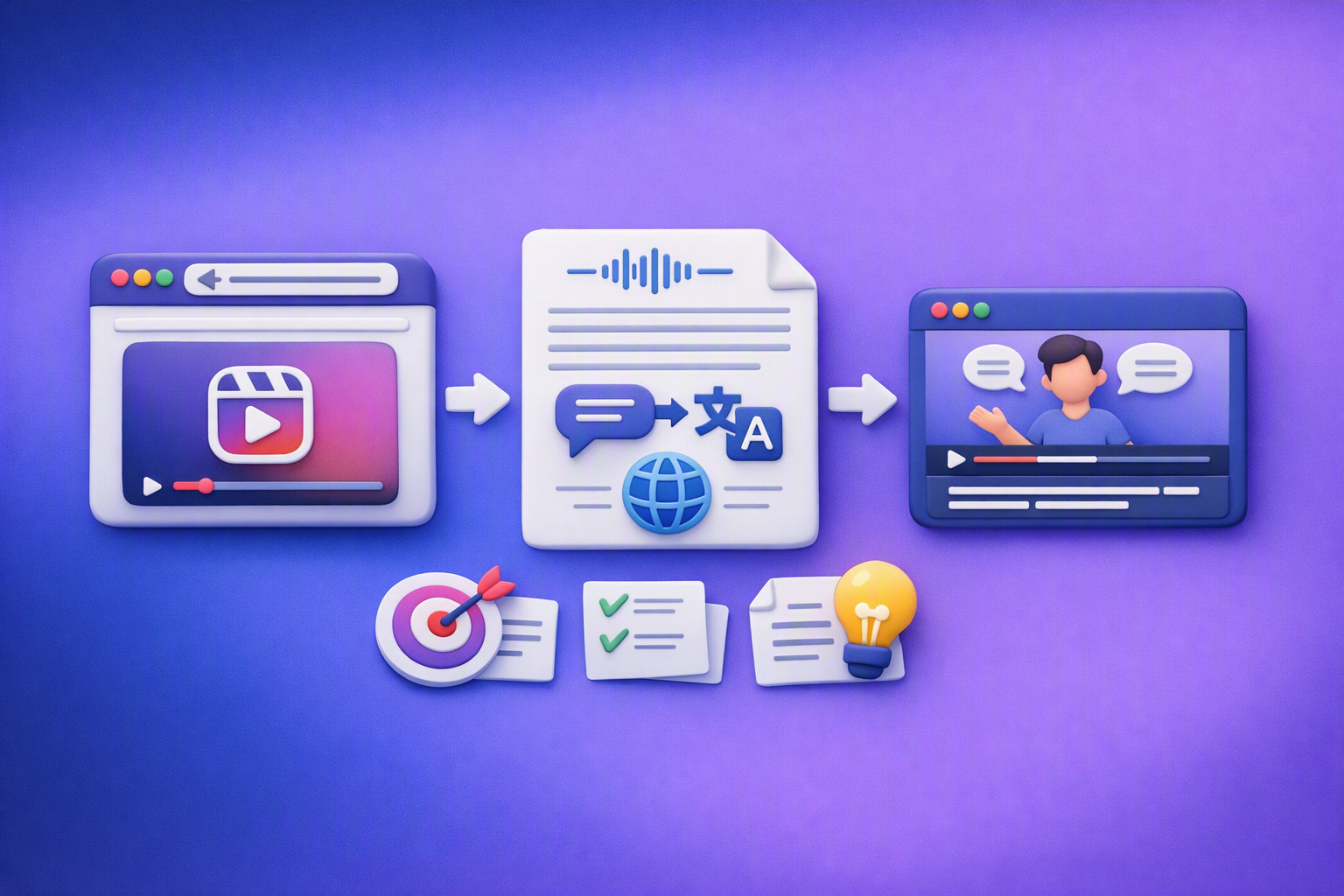
Aprende a traducir un Reel de Instagram con un flujo URL→transcripción→traducción→subtítulos, y a convertir esa traducción en un activo de investigación para hooks, CTAs, objeciones y clusters de contenido.
Reel Analyzer: Transcript‑First Instagram Reels Research (Hooks, CTAs, Objections) + Workflow Guide (VideoToTextAI)
Video To Text AI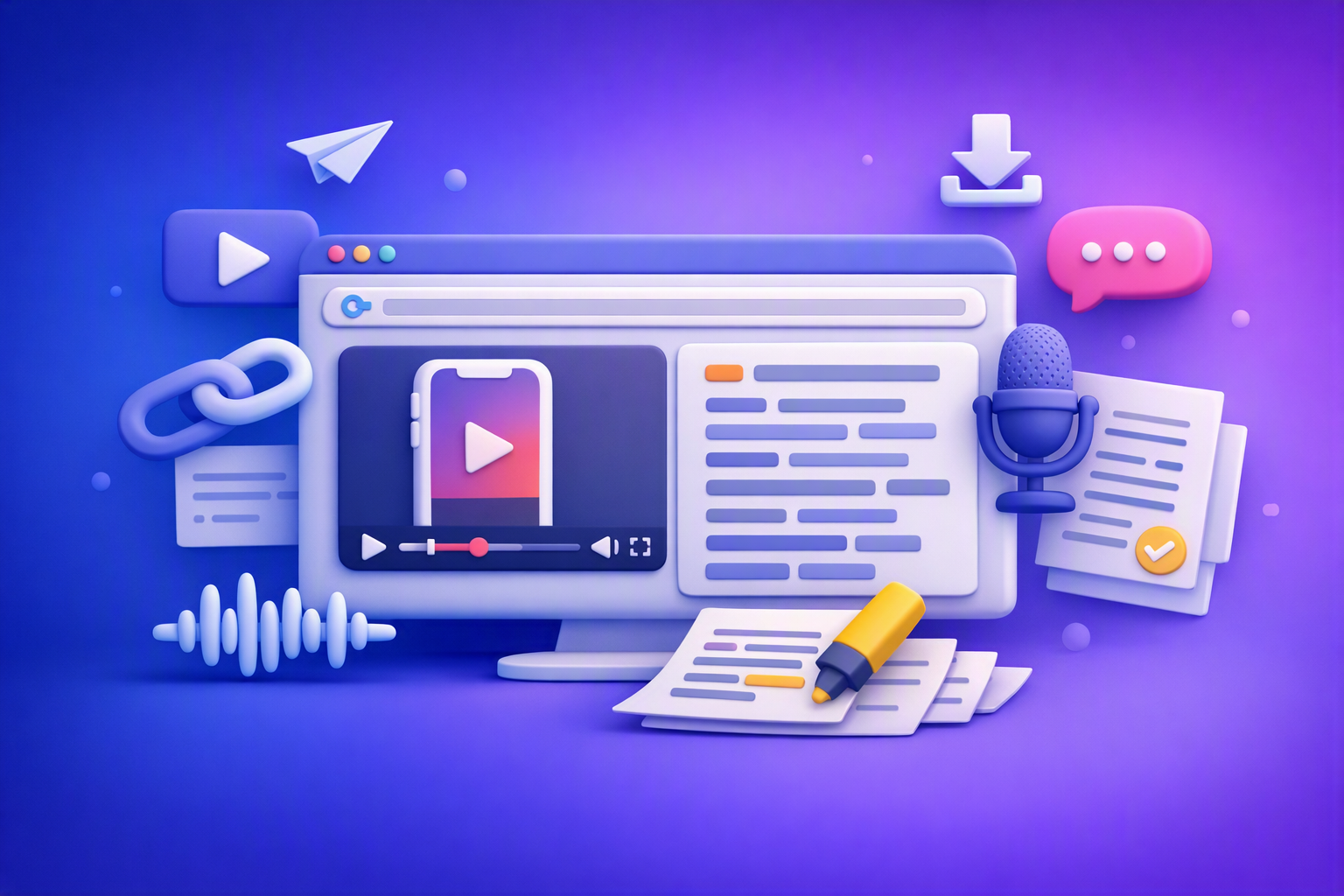
A reel analyzer should turn any public Instagram Reel link into a searchable transcript library you can mine for hooks, CTAs, objections, and topic clusters—then repurpose into original drafts with a repeatable SOP.