
“Attachments Disabled for” ChatGPT: What It Means + Fixes That Work (and a No-Upload Video→Text Workflow)
 Video To Text AI
If you see “attachments disabled for …” in ChatGPT, the fastest fix is to start a new chat and switch to an upload-capable model/surface. If uploads still don’t come back within ~10 minutes, stop troubleshooting and ship via a transcript-first workflow (video link → transcript/captions → paste text into ChatGPT).
Downloading and re-uploading video files is an outdated workflow. Link-based extraction is the future of creator productivity because it removes fragile upload UI states and permissions friction.
What “Attachments Disabled for …” Actually Means
It’s a context restriction (surface/model/thread/policy), not “your file is bad”
“Attachments disabled for …” usually means uploads are turned off in the current context:
- The surface (web vs desktop vs mobile)
- The model you selected
- The thread state (one chat can “lock” capabilities)
- A workspace/admin policy (Team/Enterprise)
- A local environment issue (browser/network)
Common UI states you’ll see (and what each implies)
-
Banner message at top of chat
Often indicates a thread/model/surface restriction or policy. -
Paperclip missing entirely
Usually means this surface/model doesn’t support uploads in this chat. -
Upload button greyed out / disabled tooltip
Often points to policy or capability mismatch (model/workspace/network).
What it usually does not mean
- Not an account ban or “shadowban”
- Not permanent
It’s often thread-specific or model/surface-specific.
2-Minute Triage (Before You Change Anything)
Step 1: Confirm where you are (surface)
Check:
- Web app vs desktop app vs mobile app
- Personal account vs Team/Enterprise workspace
Why this matters: uploads can be enabled in one surface and disabled in another.
Step 2: Start a brand-new chat (thread isolation test)
Old threads can retain a “locked” capability state.
Do this:
- Open New chat
- Don’t reuse the same conversation
- Re-check if the paperclip appears
Step 3: Switch to an upload-capable model (model isolation test)
In the model picker, look for file/attachment capability indicators (varies by UI).
Confirm by:
- Selecting a different model
- Verifying the upload control appears in the composer
Step 4: Run one clean-environment test
Do one quick isolation pass:
- Incognito/private window (no extensions, fresh storage)
- Alternate network (mobile hotspot) to rule out office/VPN filtering
If uploads work in incognito or on hotspot, you’ve already narrowed the cause.
Root Causes (Ranked) + How to Confirm Each
1) Model/surface mismatch (uploads not supported here)
Most common.
Confirm: uploads work in a different model or a new chat.
Fix direction: new chat + pick an upload-capable model on a supported surface.
2) Workspace/admin policy (Team/Enterprise restrictions)
Admins can restrict uploads via data controls or DLP.
Confirm:
- Uploads work on your personal account
- Uploads fail in your workspace
Ask your admin to check:
- Whether file uploads are enabled for ChatGPT
- Data controls / DLP rules blocking uploads
- Proxy/security logs for blocked endpoints
3) Browser profile issues (extensions, cookies, corrupted storage)
Extensions can break upload UI or block required scripts.
Confirm: uploads work in incognito but not your normal profile.
High-risk extensions:
- Ad blockers
- Privacy/script blockers
- Antivirus “web shields”
- Corporate browser agents
4) Network/security filtering (VPN/proxy/firewall/DLP)
Office networks often block upload endpoints or scanning triggers.
Confirm: uploads work on mobile hotspot but not office Wi‑Fi/VPN.
5) Temporary service degradation
Sometimes the UI fails intermittently across devices.
Confirm:
- Widespread reports from other users
- Intermittent failures across multiple devices/surfaces
Step-by-Step Fix Sequence (Fastest-to-Verify First)
1) New chat + reselect an upload-capable model
Exact action:
- Open New chat
- Select a model that supports attachments
- Verify the paperclip/upload control appears
If this works, the issue was likely thread/model state.
2) Try the official mobile app (rules out browser-only issues)
If mobile works:
- Focus on desktop browser profile and network policy
If mobile also fails:
- It’s more likely workspace policy or service degradation
3) Incognito/private window test
If incognito works:
- Your normal profile is the culprit (extensions/storage)
4) Disable extensions that commonly break uploads
Do this quickly:
- Turn off all extensions
- Re-test uploads
- Re-enable one-by-one to find the offender
5) Clear site data for ChatGPT and re-authenticate
Clear cookies + local storage for the ChatGPT domain.
Then:
- Sign in again
- Start a new chat
- Re-check upload UI
6) Switch networks and remove VPN/proxy
Run two tests:
- Hotspot test
- Direct connection (no VPN/proxy)
If either restores uploads, you’ve confirmed network filtering.
7) Workspace path: copy/paste message to your admin
Send this:
We’re seeing “attachments disabled for …” in ChatGPT. Please confirm file uploads are enabled for our workspace, and review DLP/proxy/firewall logs for blocked upload endpoints. If uploads are intentionally restricted, please share the approved alternative workflow for handling transcripts/captions.
8) Stop troubleshooting after 10 minutes and use the fallback workflow
Decision rule:
- If uploads aren’t restored in ~10 minutes, switch to transcript-first and keep shipping.
Edge Cases You’ll See in Real Use (and What to Do)
Uploads missing only in one thread
Do:
- Start a new chat
- Re-run model selection
Thread-level state issues are common.
Uploads work on mobile but not desktop
Do:
- Incognito test
- Extension audit
- Network test (VPN/off, hotspot)
Uploads work on personal but not workspace
Do:
- Treat as admin policy/DLP
- Use the no-upload workflow meanwhile
“You need X model to continue because there’s an attachment”
Do:
- Move the work to a new chat with the required model, or
- Remove attachment dependency by pasting text (transcript-first)
Ship-Now Workflow (No Attachments Needed): Video/Audio Link → Transcript/Captions → ChatGPT-on-Text
Why transcript-first is more reliable than upload-first
Transcript-first wins operationally because it:
- Removes fragile upload UI state
- Produces export-ready assets (TXT/SRT/VTT) you can reuse anywhere
- Works even when uploads are blocked by policy or network controls
And it aligns with the reality that downloading and re-uploading video files is outdated. Link-based extraction is the future of creator productivity.
Implementation: VideoToTextAI link-based workflow
Step 1: Choose input type
Use:
- A public URL (YouTube/Instagram/TikTok), or
- An MP4 file when you must work from local media
If you want the fastest path from “video exists” to “text you can ship,” use a link-based workflow with VideoToTextAI: VideoToTextAI
Step 2: Generate export-ready outputs
Create:
- Transcript (TXT) for analysis, summarization, and repurposing
- Captions (SRT/VTT) for publishing workflows
Shortcuts (internal tools):
Step 3: Paste transcript into ChatGPT (no attachments required)
For long transcripts, use chunking rules:
- Split by timestamps (e.g., 00:00–05:00, 05:00–10:00)
- Or split by sections (intro, segment 1, Q&A, outro)
- Keep each paste to a manageable size, then ask ChatGPT to wait until you send “FINAL” before writing outputs
Step 4: Repurpose into deliverables
Once the transcript is in ChatGPT, generate:
- Blog outline + draft
- Social posts (LinkedIn/X)
- Titles, hooks, summaries, action items
- Captions QA notes (speaker labels, timing, brand terms)
Recommended shortcut:
Copy/Paste Prompt Templates (Designed for Pasted Transcript Text)
Template 1: Clean summary + key takeaways + action items
Prompt:
You are an editor. Using the transcript below, produce:
- a 6–10 sentence summary,
- 7–12 key takeaways (bullets),
- action items grouped by role (Creator, Marketer, Ops).
Keep claims faithful to the transcript. If something is unclear, list questions.
Transcript:
[PASTE TRANSCRIPT]
Template 2: Turn transcript into SEO blog outline (H2/H3 + FAQs)
Prompt:
Turn this transcript into an SEO blog outline targeting the keyword: “attachments disabled for chatgpt”.
Requirements: H2/H3 structure, suggested title tag, meta description, and 5–8 FAQs.
Include a troubleshooting section with ordered steps and a fallback workflow.
Transcript:
[PASTE TRANSCRIPT]
Template 3: Create captions QA checklist (timing, speaker labels, profanity/brand terms)
Prompt:
Create a captions QA checklist for this transcript.
Include: timing rules, speaker label rules, punctuation/line length, profanity handling, brand term consistency, and a final review pass.
Transcript:
[PASTE TRANSCRIPT]
Checklist: Fix or Fallback (Print This)
Fix checklist (ordered)
- New chat + upload-capable model
- Mobile app test
- Incognito test
- Disable extensions
- Clear site data
- Hotspot test / remove VPN
- Workspace admin request
Helpful related reads (internal):
- “Attachments Disabled for” ChatGPT: What It Means, Why It Happens, and the Fastest Fix (2026)
- “Max 0 Uploads at a Time” in ChatGPT: What It Means + Fixes That Work (and a No-Upload Video→Text Workflow)
- “Add Files Is Unavailable” in ChatGPT: Fixes That Work + a No-Upload Video→Text Workflow (VideoToTextAI)
- ChatGPT “Upload Video” Feature (2026): What Works, What Breaks, and the Production-Safe No-Upload Workflow
Fallback checklist (ship today)
- Generate TXT + SRT/VTT
- Paste transcript into ChatGPT in sections
- Produce final outputs (blog/social/captions) without uploads
VideoToTextAI vs Competitors
When ChatGPT attachments are blocked, the winning workflow is the one that doesn’t depend on uploads. That’s why link-based extraction + export-ready outputs matters more than “can I upload a file today.”
Downloading and re-uploading video files is an outdated workflow. Link-based extraction is the future of creator productivity, especially for repeatable creator/team operations.
| Tool | Link-based input (public URL) | Upload-first workflow | Export-ready outputs (TXT/SRT/VTT) | Repurposing workflow focus | Best fit when… |
|---|---|---|---|---|---|
| VideoToTextAI | Yes (positioned for link-based workflows) | Optional (MP4 supported) | Yes (transcripts + captions for reuse) | Yes (transcript → blog/social workflows) | You need speed + repeatability and want to keep shipping even when ChatGPT uploads break |
| Canva (canva.com) | No strong public signal | Yes | Transcript supported; subtitle export readiness not strongly signaled in research | Not strongly positioned for blog/social repurposing | You’re already designing in Canva and want transcription inside a design suite |
| Choppity (choppity.com) | No strong public signal | Yes | Transcript + subtitles/captions supported | Not strongly positioned for blog/social repurposing | You want an AI editing workflow that includes captions as part of clip production |
| Reduct Video (reduct.video) | No strong public signal | Not clearly link-based in research | Transcript export supported | Summaries mentioned; repurposing not strongly positioned | You need collaborative, transcript-centric review/editing for teams |
Why VideoToTextAI wins when attachments are blocked (based on the research signals and this use case):
- Workflow speed: URL → transcript/captions avoids download/upload loops that fail when attachments are disabled.
- Operational repeatability: deterministic outputs (TXT/SRT/VTT) let teams standardize a “transcript-first” pipeline.
- Repurposing: positioned around turning transcripts into publishable assets, not transcription alone.
Where competitors can be better (fair call):
- Canva can be better if your primary job is design + captions inside one visual suite.
- Choppity can be better if your primary job is AI clip editing with captions as part of the edit pipeline.
- Reduct can be better for collaborative transcript-based review and organizing lots of interviews.
Competitor Gap
Most pages about “attachments disabled for chatgpt” miss the practical parts that actually unblock work:
- A timed, ordered diagnosis (2-minute triage + 10-minute stop rule)
- Clear isolation tests (new chat/model, incognito, hotspot) to pinpoint the real cause
- A production-safe no-upload workflow that still delivers publishable assets (TXT/SRT/VTT)
- Repurposing steps (transcript → blog/social) instead of transcription-only positioning
FAQ
Why are my ChatGPT uploads disabled?
Because uploads are disabled in your current surface/model/thread, or blocked by workspace policy, browser extensions/site data, or network security. Confirm quickly with a new chat + model switch + incognito/hotspot tests.
Why are my ChatGPT attachments greyed out?
A greyed-out button usually indicates a capability mismatch (model/surface) or a policy/network restriction. If it works on hotspot or personal account, it’s likely network/workspace policy.
Why can’t I add files to ChatGPT Plus?
Plus doesn’t guarantee uploads in every context. Upload availability can still vary by model, surface, thread state, and workspace/network controls.
Where is the upload button in ChatGPT?
When enabled, it appears near the message box (often a paperclip). If it’s missing, start a new chat, switch models, and run incognito/hotspot isolation tests.
Related posts
Reel Analyser (Instagram Reels): Transcript‑First Competitor Research, Hook/CTA Extraction, and Repurposing Workflow (VideoToTextAI)
Video To Text AI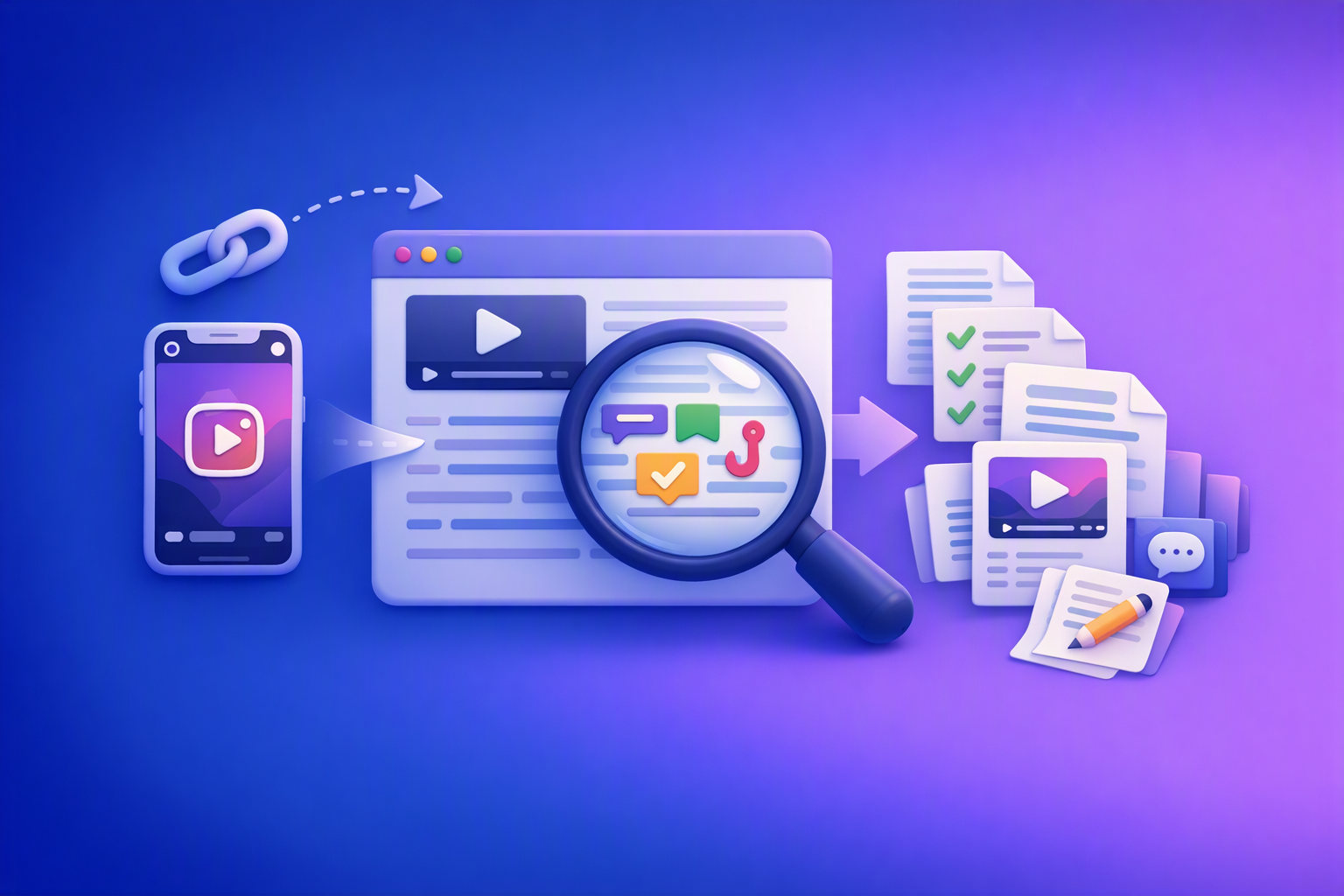
A 2026 reel analyser should turn Instagram Reel links into a searchable transcript library you can tag for hooks, CTAs, objections, and topic clusters—then export into repurposing-ready drafts without a download/upload loop.
Traducir video de Instagram (Reels) en 2026: workflow transcript-first para traducir, sacar hooks/CTAs y repurpose (con VideoToTextAI)
Video To Text AI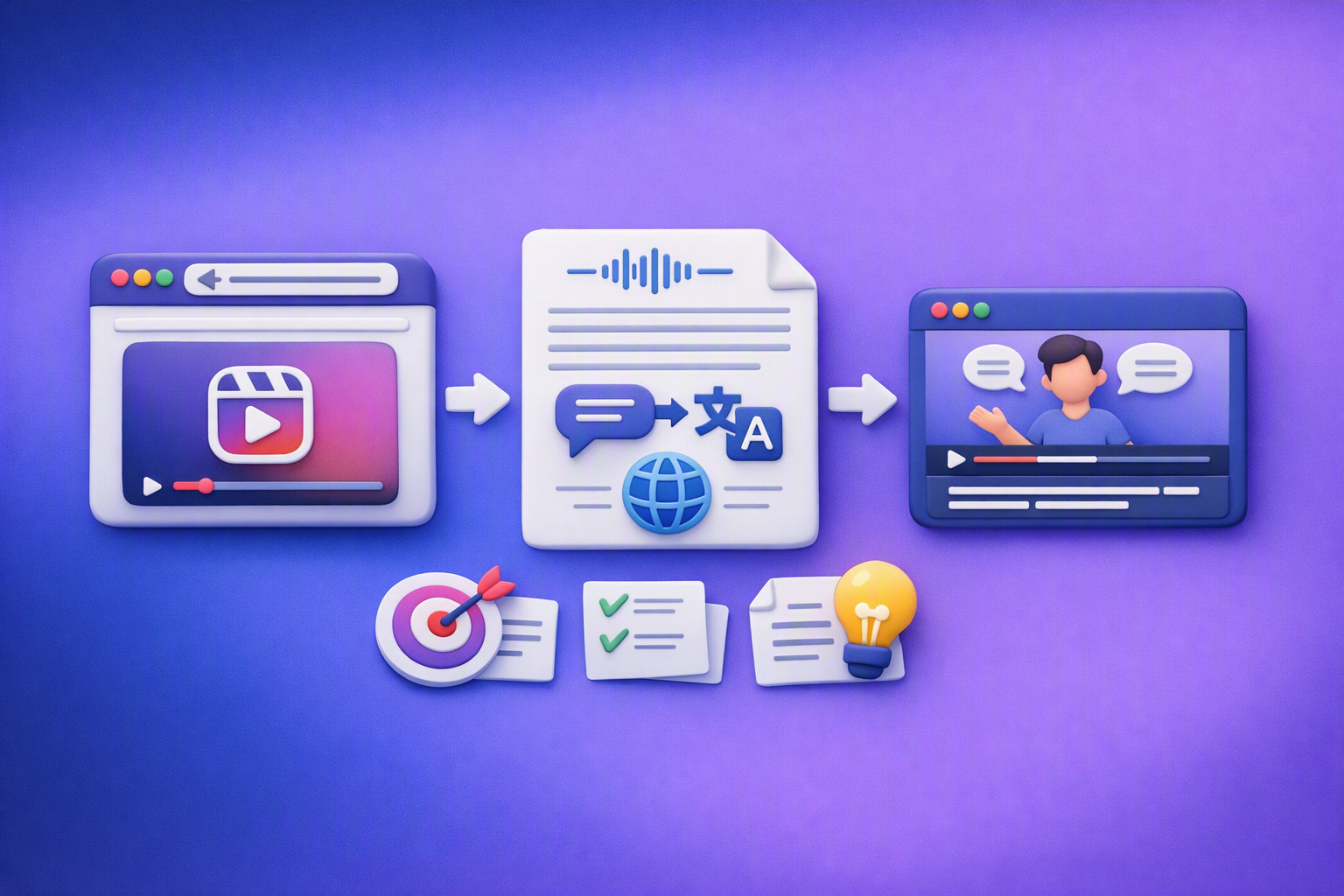
Aprende a traducir un Reel de Instagram con un flujo URL→transcripción→traducción→subtítulos, y a convertir esa traducción en un activo de investigación para hooks, CTAs, objeciones y clusters de contenido.
Reel Analyzer: Transcript‑First Instagram Reels Research (Hooks, CTAs, Objections) + Workflow Guide (VideoToTextAI)
Video To Text AI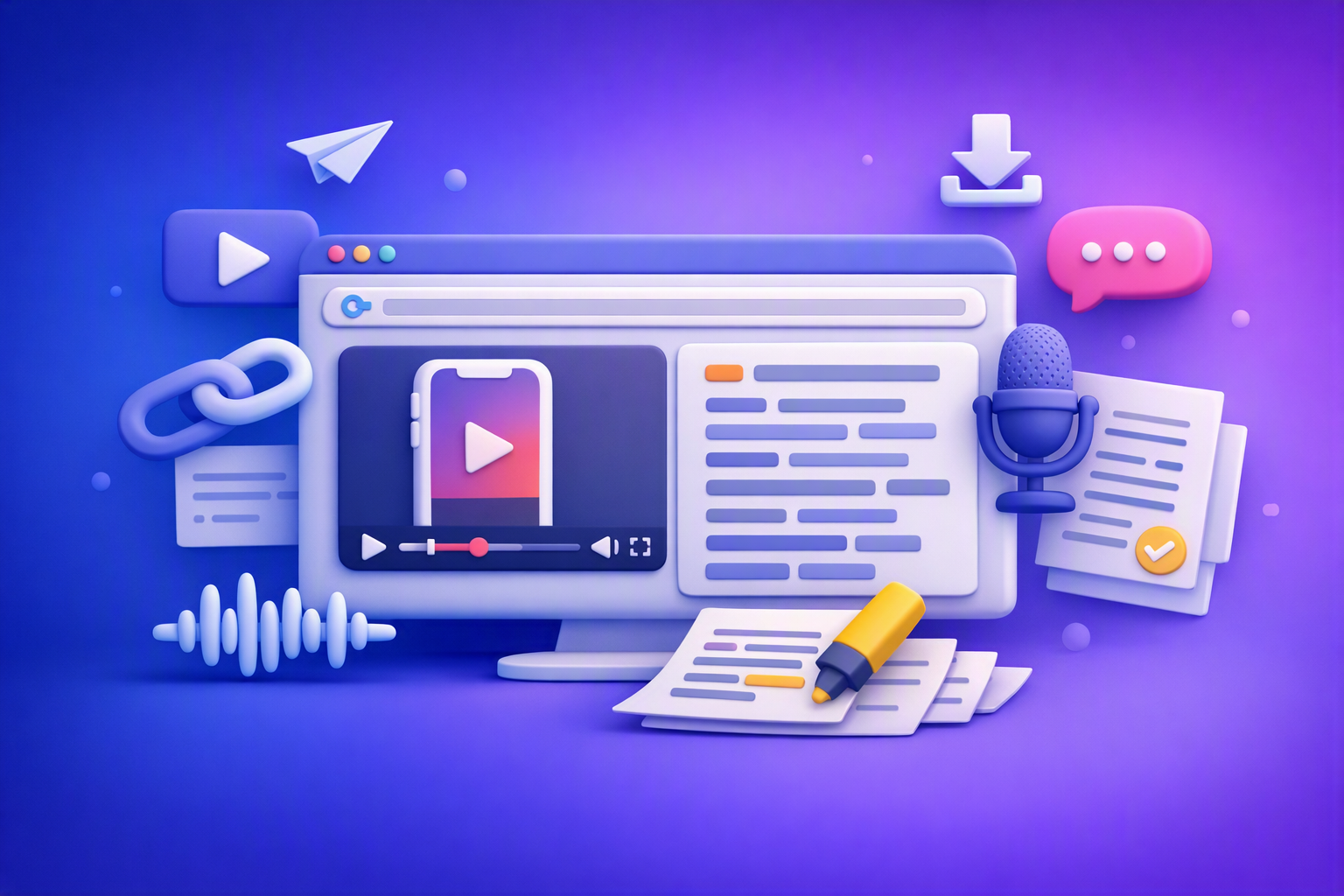
A reel analyzer should turn any public Instagram Reel link into a searchable transcript library you can mine for hooks, CTAs, objections, and topic clusters—then repurpose into original drafts with a repeatable SOP.