
“Add Files” Button Unavailable in ChatGPT: Causes, Exact Fixes, and a Ship-Now No-Upload Workflow
 Video To Text AI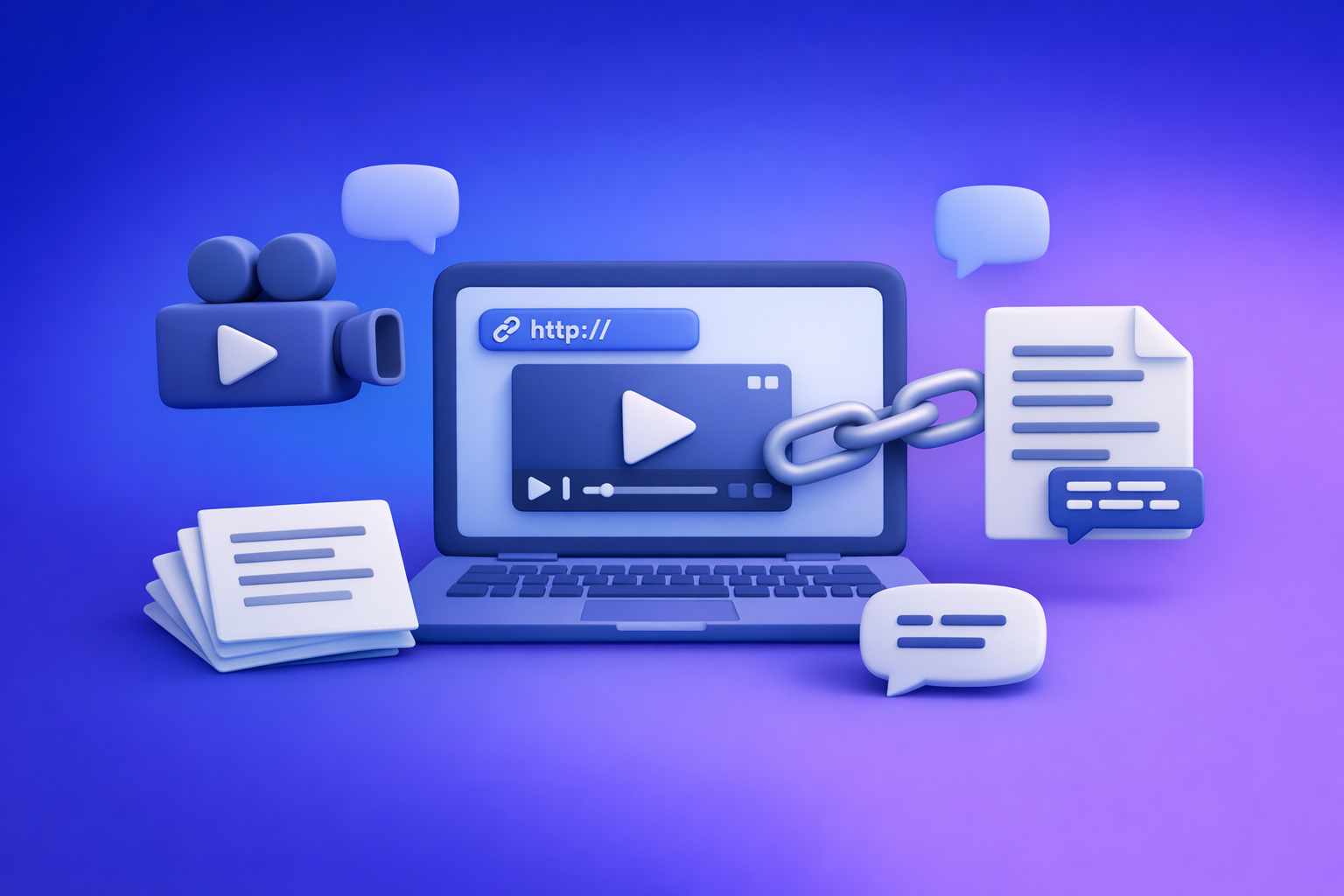
“Add Files” Button Unavailable in ChatGPT: Causes, Exact Fixes, and a Ship-Now No-Upload Workflow
Fix this by switching to an upload-capable ChatGPT surface + model, then isolating whether the blocker is entitlement, workspace policy, browser profile, or network security. If you’re trying to upload video for transcripts/captions, stop uploading video and use a link → transcript/captions → ChatGPT-on-text workflow that ships today.
What “Add Files” Button Unavailable Actually Means (and What It Doesn’t)
“Add files is unavailable” is a UI symptom, not a single bug.
It usually means one of four layers is blocking attachments:
- Surface/model capability mismatch (the chat context you’re in doesn’t support uploads)
- Plan/entitlement or rollout state (your account/workspace doesn’t have the feature right now)
- Workspace/admin policy (Team/Enterprise toggles disable attachments/tools)
- Browser/app/network interference (extensions, corrupted site data, VPN/proxy/DLP)
The UI symptom vs the real blocker (capability, policy, client, network)
What you see in the composer (paperclip, “Add files”, greyed-out control) is the front-end. The real blocker is typically:
- The model/tooling state for that chat
- A policy decision (workspace settings)
- A client-side failure (browser profile, extensions, cache)
- A network security decision (proxy, SSL inspection, DLP)
The 4 root-cause buckets you’re diagnosing
You’re not “fixing uploads.” You’re identifying which bucket you’re in:
- Surface/model capability mismatch
- Plan/entitlement or feature rollout state
- Workspace/admin policy (Team/Enterprise)
- Browser/app/network interference
2-Minute Triage (Do This Before You Change Anything)
This is the fastest path to a correct diagnosis without random cache-clearing.
Step 1: Confirm you’re on the correct ChatGPT surface
Uploads can differ across web vs desktop vs mobile.
Do this:
- Test on the main ChatGPT web app in a standard browser.
- If you use multiple orgs/workspaces, confirm you’re in the intended org/workspace (wrong workspace = wrong policy).
Why it matters: some surfaces or workspaces expose fewer tools, even on the same account.
Step 2: Start a fresh chat to reset tool state
Old threads can retain a disabled tool state.
Do this:
- Click New chat
- Re-check whether the paperclip / “Add files” appears
Fresh chat fixes: stale tool state, model/tool mismatch carried in the thread.
Fresh chat won’t fix: admin policy blocks, network blocks, missing entitlements.
Step 3: Switch models and re-check the attachment UI
Don’t guess. Switch models, then look at the composer.
What to look for:
- Paperclip / “Add files” appears = uploads likely supported in this context
- Missing/greyed out = capability/policy/client/network issue
How to confirm without guessing:
- If switching models changes the UI, you had a capability mismatch.
- If switching models changes nothing across devices, suspect policy or entitlement.
Step 4: Identify the failure mode you’re seeing
Map your symptom to the likely layer:
- Button missing entirely → surface/model mismatch, entitlement, or policy
- Button present but greyed out → policy, entitlement, or blocked tooling state
- Upload starts then fails (unknown error / 403 / stuck at 0%) → network/security or browser interference
- Upload succeeds but analysis fails → file parsing/format limitations
Fix Sequence (Ordered: Fastest → Highest-Leverage)
Work top-down. Stop as soon as the button works.
1) Fix surface/model mismatch (most common)
Do these in order:
- Switch to an upload-capable model and re-check the composer UI.
- Move from a restricted surface to the main ChatGPT web app.
- Log out/in to force a capability refresh.
If the paperclip appears after a model switch, you’re done.
2) Fix plan/entitlement and rollout issues
Uploads can be tied to account/workspace entitlements and staged rollouts.
Verify:
- Your subscription status is active (billing issues can silently remove features).
- You’re not in a restricted rollout cohort/region (symptom: missing uploads everywhere, even in clean browsers).
If it worked yesterday:
- Treat it as either a regression (temporary) or an entitlement refresh issue.
- Re-test with: fresh chat → model switch → logout/login → alternate browser before assuming outage.
3) Fix workspace/admin policy blocks (Team/Enterprise)
Policy blocks are common in Team/Enterprise.
How to tell it’s policy:
- The button is consistently missing/disabled across devices and browsers.
- It fails even on a clean profile and alternate network.
What to ask your admin to check:
- Attachments/uploads enabled for the workspace
- Tools toggles that govern file handling
- Any DLP/retention settings that disable uploads
Workaround to validate root cause:
- If allowed, switch to a personal workspace and test uploads there.
- If personal works and workspace doesn’t, it’s policy.
4) Fix browser/profile breakage (most common on web)
Browser state breaks uploads more than people expect.
Do this isolation pass:
- Test in a clean profile (new Chrome profile / Firefox container).
- Disable extensions that commonly break uploads:
- Privacy blockers
- Script blockers
- Download managers
- “Security” extensions that inject headers or block requests
- Clear site data for ChatGPT only (cookies + storage), then re-auth.
- Check browser permissions:
- Downloads
- Popups/redirects
- File system access (where applicable)
If clean profile works, your main profile is the issue.
5) Fix network/security interference (most common at work/school)
Corporate networks often block file uploads via proxy/DLP/SSL inspection.
Symptoms:
- 403 errors
- Upload stuck at 0%
- Repeated retries
- “Unknown error occurred” after selecting a file
Quick isolation test:
- Switch networks (e.g., mobile hotspot) and retry.
- If you’re on VPN, disable temporarily or try split-tunneling to confirm.
If you’re behind SSL inspection, report to IT:
- The error pattern (403/stall/unknown error)
- That the issue is file upload endpoints, not general browsing
- The exact time and device/browser used (helps correlate logs)
6) App-specific fixes (desktop/mobile)
If you’re not on web:
- Update the app to the latest version
- Force close + relaunch; re-authenticate
- iOS/Android: confirm storage permissions and “Files” provider access
Android-specific edge case:
- “Add files unavailable” can be caused by a broken file picker/provider. Try selecting a file from a different provider (Downloads vs Drive) or reinstall the app.
Common Edge Cases (Where People Get Stuck)
“I have ChatGPT Plus—why can’t I add files?”
Because Plus ≠ guaranteed uploads in every surface/workspace.
Common reality:
- Your workspace policy can override personal entitlements.
- Some chat contexts/models expose fewer tools.
Fix path:
- Confirm workspace selection
- Fresh chat
- Model switch
- Test personal workspace (if allowed)
“Can you no longer upload files to ChatGPT?”
Sometimes it’s a temporary outage, but most cases are local.
Before waiting it out:
- Fresh chat + model switch
- Clean browser profile
- Alternate network (hotspot)
- Confirm workspace policy
If you want a deeper breakdown, see:
“Uploads work, but the model can’t read my file”
This is usually parsing, not uploading.
Typical fixes:
- Convert to simpler formats: TXT (for text), CSV (for tables)
- Extract text first, then paste it
Related:
“Video uploads are failing (403 / unknown error)”
Large media is the most fragile category:
- Big files time out
- Proxies/DLP block binary uploads
- SSL inspection breaks multipart uploads
Production fix: don’t upload video. Extract transcript/captions first, then run ChatGPT on text.
Ship-Now Alternative: Stop Depending on ChatGPT Uploads (Video Workflows)
If your goal is transcripts, subtitles, captions, or repurposing, uploading video into ChatGPT is an outdated workflow.
Brand POV (and the practical reason): downloading video files and re-uploading them is slow, fragile, and hard to standardize. Link-based extraction is the future of creator productivity because it removes the download/upload loop and produces export-ready text assets you can QA and reuse.
Why uploads are fragile for transcripts/captions
Uploads fail for reasons you don’t control:
- Large file size + unstable networks
- Corporate security inspection
- Inconsistent tool availability across surfaces/workspaces
- Harder QA: you often need deterministic exports (TXT/SRT/VTT) for production
The deterministic workflow (Link/MP4 → TXT + SRT/VTT → ChatGPT-on-text)
This workflow is stable because it turns video into portable text assets first.
Step-by-step implementation using VideoToTextAI
- Paste a video link (YouTube/Instagram/TikTok) or use an MP4 input path.
- Generate transcript (TXT) + captions (SRT/VTT).
- Spot-check accuracy:
- Names and jargon
- Speaker turns (if relevant)
- Timestamp alignment
- Paste the transcript into ChatGPT for summarization/repurposing.
- Export final assets (blog draft, captions, show notes) from text—no uploads required.
If you want to ship this workflow today, use VideoToTextAI: VideoToTextAI
Tool shortcuts (pick the one that matches your input/output)
- MP4 → transcript:
/tools/mp4-to-transcript - MP4 → SRT:
/tools/mp4-to-srt - MP4 → VTT:
/tools/mp4-to-vtt - YouTube → blog:
/tools/youtube-to-blog - Instagram → text:
/tools/instagram-to-text - TikTok → transcript:
/tools/tiktok-to-transcript
Minimal prompt pack (copy/paste) for ChatGPT-on-text
Use these prompts after you have a clean transcript.
Prompt 1: Clean transcript + structure
You are an editor. Clean and structure the transcript below.
Requirements: add headings, convert long paragraphs to bullets, keep key quotes, and add speaker labels if present.
Optional: remove filler words (“um”, “like”) without changing meaning.
Transcript:
[PASTE]
Prompt 2: Create captions from transcript (platform-specific)
Create 10 short social caption variants for [Instagram/TikTok/LinkedIn].
Output: 3 hooks, 10 captions (1–2 sentences), 3 CTAs, and 2 hashtag sets.
Use the transcript context below:
[PASTE]
Prompt 3: Turn transcript into a publishable blog post
Turn this transcript into a publishable blog post.
Output: 5 title options, an outline, a full draft, a meta description (155 chars), and 6 FAQ questions.
Transcript:
[PASTE]
For related workflows, see:
Checklist: Fix “Add Files” Button Unavailable + Keep Shipping
Restore uploads checklist (10 items)
- Confirm correct surface (web/desktop/mobile)
- Start a fresh chat
- Switch to an upload-capable model
- Verify org/workspace selection
- Log out/in
- Test in a clean browser profile
- Disable extensions (privacy/script blockers)
- Clear site data for ChatGPT
- Switch networks / disable VPN to isolate
- Confirm workspace policy with admin (Team/Enterprise)
Ship-now checklist (no-upload workflow)
- Get video link or MP4
- Generate TXT + SRT/VTT in VideoToTextAI
- QA transcript (names/jargon/timestamps)
- Paste text into ChatGPT for repurposing
- Export final deliverables (blog/captions/subtitles) from text assets
If you want more troubleshooting variants, also read:
- “Add Files Is Unavailable” in ChatGPT: Causes, Fixes, and a No-Upload Transcript Workflow (VideoToTextAI)
- “Add Files” Button Unavailable in ChatGPT: Why It Happens + Exact Fixes (and a No-Upload Workflow)
- Attachments Disabled in ChatGPT Image Upload: Causes, Fixes, and a No-Upload Video-to-Text Workflow (2026)
VideoToTextAI vs Competitors
If your bottleneck is “add files button unavailable ChatGPT,” upload-heavy tools inherit the same fragility: big binaries + network inspection + inconsistent UI/tool access. VideoToTextAI is built around a URL-first workflow, which avoids the download/upload loop and produces export-ready text assets (TXT/SRT/VTT) you can reuse across tools and teams.
Comparison table (workflow-focused)
| Criteria | VideoToTextAI | Reduct Video (reduct.video) | Canva (canva.com) | VideoTranscriber AI (videotranscriber.ai) |
|---|---|---|---|---|
| URL-first workflow (paste link) | Yes (core workflow) | No strong public signal | No (upload-first) | Yes |
| Avoids download/upload loops | Yes | Not positioned that way | No | Yes |
| Export-ready outputs (TXT + SRT/VTT) | Yes (explicit workflow) | Transcript export emphasized; subtitle exports not clearly positioned | Transcript/captions exist; export specifics vary by workflow | Transcript + subtitles/captions positioned |
| Repurposing workflow (transcript-first → blog/social) | Yes (tools + promptable text assets) | More transcript collaboration/editing oriented | Better for design-centric captioning and creative assembly | Less positioning around blog/social repurposing |
| Team/process repeatability (QA checkpoints) | High (deterministic assets + QA step) | Strong for collaboration | Strong for design teams | Less team/process positioning |
What this means in practice (fair take)
- VideoToTextAI wins on workflow speed and reliability when uploads are blocked, because link-based extraction bypasses the “Add files” dependency and outputs portable TXT/SRT/VTT assets.
- Reduct Video can be better for teams that need a collaborative, transcript-centric environment for reviewing and editing spoken content together.
- Canva can be better when your primary goal is designing and packaging content visually after you already have the transcript/captions.
- VideoTranscriber AI also supports link-based input and captions, but it’s less clearly positioned around a repeatable repurposing pipeline (transcript-first → blog/social assets).
Competitor Gap
Top-ranking forum threads and quick fixes usually miss four production-critical pieces:
- Ordered diagnosis that isolates surface/model vs entitlement vs policy vs client/network in one pass
- A ship-now fallback that avoids uploads entirely (especially for video)
- Export-ready deliverables (TXT/SRT/VTT) plus QA steps you can standardize
- A clear decision point: restore uploads vs proceed with transcript-first workflow
This post is designed to get you to a decision quickly, then keep you shipping even if uploads stay blocked.
FAQ (People Also Ask)
Why can’t I add files in ChatGPT Plus?
Because Plus doesn’t guarantee uploads across every surface, model, and workspace. Start with fresh chat → model switch → confirm workspace, then isolate policy (Team/Enterprise) and network (VPN/proxy/DLP) if it’s still unavailable.
Can you no longer upload files to ChatGPT?
Not necessarily. Distinguish temporary outage from local blocks by testing a clean browser profile and an alternate network. If it works on hotspot but not at work, it’s network/security.
How do I add a file in ChatGPT?
Use an upload-capable surface and model, then click the paperclip / “Add files” in the composer. If it’s missing or disabled, follow the ordered fix sequence above.
Why can’t I add a file to chat?
Most common causes are workspace policy (Team/Enterprise), browser extensions/site data, or network security (403, stalled uploads). Video uploads fail most often; use a transcript-first workflow instead.
Internal Link Plan
- “Add Files Is Unavailable” in ChatGPT: Causes, Fixes, and a No-Upload Transcript Workflow (VideoToTextAI)
- “Attachments Disabled for” ChatGPT: What It Means, Why It Happens, and the Fastest Fix (Plus a No-Upload Transcript Workflow)
- ChatGPT “Upload Video” Feature (2026): What Works, What Breaks, and the Production-Safe Link → Transcript Workflow
- “Add Files” Button Unavailable in ChatGPT: Why It Happens + Exact Fixes (and a No-Upload Workflow)
- Attachments Disabled in ChatGPT Image Upload: Causes, Fixes, and a No-Upload Video-to-Text Workflow (2026)
- Reel Summary: How to Summarize an Instagram Reel (Accurately) + Turn It Into Captions, Posts, and a Blog
Related posts
Reel Analyser (Instagram Reels): Transcript‑First Competitor Research, Hook/CTA Extraction, and Repurposing Workflow (VideoToTextAI)
Video To Text AI
A 2026 reel analyser should turn Instagram Reel links into a searchable transcript library you can tag for hooks, CTAs, objections, and topic clusters—then export into repurposing-ready drafts without a download/upload loop.
Traducir video de Instagram (Reels) en 2026: workflow transcript-first para traducir, sacar hooks/CTAs y repurpose (con VideoToTextAI)
Video To Text AI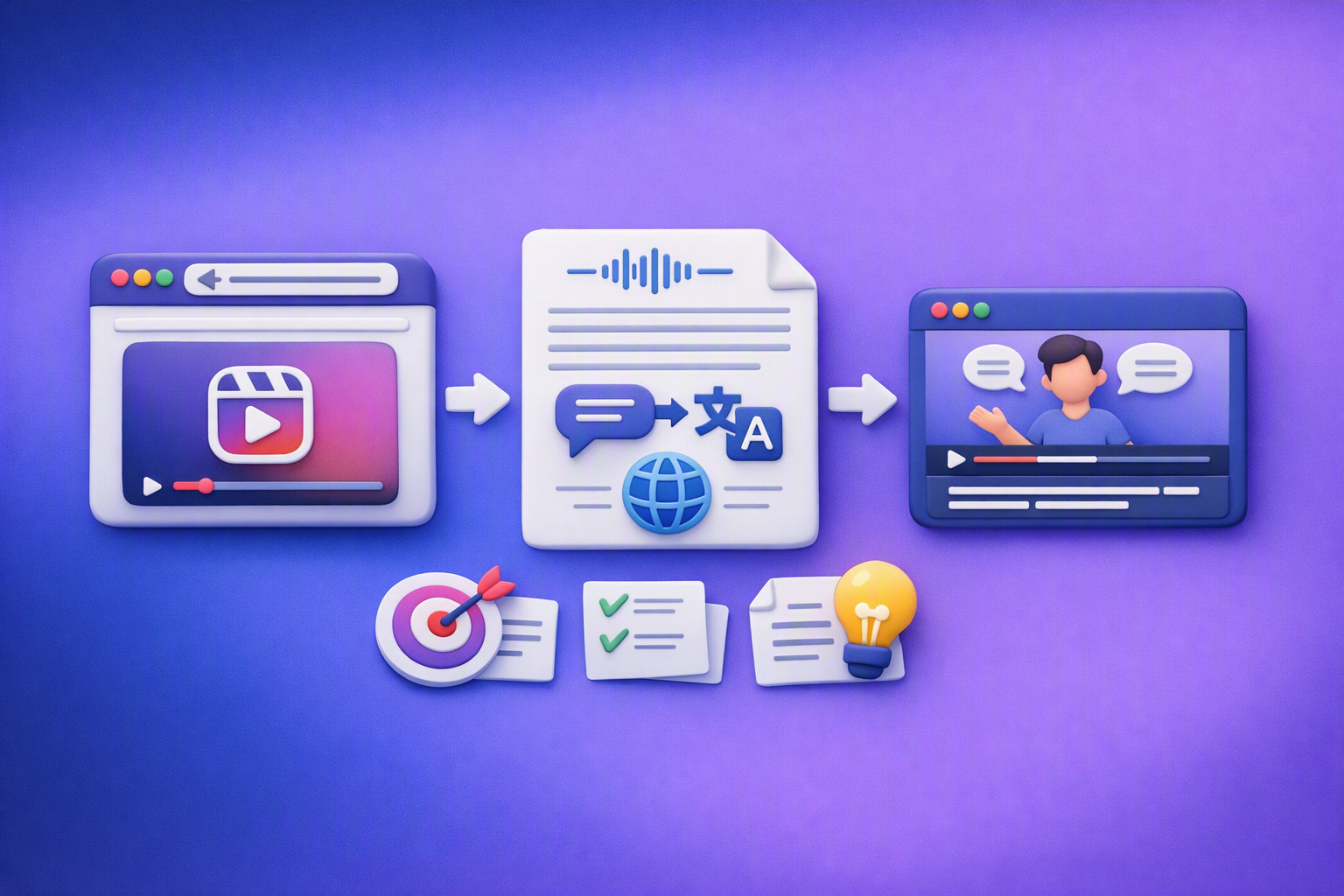
Aprende a traducir un Reel de Instagram con un flujo URL→transcripción→traducción→subtítulos, y a convertir esa traducción en un activo de investigación para hooks, CTAs, objeciones y clusters de contenido.
Reel Analyzer: Transcript‑First Instagram Reels Research (Hooks, CTAs, Objections) + Workflow Guide (VideoToTextAI)
Video To Text AI
A reel analyzer should turn any public Instagram Reel link into a searchable transcript library you can mine for hooks, CTAs, objections, and topic clusters—then repurpose into original drafts with a repeatable SOP.