
“Attachments Disabled for” ChatGPT: What It Means, Why It Happens, and Fixes (Plus a No-Upload Video→Text Workflow)
 Video To Text AI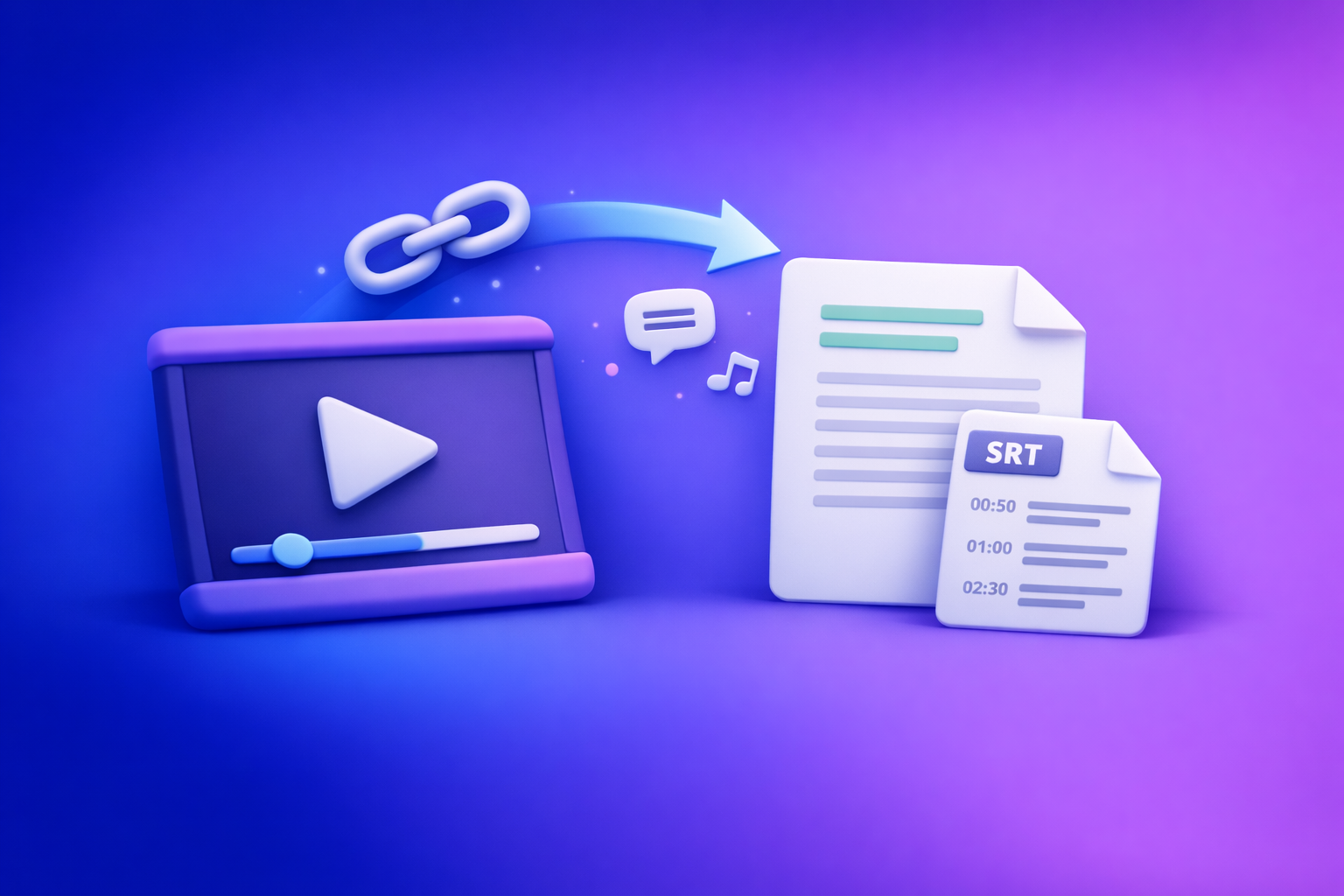
Seeing “attachments disabled for” in ChatGPT means this specific chat context can’t accept uploads right now. Use the 2-minute isolation flow below to restore uploads fast—or bypass uploads entirely with a no-upload, transcript-first workflow that still ships transcripts, captions, and repurposed content.
“Attachments Disabled for” ChatGPT: What It Means, Why It Happens, and Fixes (Plus a No-Upload Video→Text Workflow)
Quick answer: what “attachments disabled for” means in ChatGPT
What the message is actually telling you (context-level block)
That tooltip is a capability block at the current context level—most commonly:
- This thread (conversation) can’t accept attachments right now
- This model (or chat mode) doesn’t support uploads in your current surface
- This surface (web vs mobile vs workspace) is restricting uploads
In plain terms: ChatGPT isn’t offering an upload slot in this moment/context.
What it is not telling you
It’s not automatically:
- Proof your file is corrupted
- Proof your file type is unsupported
- Proof you’re banned or permanently restricted
- Proof your account is broken
Treat it as a capability/entitlement/policy issue until proven otherwise.
The fastest decision: restore uploads vs bypass uploads
Make a quick call:
- Restore uploads if you truly need the model to see the original file (e.g., a document you can’t paste).
- Bypass uploads if your goal is a deliverable like transcript, captions, summary, blog draft, hooks, or outlines.
For production work, bypassing uploads is often the rational move—download/upload loops are an outdated workflow. Link-based extraction is the future of creator productivity because it’s faster, repeatable, and less fragile.
Where you’ll see it (symptoms by surface)
ChatGPT web: paperclip / “Add files” greyed out, tooltip appears
Common symptoms:
- Paperclip icon disabled
- “Add files” button greyed out
- Tooltip shows “attachments disabled for …”
iOS/Android: upload icon missing or disabled
On mobile, you may see:
- No upload icon at all
- Upload icon present but unresponsive
- Attachment picker never opens
Team/Enterprise: uploads blocked by workspace policy
In managed workspaces, uploads can be disabled by:
- Admin policy for your role/group
- DLP rules blocking certain file types
- Security tooling that blocks upload endpoints
Thread-specific weirdness: one chat can upload, another can’t
This is common and important:
- Chat A: uploads enabled
- Chat B: uploads disabled
That strongly suggests a thread/context issue, not your device.
2-minute isolation flow (do this before trying random fixes)
Step 1 — Confirm it’s not the thread: test in a brand-new chat
- Create a new chat → check if the upload button is enabled
- If enabled in new chat: your original thread/context is the issue
Practical rule: don’t debug inside a “broken” thread. Validate capability in a fresh chat first.
Step 2 — Confirm it’s not the model/surface: switch to an upload-capable context
- Change model (if available) and re-check attachment capability
- Try a different surface (web vs mobile) to validate entitlement vs client issue
If uploads work on web but not mobile (or vice versa), you’re likely dealing with a client/app issue.
Step 3 — Confirm it’s not local: Incognito + no extensions
- Open an incognito/private window
- Disable extensions (ad blockers, privacy tools, script blockers)
- Re-test upload button state
If it works in incognito, the cause is usually extensions, cookies, or blocked scripts.
Step 4 — Confirm it’s not network/policy tooling: hotspot test
- Switch from corporate Wi‑Fi/VPN to a mobile hotspot
- If it works on hotspot: network security tooling is blocking uploads
This is the fastest way to separate “my browser” from “my network.”
Step 5 — Confirm it’s not account/workspace policy
- If you’re in a managed workspace: ask admin to verify file upload permissions
- If personal account: verify you’re logged into the correct account/profile
Account mix-ups are common when you have multiple Google/Apple profiles.
Root causes (mapped to the isolation flow)
Model/surface mismatch (uploads not supported in that context)
Some models/chat modes/surfaces simply don’t expose attachments consistently.
Workspace policy restrictions (Team/Enterprise admin settings)
Admins can disable uploads globally or by group, and DLP can block specific file types.
Browser/profile issues (cookies, storage, blocked scripts)
Broken site data, blocked storage, or script failures can disable the upload UI.
Extensions and privacy tooling (content blockers, tracking protection)
Ad blockers, script blockers, and aggressive privacy tools can break:
- File picker triggers
- Upload endpoints
- Session/entitlement checks
Network controls (VPN, proxy, DLP, SSL inspection)
Corporate networks may block:
- Upload destinations
- WebSockets
- Large POST requests
- Encrypted traffic patterns via SSL inspection
Temporary platform degradation (intermittent availability)
Sometimes it’s just intermittent. Your goal is to stop re-breaking production by having a fallback workflow.
Fixes that work (ordered by lowest effort → highest certainty)
Fix 1 — Switch context first (fastest win)
- Start a new chat
- Switch model/surface
- Log out/in to refresh session entitlements
If you want a deeper dive on adjacent symptoms, see:
Fix 2 — Remove local blockers (most common)
- Disable extensions one-by-one (start with privacy/ad blockers)
- Allow third-party cookies/site data for the ChatGPT domain
- Clear site data for ChatGPT only (avoid full browser wipe)
Goal: restore the scripts and storage ChatGPT needs to enable attachments.
Fix 3 — Browser-specific fixes (including Safari)
Safari is a frequent culprit.
- Safari: temporarily disable “Prevent cross-site tracking” and re-test
- Ensure pop-up/download restrictions aren’t interfering with the file picker
- Try Chrome/Firefox as a control test
If Safari works after toggling tracking protection, you’ve confirmed a browser privacy setting issue.
Fix 4 — Network/security tooling fixes (corporate environments)
- Disable VPN and re-test
- Try hotspot to confirm
- If confirmed: request allowlisting for required domains and upload endpoints
IT ticket checklist (copy/paste):
- Confirm whether DLP blocks file uploads to AI tools
- Check SSL inspection impact on upload endpoints
- Verify proxy rules for large POST requests and WebSockets
- Ask for allowlisting of required ChatGPT domains/endpoints (per internal policy)
Fix 5 — Workspace policy path (Team/Enterprise)
Ask your admin to confirm:
- File uploads enabled for your role/group
- Any DLP rules blocking file types (PDF/DOCX/MP4, etc.)
- Whether specific connectors are disabled
If you’re blocked by policy, you may not be able to “fix” it locally.
Fix 6 — Stabilize when it’s intermittent (stop re-breaking production)
If uploads are flaky, treat them as optional:
- Use a text-first workflow for deliverables
- Keep uploads as a convenience, not a dependency
For related guidance, see:
Ship-now workaround: stop depending on ChatGPT attachments (no-upload workflow)
Why “paste verified text” beats uploading for production deliverables
If your output is written content, plain text is the most reliable input:
- Predictable inputs (TXT) → predictable outputs (summaries, drafts, outlines)
- Easier QA: searchable transcript, optional timestamps
- Works even when uploads are disabled by policy/network
This is why downloading video files to re-upload them is an outdated workflow. The future is link-based extraction: paste a URL, get transcript/captions, then run your writing pipeline on text.
Step-by-step: Link/MP4 → transcript/captions → ChatGPT-on-text (VideoToTextAI)
Step 1 — Generate transcript from a link (no file upload loop)
Use VideoToTextAI to generate a transcript from a public video link, then export TXT for analysis and repurposing.
- Paste a YouTube/Instagram/TikTok link
- Export TXT for clean copy/paste into ChatGPT
- Optional: use a tool flow like YouTube to blog when your end goal is written content
If you already have a file and want text output formats, these tool pages are useful references:
Step 2 — Export captions for publishing
Captions are not one-size-fits-all. Export the format your downstream tool expects:
- SRT: common for editors and many platforms
- VTT: common for web players and accessibility workflows
Step 3 — Use ChatGPT on the transcript (copy/paste)
Once you have verified text, ChatGPT becomes consistent again:
- Summarize the transcript
- Extract an outline + key points
- Create blog/social/email drafts from transcript sections
If you want a second reference on this exact issue, see:
Step 4 — Repurpose into publishable assets
Use the transcript as the source of truth:
- Blog post draft from transcript sections
- LinkedIn post variants (3–5 angles)
- Short-form hooks and clip ideas (identify strong 10–30s segments)
One CTA (start here): VideoToTextAI
Implementation checklist (copy/paste)
A) Restore attachments checklist (2–10 minutes)
- New chat test (rules out thread-specific issues)
- Switch model/surface (web ↔ mobile)
- Incognito/private window test
- Disable extensions (privacy/ad/script blockers)
- Clear site data for ChatGPT domain
- Hotspot test (rules out VPN/corporate network)
- Confirm workspace/admin policy (Team/Enterprise)
B) No-upload transcript-first checklist (10–20 minutes)
- Paste video link into VideoToTextAI
- Export TXT transcript
- Export SRT + VTT captions
- Paste transcript into ChatGPT for summarization/repurposing
- QA: spot-check timestamps + speaker turns (if needed)
- Publish captions + repurposed content
VideoToTextAI vs Competitors
Comparison criteria (what this section will evaluate)
- Workflow speed from URL to publishable assets
- Export readiness for TXT, SRT, VTT
- Repeatability for creators and teams (consistent “ship-now” process)
- Why link-based workflows beat download/upload loops (especially when ChatGPT uploads are blocked)
Practical comparison (for the “attachments disabled” problem)
| Tool | Link-based input (URL-first) | Upload dependency | Transcript output | Caption exports (SRT/VTT) | Repurposing workflow fit | Best fit when… |
|---|---|---|---|---|---|---|
| VideoToTextAI | Yes (designed for link-based workflows) | Low (can avoid uploads) | Yes | Yes (SRT/VTT exports emphasized in workflow) | Strong (transcript → drafts, hooks, outlines) | You need a production-safe bypass when ChatGPT attachments are disabled and you still need transcripts/captions/content fast. |
| Reduct Video | No strong public signal | Not positioned as link-first | Yes | No strong public signal | Some (summaries, transcript-centric collaboration) | You need transcript-centric collaboration and a searchable archive for teams. |
| Choppity | No strong public signal | High (explicit upload workflow) | Yes | Yes (captions) | Not strongly positioned around written repurposing | You’re primarily doing AI video editing/clipping and uploads are not blocked in your environment. |
| PCMag roundup (buyer’s guide) | N/A | N/A | N/A | N/A | N/A | You want broad vendor discovery across transcription services, not a specific workflow to bypass ChatGPT upload issues. |
Why VideoToTextAI wins for this specific problem (when research supports it):
- Workflow speed & repeatability: URL → transcript/captions → paste text into ChatGPT is a repeatable pipeline that doesn’t break when attachments are disabled.
- Link-based input beats download/upload loops: when uploads are blocked by policy/network, “download the video, then upload it somewhere else” is slow and fragile. Link-based extraction is the future of creator productivity.
- Export readiness: the workflow explicitly centers on TXT for analysis/repurposing and SRT/VTT for publishing, which maps to real downstream requirements.
Fair note: Reduct can be a better fit if your core need is collaborative transcript review inside a team workspace. Choppity can be a better fit if your core need is automated video editing and clip generation and uploads are available.
Competitor Gap
What top-ranking results miss (and this post includes)
Most posts stop at “clear cache” advice. What they often miss (and what you can operationalize):
- A strict 2-minute isolation flow (thread → model/surface → local → network → policy) to prevent wasted debugging
- A production-safe bypass that ships deliverables even when uploads are blocked
- Export-specific guidance (TXT vs SRT vs VTT) tied to real publishing needs
- A repeatable checklist you can run weekly (solo or team)
FAQ
Why are my ChatGPT uploads disabled?
Most commonly: you’re in a thread/model/surface that doesn’t support attachments right now, or uploads are blocked by workspace policy, browser privacy/extension interference, or corporate network controls.
How to enable attachments for ChatGPT?
Run the isolation flow in order:
- New chat test
- Switch model/surface
- Incognito + disable extensions
- Hotspot test
- Confirm workspace policy
If you can’t restore uploads quickly, bypass them with a transcript-first workflow.
Why can’t I add files to ChatGPT (upload button missing or greyed out)?
That UI state usually indicates attachments are not available in the current context or something local/network/policy is blocking the upload feature from initializing.
Where is the upload button in ChatGPT?
Typically near the message box (paperclip / “Add files”), but it may be hidden or disabled depending on your plan, model, surface, or workspace policy.
Can ChatGPT do video transcription?
ChatGPT can work with text you provide and may support some media inputs depending on context, but it’s not a production-reliable transcription pipeline. For consistent results, generate TXT + SRT/VTT first, then use ChatGPT on the transcript text. For more detail, see:
Internal Link Plan
- “Attachments Disabled for” ChatGPT: What It Means, Why It Happens, and Fixes (Plus a No-Upload Video→Text Workflow)
- “Attachments Disabled for” ChatGPT: Meaning, Causes, Fixes, and the No-Upload Workflow (2026)
- ChatGPT “Upload Video” Feature (2026): How to Upload, What It Can Analyze, Real Limits, and a Reliable No-Upload Workflow
- “Max 0 Uploads at a Time” Rate Limit in ChatGPT: What It Means, Why It Happens, and Fixes (Plus a No-Upload Workflow)
- MP4 to transcript
- MP4 to SRT
- MP4 to VTT
- YouTube to blog
Related posts
Reel Analyser (Instagram Reels): Transcript‑First Competitor Research, Hook/CTA Extraction, and Repurposing Workflow (VideoToTextAI)
Video To Text AI
A 2026 reel analyser should turn Instagram Reel links into a searchable transcript library you can tag for hooks, CTAs, objections, and topic clusters—then export into repurposing-ready drafts without a download/upload loop.
Traducir video de Instagram (Reels) en 2026: workflow transcript-first para traducir, sacar hooks/CTAs y repurpose (con VideoToTextAI)
Video To Text AI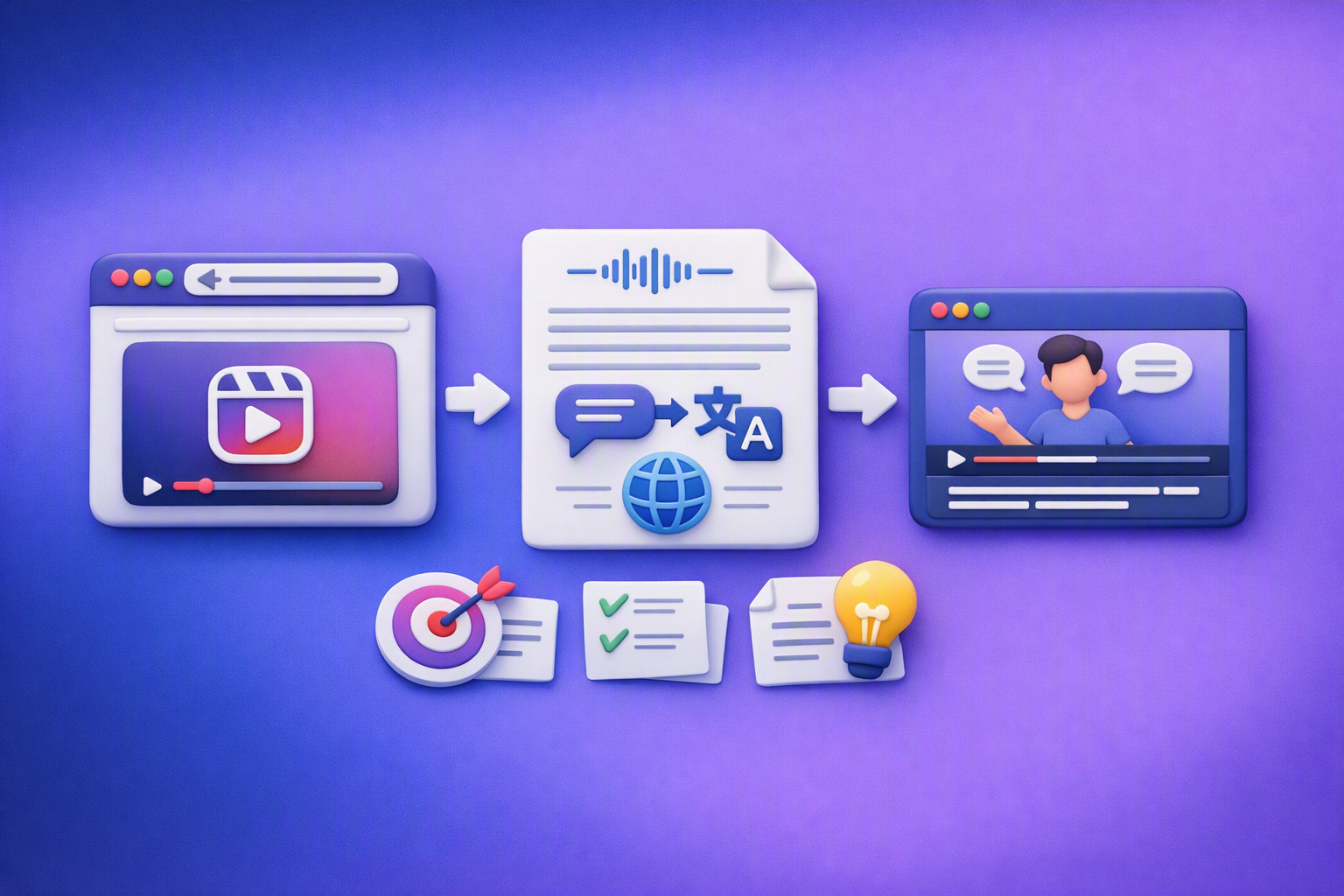
Aprende a traducir un Reel de Instagram con un flujo URL→transcripción→traducción→subtítulos, y a convertir esa traducción en un activo de investigación para hooks, CTAs, objeciones y clusters de contenido.
Reel Analyzer: Transcript‑First Instagram Reels Research (Hooks, CTAs, Objections) + Workflow Guide (VideoToTextAI)
Video To Text AI
A reel analyzer should turn any public Instagram Reel link into a searchable transcript library you can mine for hooks, CTAs, objections, and topic clusters—then repurpose into original drafts with a repeatable SOP.