
Instagram Reel Competitor Research: How to Find Hooks, Angles, and Content Ideas From Transcripts
 Video To Text AI
Most teams do competitor research on Instagram the slow way: open a Reel, watch it, rewind it, type notes, forget the exact hook, and then repeat that process 20 more times.
That workflow does not scale.
If your goal is to find new content ideas, understand why competitor Reels perform, and build a repeatable swipe file, the right process is:
- Collect competitor Reel links
- Generate transcripts
- Tag the transcripts
- Turn the patterns into original content angles
Once the Reel becomes text, it stops being "something you watched once" and becomes a searchable research asset.
Why transcript-first competitor research works better
Watching Reels is fine for inspiration. It is bad for analysis.
A transcript-first workflow gives you:
- Searchability: find every Reel that mentions a phrase, objection, outcome, or CTA
- Speed: compare 20 hooks in minutes instead of scrubbing through video timelines
- Consistency: use the same fields for every competitor instead of random notes
- Repurposing: turn research directly into your own script briefs, LinkedIn posts, blogs, and FAQs
This is the same reason downloading video files is an outdated workflow. Link-based extraction is faster, cleaner, and easier to standardize across a team.
What to extract from every competitor Reel
If you only save the raw transcript, you still have a pile of text. What makes the workflow valuable is the structure you apply after transcription.
For every Reel, capture these fields:
- Hook: the first line or first 3 seconds
- Audience: who the creator is talking to
- Pain point: what problem they are surfacing
- Promise: what result they claim or imply
- Proof: story, case study, result, demo, screenshot, or authority signal
- CTA: follow, comment, DM, save, click bio, book a call
- Format: talking head, listicle, story, myth-busting, reaction, before/after
- Topic cluster: the broader theme the Reel belongs to
That simple schema is enough to spot patterns fast.
The 5-step workflow: Reel URL -> transcript -> idea bank
Step 1: Build a focused competitor list
Do not analyze "everyone in the niche." Start with:
- 3 direct competitors
- 3 adjacent creators with strong distribution
- 3 aspirational accounts whose content quality is clearly above the market
This gives you enough variety to find patterns without drowning in inputs.
Step 2: Transcribe the Reels from the link
Copy each public Reel URL and run it through a link-based transcription workflow like instagram to text.
If your goal is ideation, export the transcript as plain text first. If you also want caption timing or editing references, keep an SRT or VTT copy too.
For hook-specific work, this is also useful:
Step 3: Tag the transcript in a research sheet
Create a simple table with columns like:
- Reel URL
- Competitor
- Hook
- Topic
- Audience
- Promise
- Proof
- CTA
- Notes
- Your spin
Your goal is not to archive content for its own sake. Your goal is to make the research reusable.
Step 4: Look for recurring patterns
After 15 to 30 transcripts, patterns become obvious.
You will usually find:
- The same 3 to 5 hook structures repeated
- The same pain points phrased slightly differently
- The same CTA repeated across formats
- One or two topic clusters that outperform everything else
- Clear whitespace where competitors are shallow, vague, or repetitive
This is where the content ideas actually come from.
Step 5: Rewrite patterns into original content briefs
Do not copy the script. Convert the pattern into a brief.
Example:
- Competitor pattern: "3 mistakes founders make when hiring their first sales rep"
- Your brief: "5 signs your startup is hiring sales too early"
Same topic family. Different angle. Original argument.
That is the correct use of competitor transcript research.
How to turn competitor Reels into content ideas
The easiest way to get useful output is to ask the same questions of every transcript.
Use prompts like:
- "Extract the hook, promise, proof, CTA, and the main objection this Reel addresses."
- "List 5 alternate angles on the same topic that are more specific, more contrarian, or more beginner-friendly."
- "Turn this transcript into 10 original blog post ideas and 10 short-form hook ideas."
- "Identify what this creator leaves unexplained that a better article could expand."
Once you have the transcript, you can also move directly into repurposing workflows:
What to track every week
If you want this to become an operating system instead of a one-off exercise, track competitor Reels weekly.
Useful weekly metrics:
- Which hooks show up most often
- Which pain points are repeated most
- Which CTAs are gaining the most emphasis
- Which topics feel saturated
- Which questions remain unanswered
The last one matters most.
The best content ideas usually come from the gap between what competitors mention and what they fail to explain.
Mistakes to avoid
1. Copying the wording instead of the structure
You are researching framing, not stealing scripts.
Use the transcript to identify:
- narrative structure
- ordering
- emotional triggers
- content gaps
Then rewrite everything in your own language.
2. Summarizing before you transcribe
If you skip straight to a summary, you lose precision. Generate the transcript first, then summarize and analyze from that source text.
If you need a fast read-first workflow, start here:
3. Treating every viral Reel as worth copying
Some Reels perform because of creator equity, timing, audience familiarity, or pure entertainment. Do not assume every high-view script is a repeatable educational format.
4. Researching too broadly
Ten deeply relevant transcripts are more useful than one hundred random Reels from the entire category.
A simple weekly system for teams
A good weekly workflow looks like this:
- Save 10 competitor Reels
- Transcribe all 10 from the links
- Tag them with the same schema
- Pull out the top 5 hooks and top 5 topic gaps
- Turn those into next week's content plan
This is how Reel competitor research becomes editorial planning instead of passive scrolling.
Final takeaway
If you want better content ideas, stop studying competitor Reels as videos and start treating them as structured text assets.
The transcript is the unlock:
- it makes hooks searchable
- it makes themes comparable
- it makes ideation faster
- it makes repurposing easier
If you want to run this workflow today, start with instagram to text, then use the transcript to build your hook bank, idea backlog, and blog briefs.
Related guides
- How to Get a Transcript from Any Instagram Reel in Seconds (2026 Guide)
- How to Extract the Script from a Viral Instagram Reel to Recreate It
- Instagram Content Repurposing: How to Turn Reels into SEO Blog Posts
- How Law Firms and Legal Marketing Agencies Can Transcribe Instagram Reels for Content Research and Client Education
Related posts
Reel Analyser (Instagram Reels): Transcript‑First Competitor Research, Hook/CTA Extraction, and Repurposing Workflow (VideoToTextAI)
Video To Text AI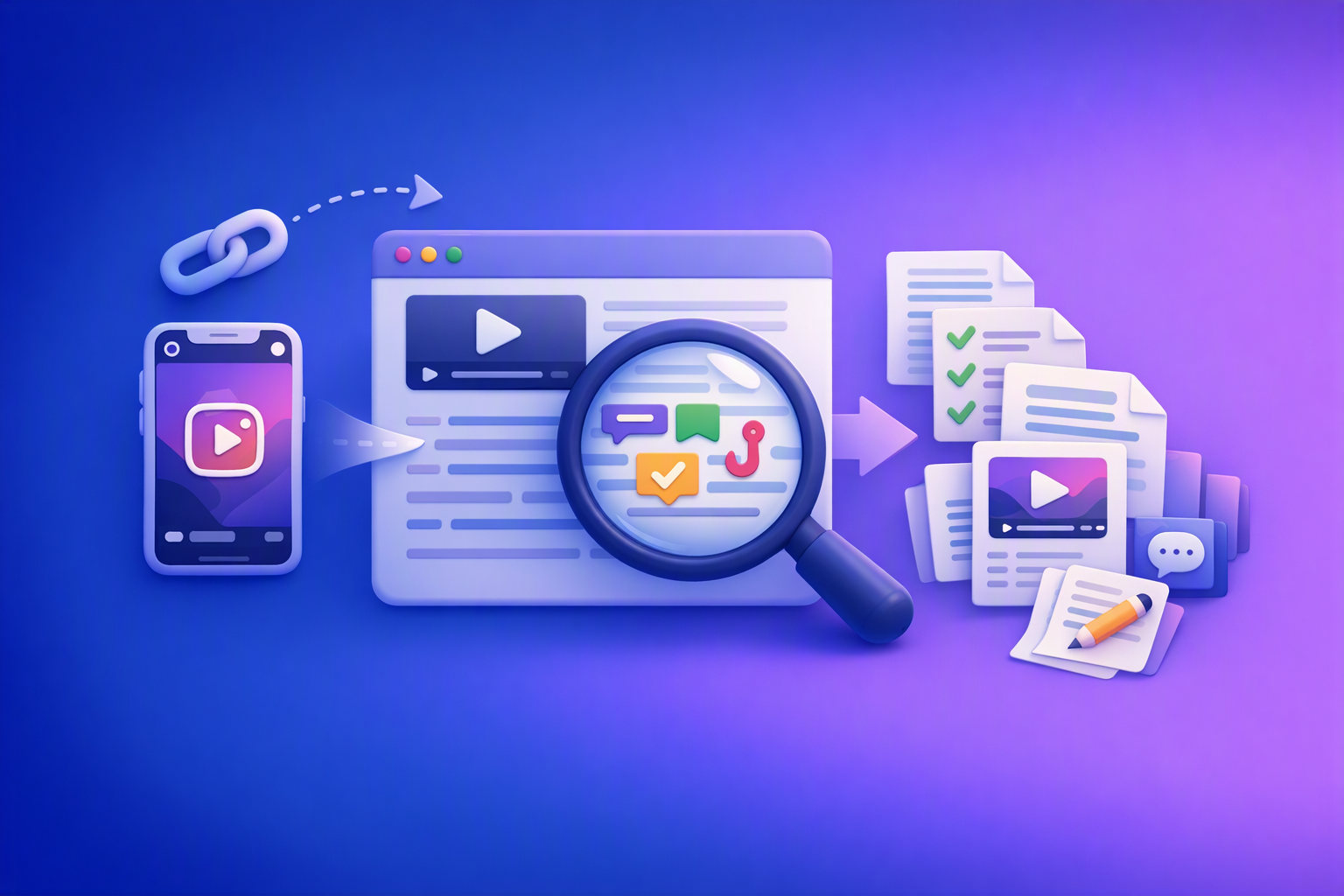
A 2026 reel analyser should turn Instagram Reel links into a searchable transcript library you can tag for hooks, CTAs, objections, and topic clusters—then export into repurposing-ready drafts without a download/upload loop.
Traducir video de Instagram (Reels) en 2026: workflow transcript-first para traducir, sacar hooks/CTAs y repurpose (con VideoToTextAI)
Video To Text AI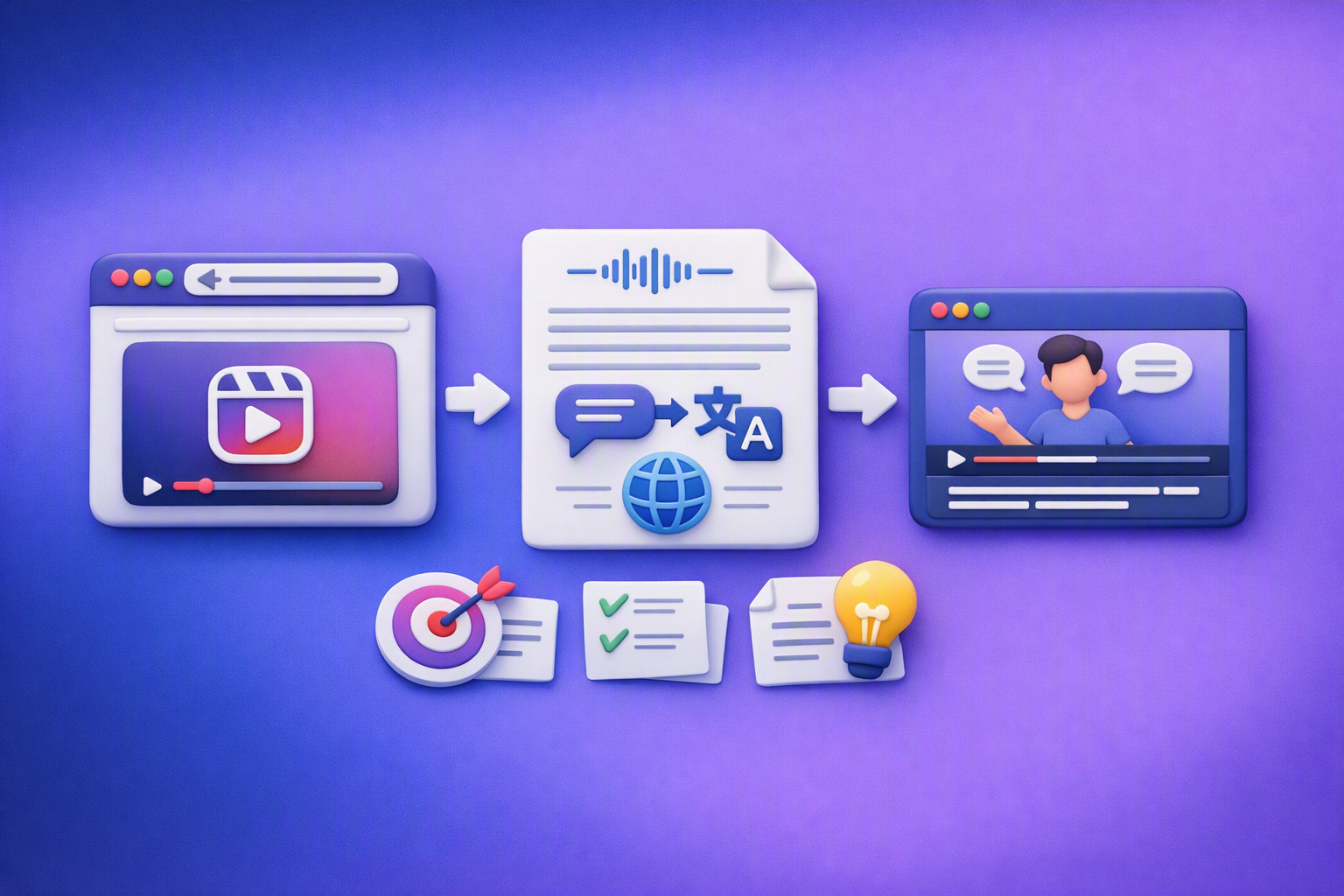
Aprende a traducir un Reel de Instagram con un flujo URL→transcripción→traducción→subtítulos, y a convertir esa traducción en un activo de investigación para hooks, CTAs, objeciones y clusters de contenido.
Reel Analyzer: Transcript‑First Instagram Reels Research (Hooks, CTAs, Objections) + Workflow Guide (VideoToTextAI)
Video To Text AI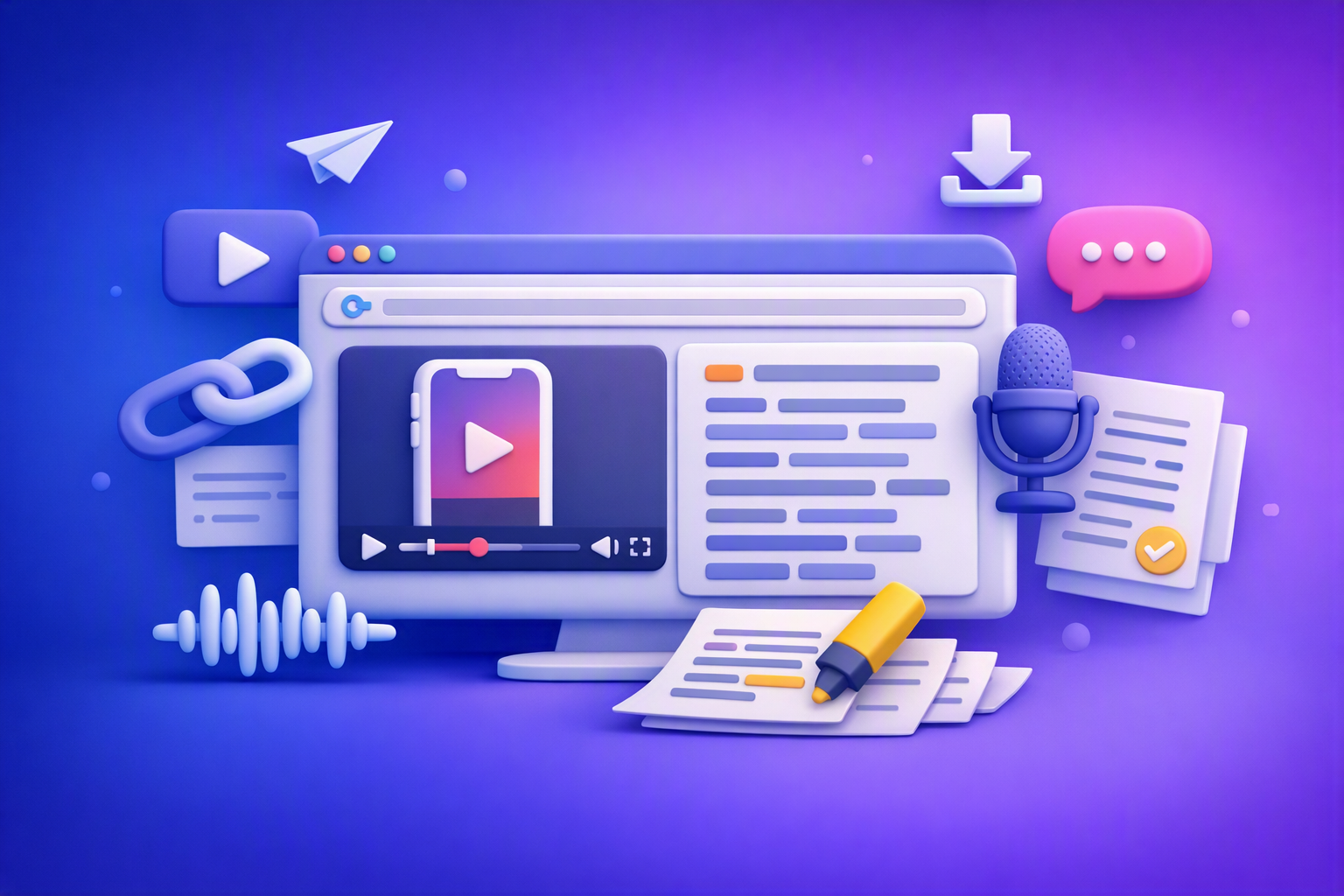
A reel analyzer should turn any public Instagram Reel link into a searchable transcript library you can mine for hooks, CTAs, objections, and topic clusters—then repurpose into original drafts with a repeatable SOP.