
“Max 0 Uploads at a Time” Rate Limit in ChatGPT: What It Means, Why It Happens, and Fixes (Plus a No-Upload Video→Text Workflow)
 Video To Text AI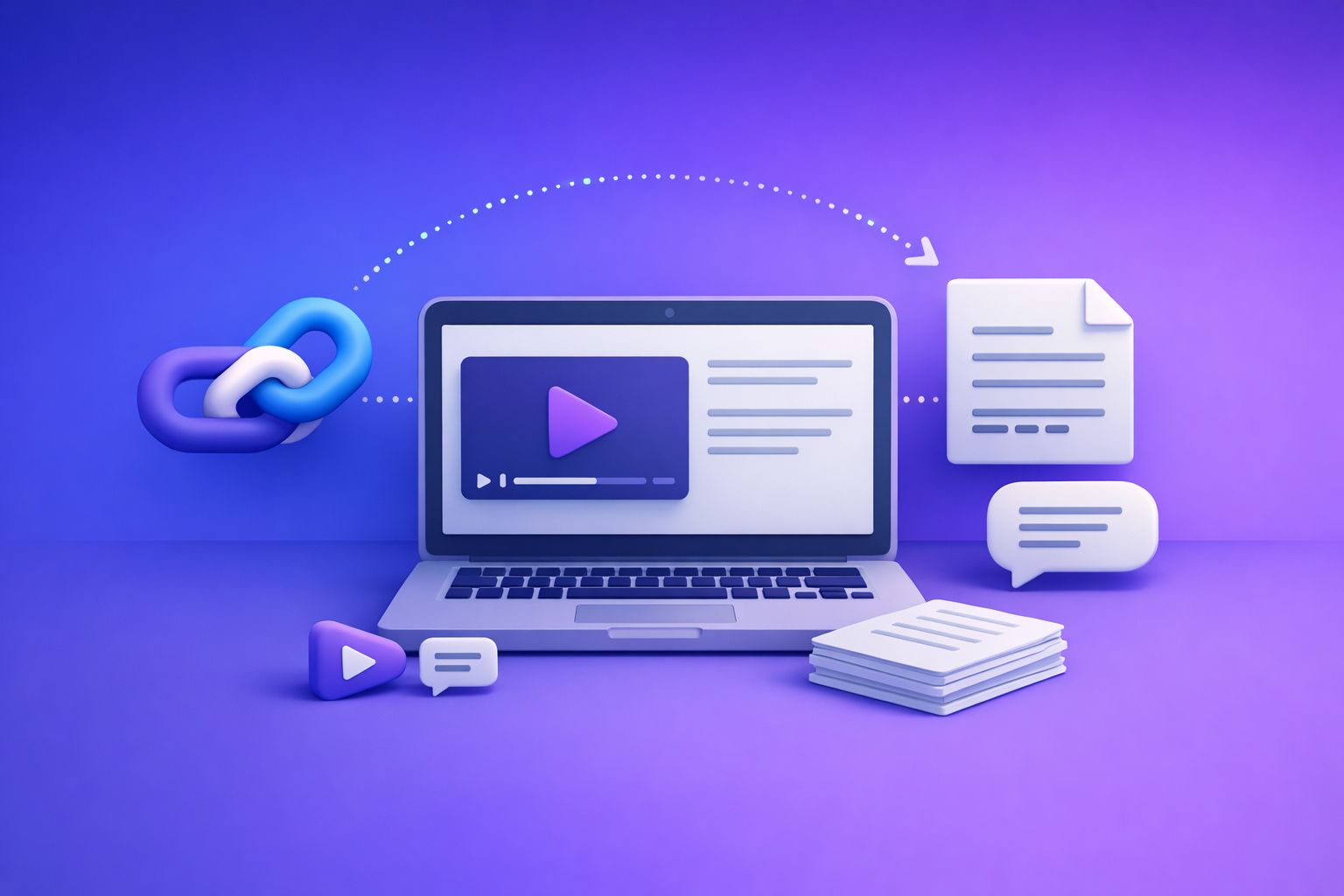
If ChatGPT says “max 0 uploads at a time”, stop trying different files—uploads are disabled in your current context, so the UI blocks attachments before your file is even evaluated. Use the 2-minute diagnosis below to isolate the blocking layer and restore uploads, or bypass uploads entirely with a link-based video→text workflow that still ships TXT + SRT/VTT today.
Who this is for (and what you’ll solve in 10 minutes)
You’re in the right place if you see any of these
- “max 0 uploads at a time”
- “upload limit reached”
- “attachments disabled for …”
- Upload button missing / grayed out (web or mobile)
Outcomes
- Restore uploads (when possible) by isolating the blocking layer
- Ship transcripts/subtitles today without uploading anything (link-based workflow)
TL;DR: fastest fix path (1 minute)
If you need uploads back
- Start a new chat → check if uploads work there
- Switch to an attachment-capable model/surface (web ↔ iOS ↔ Android)
- Sign out/in + hard refresh
- Disable extensions / try an incognito profile
- Switch networks (remove VPN/proxy) and retest
- If on Team/Enterprise: ask admin to enable attachments
If you need results now (no uploads)
- Use VideoToTextAI: paste a video link → export TXT + SRT/VTT → paste text into ChatGPT for summarizing/repurposing
- This avoids the outdated download → upload → fail → retry loop that kills creator productivity.
What “max 0 uploads at a time” actually means (plain English)
It’s not a file-size problem
“0 uploads” means attachments are disabled in the current ChatGPT context. The UI blocks uploads before it checks:
- file size
- file type
- content
It’s usually a capability/permission flag, not a true “rate limit”
It can look like throttling, but most cases are caused by mismatches across:
- the thread you’re in
- the model you selected
- the surface/app you’re using
- your workspace policy
- your local environment/network
If you’re also seeing “attachments disabled for…”, cross-check: “Attachments Disabled for” ChatGPT: What It Means, Why It Happens, and Fixes (Plus a No-Upload Video→Text Workflow)
Where the restriction usually lives (the 5-layer model)
Think of “max 0 uploads at a time” as a switch that can be flipped at multiple layers.
Layer 1 — Thread-level (this conversation only)
A single chat can get “stuck” with uploads disabled.
- Common symptom: uploads fail in one chat, work in another.
Layer 2 — Model-level (the selected model can’t accept attachments)
Some models/surfaces don’t support file uploads consistently.
- Common symptom: switching models makes the upload button appear/disappear.
Layer 3 — Surface/app-level (web vs iOS vs Android)
Upload UI and capabilities can differ by client.
- Common symptom: web fails, mobile works (or vice versa).
Layer 4 — Workspace policy (Team/Enterprise/admin controls)
Admins can disable attachments org-wide.
- Common symptom: personal account works, work account shows “max 0 uploads.”
Layer 5 — Local environment (browser profile, extensions, network tooling)
Ad blockers, privacy extensions, corporate proxies, VPNs, and SSL inspection can break upload endpoints.
- Common symptom: uploads fail only on one device/browser/network.
2-minute diagnosis: isolate the block (do this in order)
Do these steps in sequence. Don’t guess.
Step 1 — Confirm whether it’s thread-specific (30 seconds)
- Open New chat → attempt a small upload (any small image/file)
Interpretation:
- Works in new chat → thread-level issue
- Fails everywhere → continue
Step 2 — Confirm model/surface capability (30 seconds)
- Switch model (if multiple available) and retest
- Switch surface:
- Web app → mobile app
- Mobile app → web app
If you’re specifically trying to upload video, also see: ChatGPT “Upload Video” Feature: How It Works, How to Use It (iPhone/Android/Web), Real Limits, and a No-Upload Workflow
Step 3 — Rule out local blockers (30 seconds)
- Incognito/private window (no extensions)
- Different browser profile
Step 4 — Rule out network/policy (30 seconds)
- Switch networks (home hotspot vs corporate Wi‑Fi)
- Disable VPN/proxy and retest
- If work account: assume workspace policy until proven otherwise
Fixes that work (ordered, fastest to slowest)
Fix 1 — New chat + reselect an attachment-capable model
- Create a new chat
- Select a model that shows attachment support in that surface
- Retry upload with a small file first
This is the highest-probability fix because thread-level flags are common.
Fix 2 — Cross-surface reset (web ↔ iOS ↔ Android)
- If web fails, test mobile; if mobile fails, test web
- If one surface works, the issue is client-specific (cache/UI/policy in that app)
Fix 3 — Hard refresh + sign out/in
- Web: hard refresh + clear site data for the ChatGPT domain
- Mobile: force quit app → reopen → re-authenticate
Fix 4 — Remove local blockers (browser)
Disable extensions that commonly interfere:
- Ad blockers, privacy blockers, script blockers
- “Security” extensions that rewrite requests
Then retest in a clean profile.
Fix 5 — Network isolation (VPN/proxy/corporate tooling)
- Turn off VPN
- Try a different network (mobile hotspot)
- If corporate network uses SSL inspection, uploads may be blocked by policy
Fix 6 — Workspace/admin resolution (Team/Enterprise)
Ask your admin to confirm:
- Attachments enabled for your workspace
- Any DLP rules blocking uploads
- Allowed domains/endpoints for file handling
Fix 7 — Wait for service-side recovery (only after isolation)
Wait only if it fails across:
- new chat + multiple models + multiple surfaces + clean browser + different network
Until you isolate layers 1–5, “just wait” is usually wasted time.
The production-safe workaround: no-upload video→text workflow (ships today)
When uploads are blocked, upload-heavy workflows compound failure points. Downloading video files is an outdated workflow; link-based extraction is the future because it’s faster, cleaner, and more repeatable for creators and teams.
When to choose no-upload (decision rule)
Choose no-upload if:
- you’re on a deadline, or
- uploads are blocked by workspace policy, or
- you need repeatable outputs (TXT + SRT/VTT) for publishing
Workflow overview (link/MP4 → TXT/SRT/VTT → ChatGPT-on-text)
- Get transcript/captions using a link-based workflow
- Paste transcript text into ChatGPT (no attachments)
- Generate deliverables: blog post, show notes, chapters, captions, social posts
Step-by-step: VideoToTextAI link-based extraction
Step 1 — Start from the video URL (no download)
Use the source link (YouTube/Instagram/TikTok/etc.). This avoids the brittle download → upload loop entirely.
If you’re starting from a local file instead, these tools map cleanly to the same deliverables:
Step 2 — Generate transcript + captions
Generate export-ready formats:
- TXT (clean transcript for prompts)
- SRT (subtitles for editors/platforms)
- VTT (web captions)
Step 3 — Export and store deliverables
- Save TXT for ChatGPT prompts and documentation
- Save SRT/VTT for publishing workflows (YouTube, web players, editors)
If your goal is content repurposing from a YouTube URL, also see: YouTube to Blog
To run the link-based workflow now, use exactly one production CTA: VideoToTextAI
Step-by-step: Use ChatGPT on transcript text (no attachments)
Prompt template: summarize + structure
Paste transcript, then:
Create a structured summary with headings, key takeaways, and action items.
Prompt template: repurpose into blog + social
Turn this transcript into: (1) SEO blog post, (2) LinkedIn post, (3) 10 short hooks.
If you’re repurposing podcast-style content, this workflow also applies: Podcast Transcription
If the transcript is too long: chunking method that doesn’t break results
- Split transcript into chunks by timestamps (e.g., 8–12 minutes each)
- For each chunk: ask for bullet summary + key quotes + topics
- Final step: paste the chunk summaries and ask for a unified outline + draft
This keeps outputs consistent and reduces “lost context” across long transcripts.
Implementation checklist (copy/paste)
Upload restore checklist (10 minutes)
- New chat test (thread isolation)
- Switch model (capability isolation)
- Switch surface (web ↔ mobile)
- Sign out/in + hard refresh
- Incognito / clean browser profile
- Disable extensions
- Switch network + disable VPN/proxy
- If Team/Enterprise: confirm workspace attachment policy
No-upload shipping checklist (15–30 minutes)
- Generate transcript/captions from a video link (no download)
- Export TXT + SRT + VTT
- Paste TXT into ChatGPT (no attachments)
- Generate: summary, chapters, blog draft, social posts
- Publish captions using SRT/VTT
Common scenarios (fastest correct response)
Scenario A: “Max 0 uploads” only in one chat
- Start a new chat → reselect model → retry
Scenario B: “Max 0 uploads” on work account only
- Switch to personal account to confirm → then escalate to admin policy
Scenario C: Upload UI missing everywhere on your device
- Cross-surface test + sign out/in
- Mobile: reinstall app if needed
- Web: clear site data + retest in clean profile
Scenario D: Uploads fail only on corporate Wi‑Fi
- Hotspot test confirms network tooling → use no-upload workflow or request allowlisting
VideoToTextAI vs Competitors
If you’re seeing “max 0 uploads at a time,” the key question is: does the workflow require uploads to function? Upload-first tools can be great when uploads work—but they’re fragile when attachments are blocked by policy, client surface, or network tooling.
| Tool | Input workflow signal | Export readiness signal | Best fit | Where it can be weaker for “max 0 uploads” users |
|---|---|---|---|---|
| VideoToTextAI | Link-based workflow (paste URL) | TXT + SRT/VTT deliverables | Fast, repeatable transcript/caption extraction and repurposing pipelines | Not positioned as a full video editor; it’s deliverable-first (text/captions) |
| Reduct Video | No strong public signal for paste-a-link workflow | Transcript export + summaries mentioned | Collaborative transcript-based review/editing for teams | If you’re blocked from uploads, upload-heavy ingestion adds friction; subtitle export readiness not strongly signaled |
| Choppity | Upload workflow explicitly shown | Captions/subtitles supported | AI video editing + clipping + captions | Upload-first flow can stall when attachments are blocked; link-based input not strongly signaled |
| PCMag (benchmark roundup) | Upload-based services discussed | Varies by service; general transcript focus | Researching categories/vendors | Not a workflow tool; doesn’t solve “uploads blocked” operationally |
Why VideoToTextAI wins for workflow speed and repeatability (when uploads are blocked):
- Link-based input removes the slowest step: downloading large video files just to re-upload them.
- Export-ready outputs (TXT + SRT/VTT) map directly to publishing and repurposing tasks.
- Operational repeatability improves because the steps are consistent across teams: URL → transcript/captions → text-only prompts in ChatGPT.
Fair note: If your primary job is editing video clips end-to-end, an editor-first tool like Choppity can be better suited—when uploads are working and allowed. For “max 0 uploads” situations, link-based extraction keeps production moving.
Competitor Gap
Most competing pages and threads (including Reddit-style answers) stop at “try again later” or “clear cache.” What they miss—and what you should use as your standard operating procedure:
- A strict layered isolation flow (thread → model → surface → policy → local/network)
- A decision rule for when to stop troubleshooting and ship via no-upload
- A copy/paste checklist for both “restore uploads” and “ship without uploads”
- Clear emphasis on link-based execution to avoid download/upload failures
- Deliverable-first outputs: TXT + SRT/VTT (not just “a transcript”)
If you want a deeper dive on the same root cause family, see:
FAQ
What’s the limit on file uploads for ChatGPT Plus?
There isn’t one universal number you can rely on because limits vary by model, client surface, and current policy. If you see “max 0 uploads at a time,” you’re not dealing with a normal quota—you’re dealing with uploads disabled in that context.
How long before ChatGPT allows more uploads?
If it’s truly transient, it may resolve later, but you should first isolate the layer causing the block. If it fails across new chat + multiple models + multiple surfaces + clean browser + different network, then waiting becomes a reasonable last step.
How to get more uploads on ChatGPT?
In practice, “more uploads” usually means “uploads enabled in this context.” The fastest path is:
- new chat
- switch model/surface
- remove local blockers
- switch networks
- confirm workspace policy (Team/Enterprise)
Is there a storage limit on ChatGPT?
Storage/retention behavior depends on the product configuration and workspace policies. For “max 0 uploads,” storage is rarely the issue; the message indicates attachments are disabled before storage is even relevant.
Can ChatGPT do video transcription?
Sometimes, depending on your plan and whether uploads are enabled—but it’s not production-safe to depend on it when attachments can be disabled by thread/model/surface/policy. A safer approach is: transcribe first (TXT/SRT/VTT), then use ChatGPT on text.
How can I take a video and turn it into text?
Use a workflow that doesn’t depend on uploads:
- Start from a video URL
- Generate TXT + SRT/VTT
- Paste TXT into ChatGPT for summaries, chapters, and repurposed content
Internal Link Plan
- “Max 0 Uploads at a Time” Rate Limit in ChatGPT: What It Means, Why It Happens, and Fixes (Plus a No-Upload Workflow)
- “Attachments Disabled for” ChatGPT: What It Means, Why It Happens, and Fixes (Plus a No-Upload Video→Text Workflow)
- ChatGPT “Upload Video” Feature: How It Works, How to Use It (iPhone/Android/Web), Real Limits, and a No-Upload Workflow
- MP4 to Transcript
- MP4 to SRT
- MP4 to VTT
- YouTube to Blog
- Podcast Transcription
Related posts
Reel Analyser (Instagram Reels): Transcript‑First Competitor Research, Hook/CTA Extraction, and Repurposing Workflow (VideoToTextAI)
Video To Text AI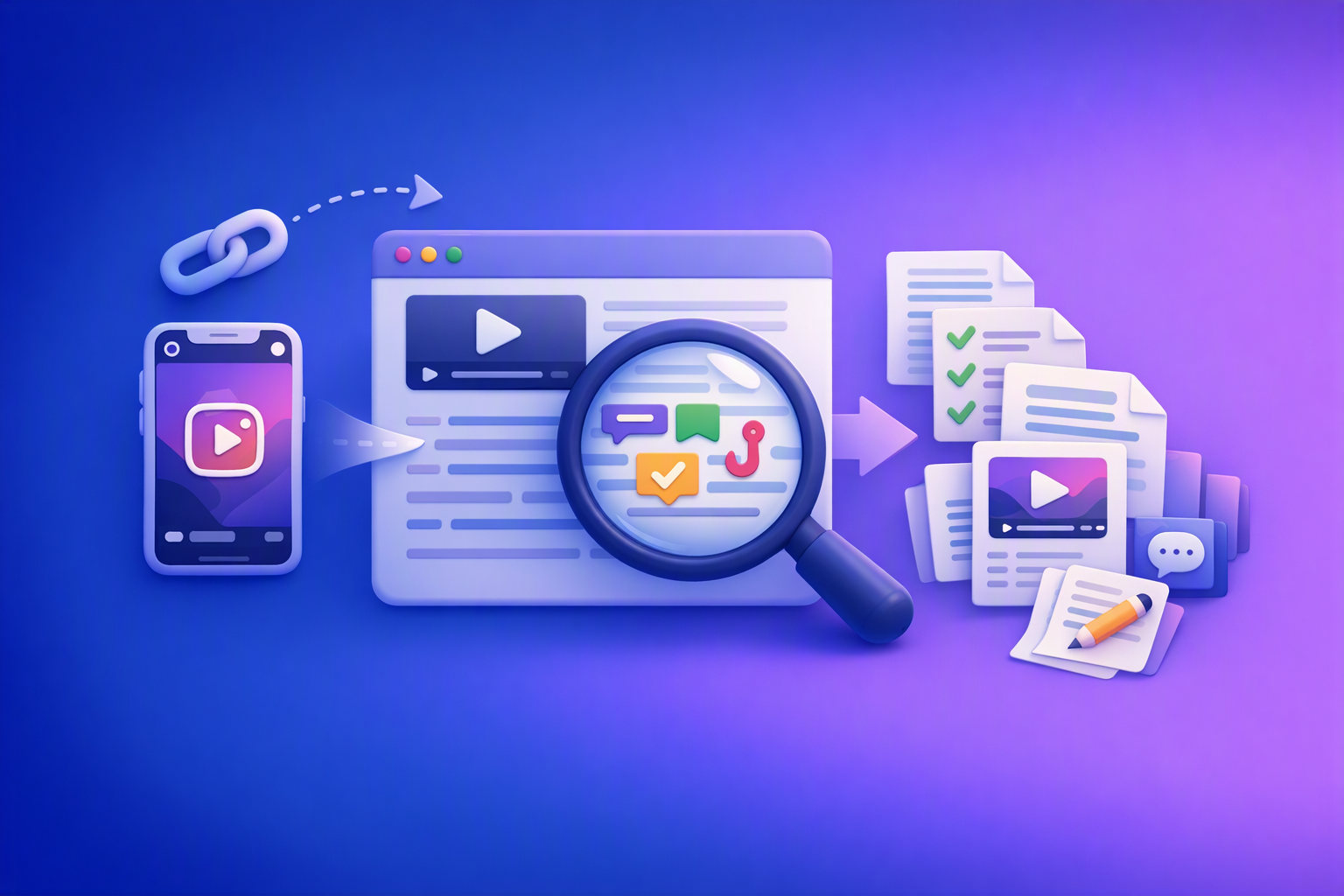
A 2026 reel analyser should turn Instagram Reel links into a searchable transcript library you can tag for hooks, CTAs, objections, and topic clusters—then export into repurposing-ready drafts without a download/upload loop.
Traducir video de Instagram (Reels) en 2026: workflow transcript-first para traducir, sacar hooks/CTAs y repurpose (con VideoToTextAI)
Video To Text AI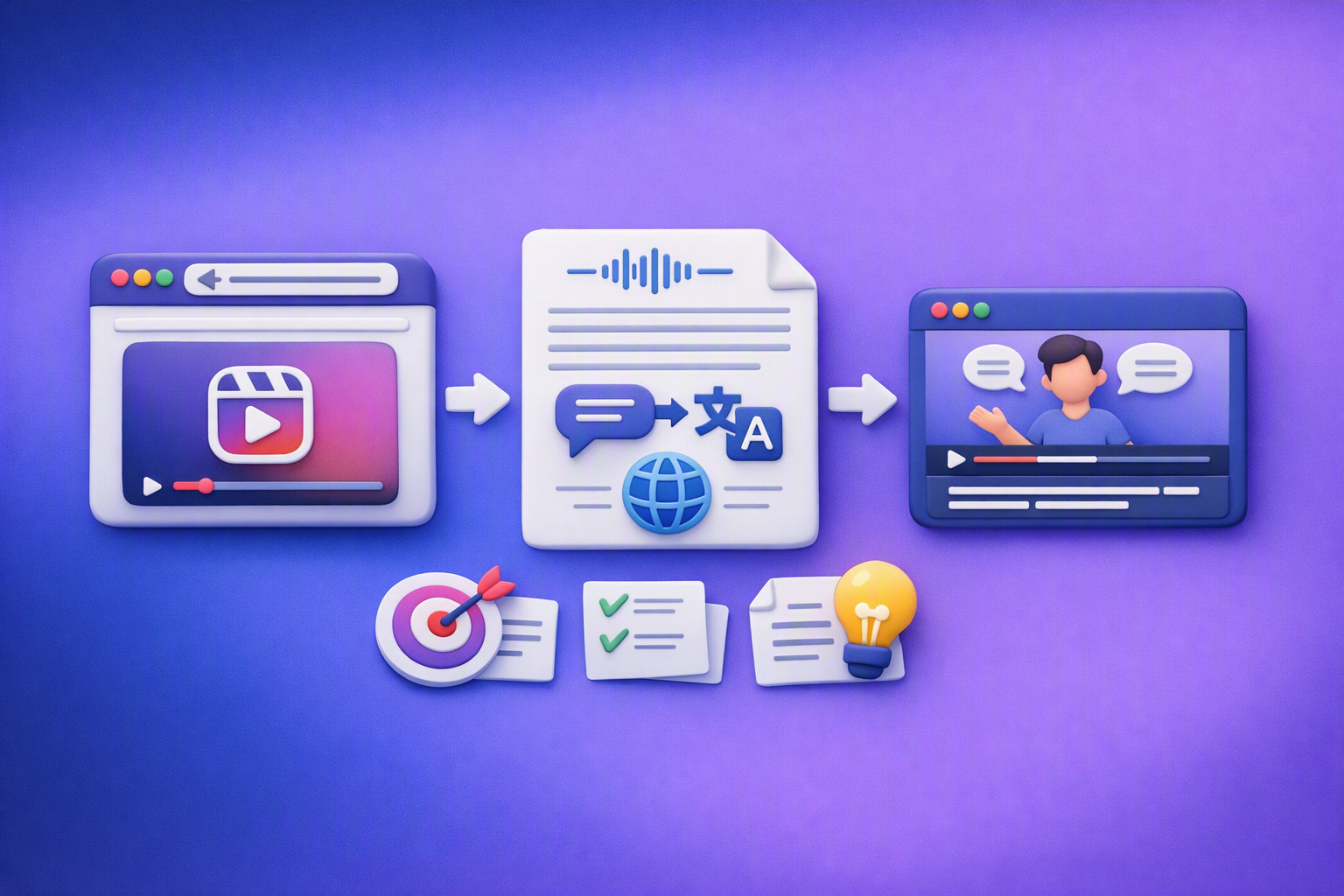
Aprende a traducir un Reel de Instagram con un flujo URL→transcripción→traducción→subtítulos, y a convertir esa traducción en un activo de investigación para hooks, CTAs, objeciones y clusters de contenido.
Reel Analyzer: Transcript‑First Instagram Reels Research (Hooks, CTAs, Objections) + Workflow Guide (VideoToTextAI)
Video To Text AI
A reel analyzer should turn any public Instagram Reel link into a searchable transcript library you can mine for hooks, CTAs, objections, and topic clusters—then repurpose into original drafts with a repeatable SOP.