
Can ChatGPT Upload Video? What Works in 2026 (and the Reliable Link → Transcript Workflow)
 Video To Text AI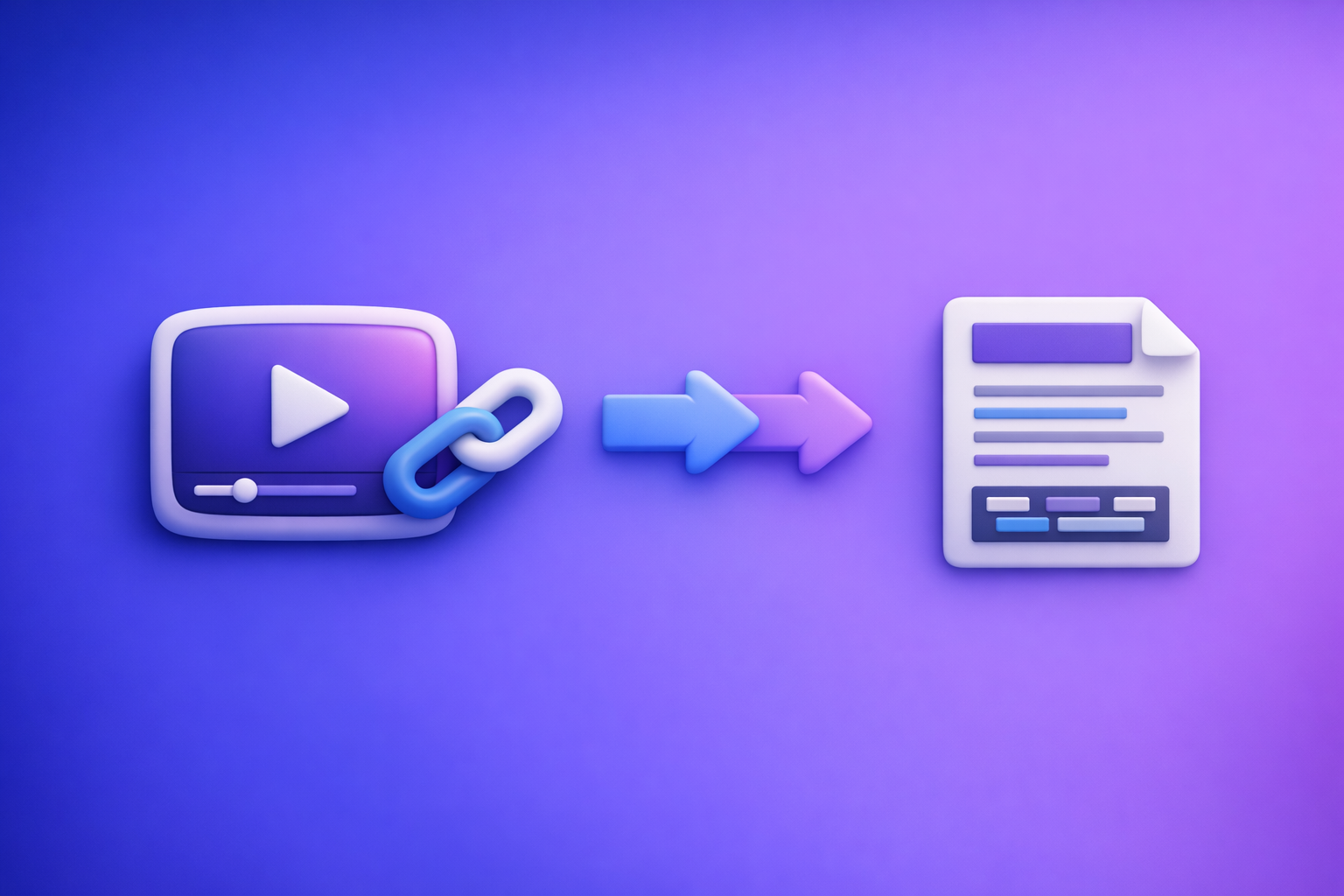
ChatGPT video uploads are not a dependable workflow in 2026 for transcription, captions, or long-form analysis. The reliable solution is link/MP4 → export-ready transcript/subtitles (TXT/SRT/VTT) → ChatGPT for cleanup, structure, and repurposing.
Can ChatGPT Upload Video? What Works in 2026 (and the Reliable Link → Transcript Workflow)
Quick Answer (So You Don’t Waste Time)
Can ChatGPT upload video?
Sometimes—but not consistently. Whether you can upload a video file into ChatGPT depends on:
- The client (web vs. iOS vs. Android)
- Your plan and feature availability
- File size/duration limits
- Processing timeouts and network stability
- The video’s codec/container compatibility
If your goal is transcripts, subtitles, captions, or content repurposing, uploading video files is an outdated workflow. Link-based extraction is the future of creator productivity because it avoids downloads, reduces failure points, and produces deterministic exports you can ship.
When it works vs. when it fails (client, plan, file size, timeouts)
Uploads tend to work best when:
- The clip is short (minutes, not hours)
- The file is small and encoded in common formats
- You’re on a supported client with the feature enabled
- Your connection is stable and processing completes quickly
Uploads tend to fail when:
- The video is long (podcasts, webinars, trainings)
- The file is large (high bitrate, 4K, long duration)
- The codec is unusual (common with screen recordings)
- The session hits timeouts or stalls mid-processing
The reliable alternative: video link/MP4 → transcript/subtitles → ChatGPT for analysis + repurposing
The dependable workflow is:
- Start with a video link (YouTube/TikTok/Instagram) whenever possible
- Generate TXT + SRT/VTT exports
- Paste the transcript into ChatGPT to create chapters, summaries, posts, and blog drafts
This is exactly what VideoToTextAI is built for: link-based video-to-text workflows that produce export-ready deliverables for publishing.
What “Upload Video to ChatGPT” Actually Means (3 Different Use Cases)
1) Uploading a video file for transcription/captions
This is the most common intent behind “can chat gpt upload video.”
What people want:
- A transcript they can edit
- Captions/subtitles (SRT/VTT)
- Speaker labels and timestamps
- A clean text asset for repurposing
What breaks it:
- Long videos
- Large files
- Unpredictable processing and timeouts
If you need publishable outputs, treat video upload as optional—not your core workflow.
2) Sharing a video link (YouTube/TikTok/Instagram) for analysis
This is what creators actually do day-to-day: “Here’s the link—summarize it, pull quotes, make posts.”
Reality check:
- Some links are accessible; others aren’t (private, region-locked, paywalled)
- Even when accessible, link ingestion can be inconsistent
- You still need deterministic exports (TXT/SRT/VTT) for production
A transcript-first workflow is more reliable than hoping a link is readable in the moment.
3) Asking ChatGPT to “edit” a video (what it can’t do vs. what it can help with)
ChatGPT is not a video editor.
It can’t:
- Cut clips on a timeline
- Apply transitions, color correction, audio mixing
- Export a finished MP4
It can help with:
- Edit decisions: what to cut/keep based on transcript
- Hook and title options
- Chaptering and segment planning
- Caption text and on-screen text suggestions
In practice: use transcripts as the control layer for editing decisions.
Why Video Uploads Fail in ChatGPT (Common Failure Modes)
File size and duration limits (long videos are the first to break)
Long-form content is where uploads collapse first:
- Webinars (45–120 minutes)
- Podcasts (60–180 minutes)
- Courses and trainings (multi-hour)
Even if an upload starts, it may fail during processing or return partial results.
Unsupported formats/codecs and container issues
“MP4” isn’t a guarantee.
Common problems:
- MP4 container with an uncommon codec
- Variable frame rate screen recordings
- Audio tracks encoded in less common formats
A transcript tool that handles ingestion and normalization is safer than relying on a chat UI upload.
Network timeouts and stalled processing
Large uploads + long processing windows = failure risk:
- Wi‑Fi drops
- Mobile backgrounding
- Browser tab sleeping
- Server-side timeouts
If you need repeatable production, avoid workflows that depend on a single uninterrupted session.
Client differences (web vs. mobile) and feature rollouts
In 2026, features still roll out unevenly:
- Web may support something mobile doesn’t (or vice versa)
- Enterprise/team settings can restrict uploads
- Regional availability can differ
A link-based transcript workflow is less sensitive to client differences.
Policy/permission issues (copyrighted content, private links)
Even if you own the content, systems may block:
- Copyrighted media
- Private/unlisted links without access
- Region-locked videos
- Paywalled platforms
Transcript-first workflows let you control inputs and outputs without guessing what will be accessible.
The Reliable Workflow in 2026: Link/MP4 → Export-Ready Transcript/Subtitles → ChatGPT
What you get at the end (TXT + SRT/VTT + summaries + repurposed posts)
A production-ready pipeline ends with assets you can ship:
- Transcript (TXT) for editing, blogs, notes, SEO
- Subtitles (SRT/VTT) for YouTube, Shorts, Reels, TikTok
- Chapters + titles for navigation and retention
- Summaries + key takeaways for newsletters and landing pages
- Repurposed posts for social distribution
Why “deterministic exports” beat “upload and hope”
“Upload and hope” fails because it’s not deterministic.
Deterministic exports win because:
- You get standard formats (TXT/SRT/VTT) every time
- You can reuse outputs across tools and teams
- You can QA accuracy quickly
- You’re not blocked by a chat client’s upload quirks
Brand POV: Downloading video files is an outdated workflow. Link-based extraction is the future because it’s faster, cleaner, and built for creator throughput.
Step-by-Step: Turn Any Video Into Text with VideoToTextAI (Then Use ChatGPT)
Step 1 — Choose your input: video link or MP4 fallback
Use a video URL whenever possible (fastest, least friction).
If you can’t use a link (private file, internal recording), use an MP4 fallback.
Useful internal tools:
Step 2 — Generate outputs you can actually ship (TXT, SRT, VTT)
Don’t stop at “a transcript exists.”
Generate:
- TXT for editing and repurposing
- SRT for captions/subtitles
- VTT for web players and accessibility workflows
Step 3 — Validate accuracy fast (speaker names, jargon, timestamps)
Do a fast QA pass instead of rereading everything.
Spot-check:
- 60–90 seconds near the start
- 60–90 seconds in the middle
- 60–90 seconds near the end
Fix:
- Speaker names (Host/Guest or real names)
- Brand terms, product names, acronyms
- Timestamp drift (if present)
Step 4 — Export and reuse (captions, subtitles, blog, social)
Export your deliverables into a content folder:
/transcripts/video-title.txt/captions/video-title.srt/captions/video-title.vtt
Then reuse across channels.
For link-first repurposing:
Step 5 — Paste transcript into ChatGPT for cleanup + structure
Once you have deterministic text, ChatGPT becomes extremely effective.
Prompt: clean transcript without changing meaning
Clean up this transcript for readability without changing meaning.
Rules:
- Keep all facts and claims exactly the same
- Remove filler words and false starts
- Fix punctuation and capitalization
- Preserve speaker labels and timestamps
- Do not add new information

Transcript:
[PASTE TXT HERE]
Prompt: create chapters + titles from timestamps
Create chapters from this transcript using the existing timestamps.
Output:
- Chapter title
- Start timestamp
- 1-sentence summary
Constraints:
- 6–12 chapters total
- Titles should be benefit-driven and specific

Transcript:
[PASTE WITH TIMESTAMPS]
Prompt: create SEO blog outline + key takeaways
Turn this transcript into an SEO blog outline.
Output:
- H1
- 6–10 H2s with brief bullets under each
- Key takeaways (5–8 bullets)
- FAQ (4–6 questions with short answers)
Constraints:
- Keep it accurate to the transcript
- Use concise, skimmable formatting

Transcript:
[PASTE TXT HERE]
Prompt: generate captions (short/medium/long) from the transcript
Write captions based on this transcript.
Output:
1) Short (<= 120 characters)
2) Medium (2–3 sentences)
3) Long (5–7 sentences with a CTA)
Constraints:
- Use the speaker’s tone
- Avoid hashtags unless requested
- Do not invent details

Transcript:
[PASTE TXT HERE]
Implementation Playbooks (Pick Your Scenario)
YouTube link → transcript → blog post
Goal: turn a video into a publishable article that ranks.
Workflow:
- Generate transcript from the YouTube link
- Extract key quotes and supporting points
- Build an H2 structure that matches search intent
- Add FAQ and a meta description
Output targets:
- H2 structure aligned to intent
- 3–7 key quotes (with timestamps if needed)
- FAQ section (PAA-style)
- Meta description (150–160 chars)
Recommended tool page:
Podcast MP4 → transcript + show notes
Goal: ship show notes fast and create clip ideas.
Workflow:
- Convert MP4 to transcript + subtitles
- Normalize speaker labels (Host/Guest)
- Generate chapters and a “clip list” from highlights
Output targets:
- Clean transcript with speaker labels
- Chapters with timestamps
- 10–20 clip ideas (hook + timestamp + why it works)
Helpful internal starting point:
TikTok/Instagram Reel → transcript → hooks + LinkedIn post
Goal: reuse short-form ideas in long-form distribution.
Workflow:
- Extract transcript from the Reel/TikTok
- Generate 10 hook variations
- Expand into a LinkedIn post with a clear CTA
Output targets:
- 10 hook variations
- 1 LinkedIn post (120–220 words)
- CTA options (comment, DM, click, subscribe)
- Optional hashtag set (if your brand uses them)
Recommended tool page:
Troubleshooting: If You Still Want to Try Uploading Video to ChatGPT
Reduce failure risk (shorten clip, compress, convert format)
If you insist on uploading:
- Trim to a 1–5 minute clip first
- Compress to reduce bitrate and file size
- Convert to a common baseline:
- MP4 container
- H.264 video
- AAC audio
If it fails twice, stop burning time and switch workflows.
If a link won’t work (private videos, region locks, paywalls)
Common link blockers:
- Private/unlisted without permission
- Region restrictions
- Paywalled platforms
- Logged-in sessions required
Fix options:
- Use a publicly accessible link
- Export audio/video to MP4 (only when necessary)
- Move to transcript-first processing so you control the input
When to stop trying and switch to link/MP4 → transcript exports
Switch immediately when:
- The video is longer than ~10–15 minutes
- You need SRT/VTT deliverables
- You’re on mobile with unstable connectivity
- You’re working against a deadline
If your goal is publishing, deterministic exports beat experimentation.
Checklist: 10-Minute “Video → Publishable Text” Workflow
Inputs
- Video URL or MP4 file ready
- Target output selected: TXT / SRT / VTT / blog / social
Processing
- Generate transcript + subtitles (SRT/VTT)
- Spot-check 60–90 seconds across 3 sections
- Fix speaker names + key terms (brands, jargon, acronyms)
Repurposing
- Create chapters + summary
- Produce 1 blog draft + 3 social variants
- Save exports to your content folder: TXT + SRT/VTT + final copy
One-time setup tip: keep a “Repurpose Prompts” doc so every video follows the same playbook.
Competitor Gap
What top-ranking pages miss
Most pages ranking for “can chat gpt upload video” are incomplete because they focus on capability debates, not production outcomes.
Common gaps:
- No step-by-step workflow that works when uploads fail
- No deterministic export formats (SRT/VTT/TXT) as the core deliverable
- No troubleshooting matrix for links vs. files vs. client limitations
- No reusable prompts + checklist for immediate execution
How this post is better
This guide is built for shipping content, not testing features.
What you get here:
- A clear decision tree: upload vs. link vs. transcript-first workflow
- Implementation steps with export-ready outputs
- Copy/paste prompts and a 10-minute checklist
- Internal tool paths to execute immediately, including:
FAQ
Can you put a video into ChatGPT?
Sometimes you can upload a video file, but it’s inconsistent across clients and often fails on long videos. For reliable results, convert the video to TXT/SRT/VTT first, then use ChatGPT for structure and repurposing.
Why can’t I upload videos to ChatGPT?
Typical reasons include file size/duration limits, unsupported codecs, network timeouts, differences between web and mobile clients, and permission/policy restrictions on copyrighted or private content.
Can ChatGPT handle video?
ChatGPT can work with video content when it has accessible inputs like a transcript, captions, or supported link/frames. It’s not a dependable end-to-end solution for ingesting arbitrary long videos and producing export-ready subtitles.
Do ChatGPT do videos?
ChatGPT doesn’t “do videos” in the sense of editing and exporting finished video files. It does help with scripts, hooks, chapters, captions text, and repurposed written content—best powered by a transcript-first workflow.
If you want the fastest, most reliable path in 2026, use a link-based transcript workflow and treat file uploads as a last resort: create deterministic TXT/SRT/VTT exports first, then let ChatGPT do what it’s best at—writing, structuring, and repurposing. To run that workflow end-to-end, use VideoToTextAI.
Related posts
Reel Analyser (Instagram Reels): Transcript‑First Competitor Research, Hook/CTA Extraction, and Repurposing Workflow (VideoToTextAI)
Video To Text AI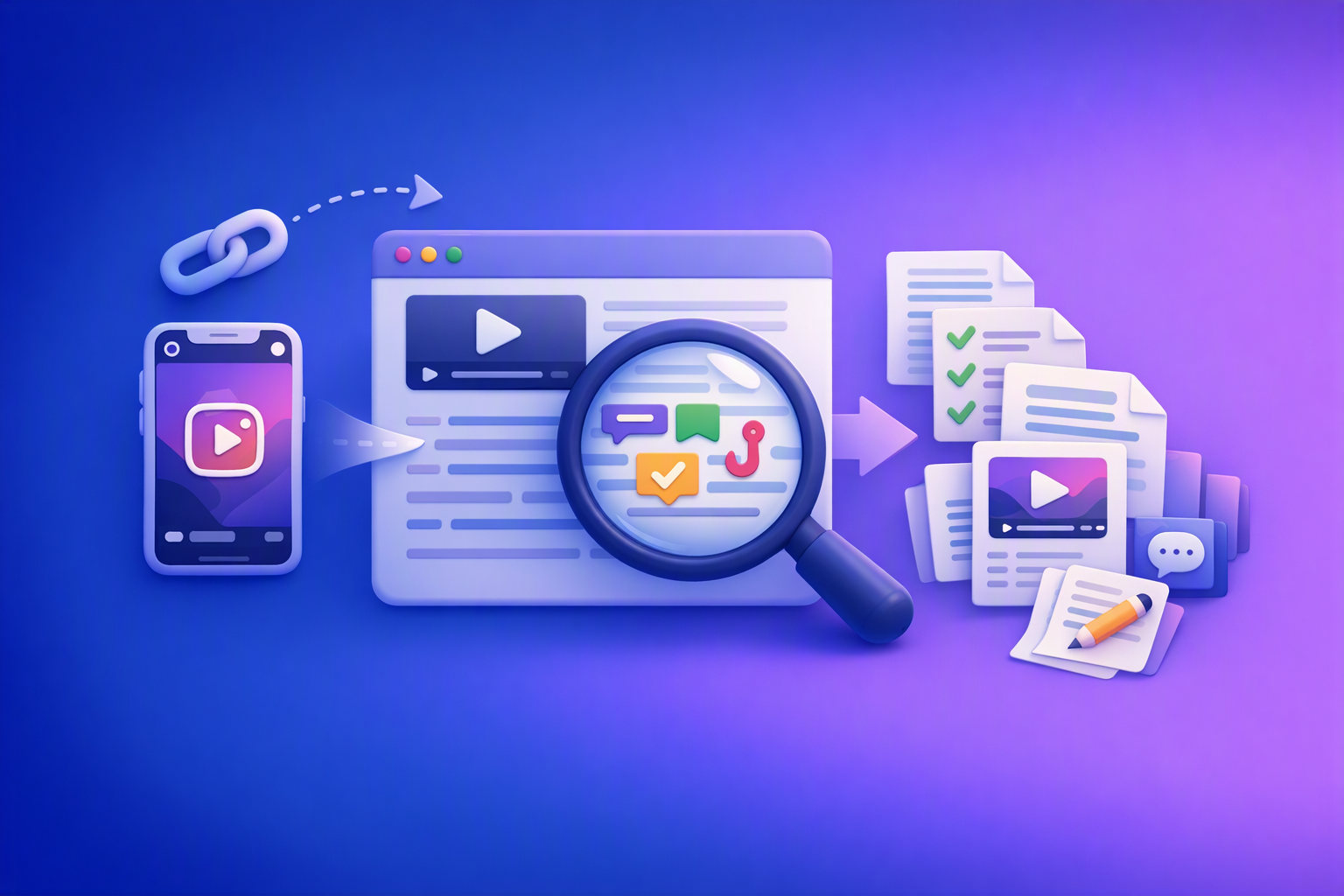
A 2026 reel analyser should turn Instagram Reel links into a searchable transcript library you can tag for hooks, CTAs, objections, and topic clusters—then export into repurposing-ready drafts without a download/upload loop.
Traducir video de Instagram (Reels) en 2026: workflow transcript-first para traducir, sacar hooks/CTAs y repurpose (con VideoToTextAI)
Video To Text AI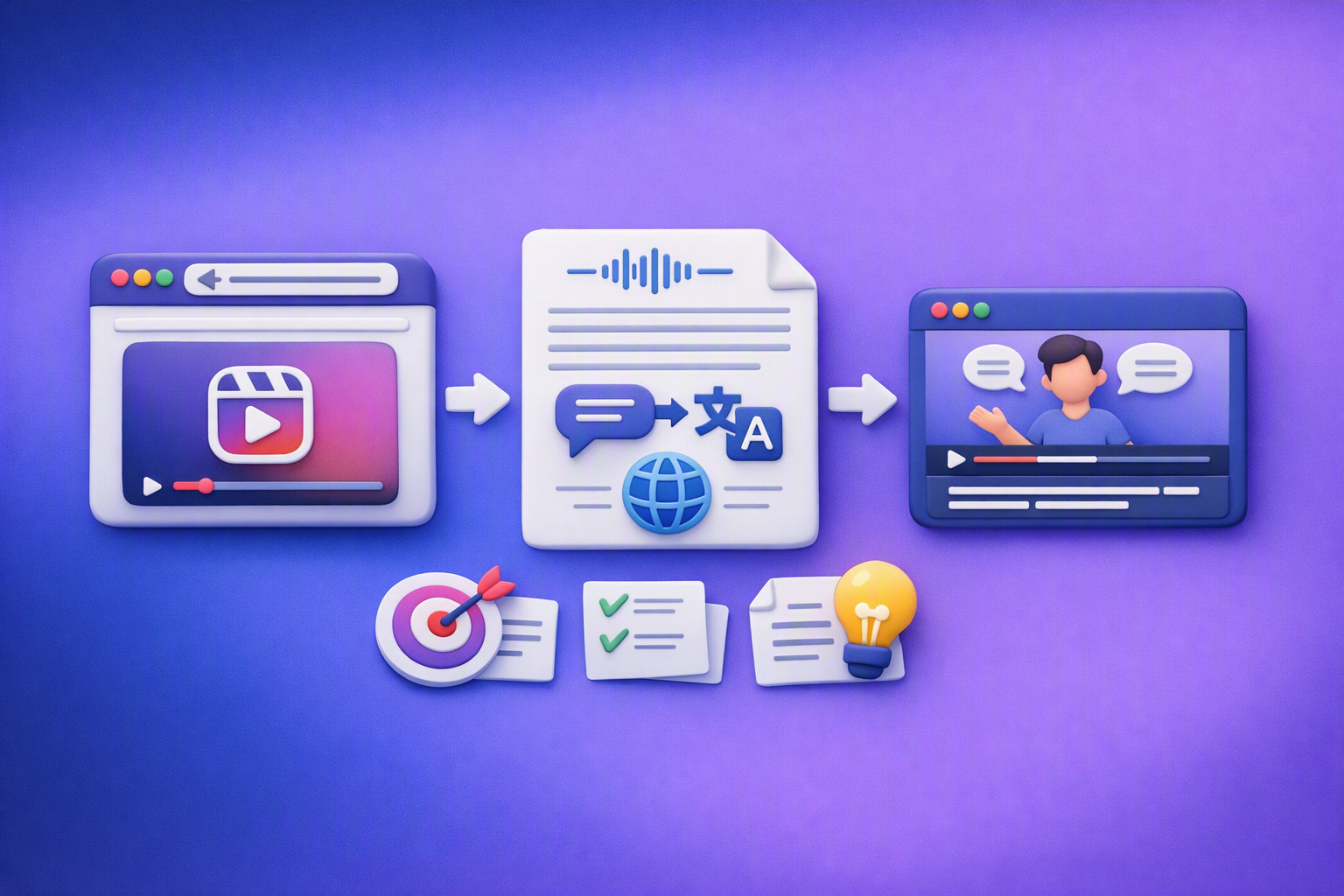
Aprende a traducir un Reel de Instagram con un flujo URL→transcripción→traducción→subtítulos, y a convertir esa traducción en un activo de investigación para hooks, CTAs, objeciones y clusters de contenido.
Reel Analyzer: Transcript‑First Instagram Reels Research (Hooks, CTAs, Objections) + Workflow Guide (VideoToTextAI)
Video To Text AI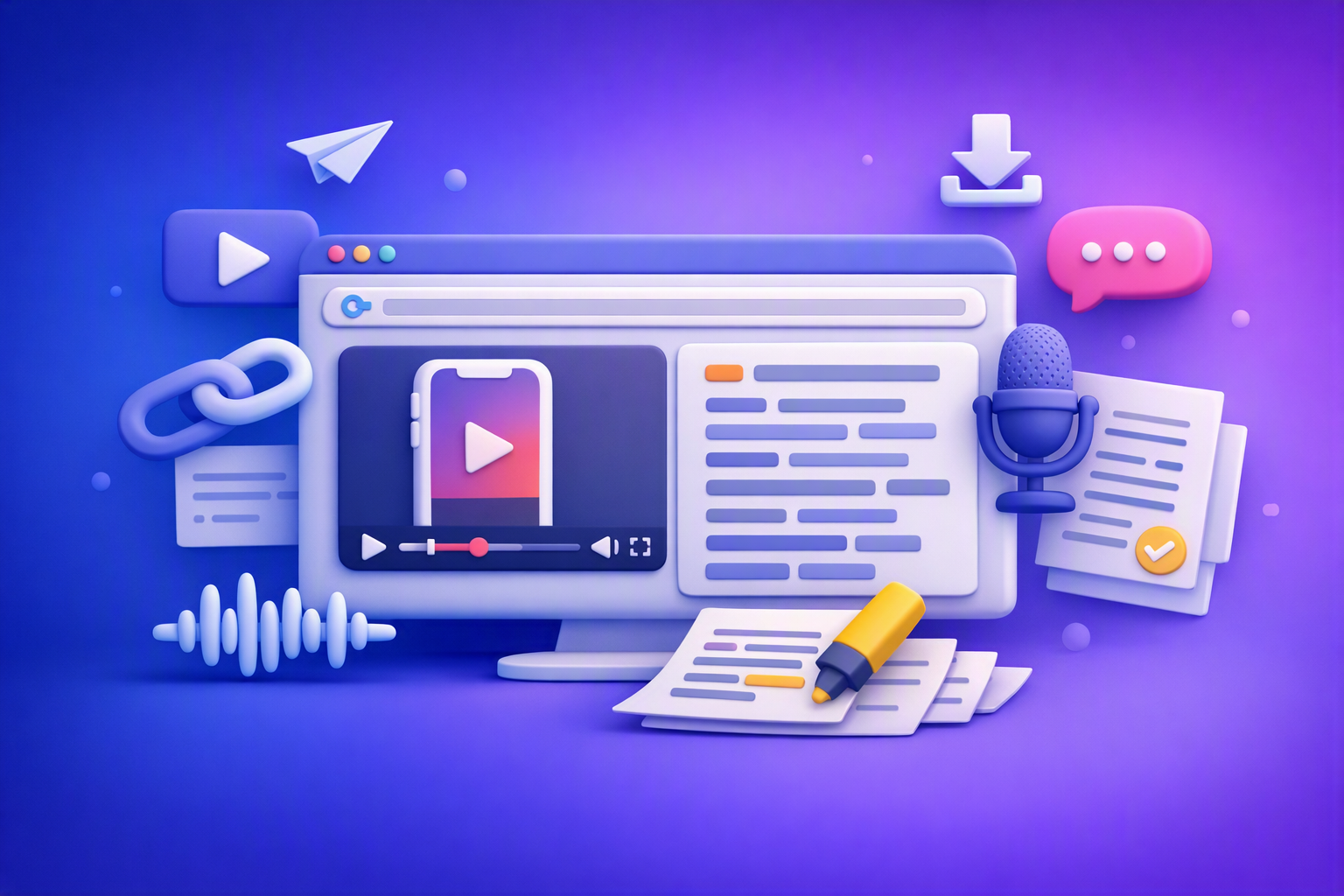
A reel analyzer should turn any public Instagram Reel link into a searchable transcript library you can mine for hooks, CTAs, objections, and topic clusters—then repurpose into original drafts with a repeatable SOP.